Finding a kid-friendly, prepaid phone can balance independence with safety. This guide spotlights popular prepaid-ready devices designed for children, featuring built-in parental controls, GPS tracking, and age-appropriate limits. Each option below comes with a plan or plan-like structure to help families manage costs while staying connected. Review the quick summary table to compare key choices, then explore detailed product sections for features, safety tools, and practical considerations.
| Product | Brand | Amazon Link |
|---|---|---|
| Bark Phone | Bark | View Product |
| Teracube Thrive Kids | Teracube | View Product |
| TalkCeLL 4G Mini | TalkCeLL | View Product |
| Teracube Thrive Kids (Alternate) | Teracube | View Product |
| MOMILLA Kids Toys Smart Phone | MOMILLA | View Product |
Bark Phone — Safest Phone For Kids & Teens

The Bark Phone emphasizes safety and monitoring with tamper-proof parental controls and alerts for potential issues across texts, emails, and 30+ social platforms. It provides a controlled environment for communication, including app and contact approvals, so guardians can manage who their child can text and call. Activation requires selecting a monthly data plan, with options ranging from Wi-Fi only to unlimited data, aligning with family budgets. This device is designed to help parents balance independence with oversight in a prepaid-like structure.
Teracube Thrive Kids Smart Phone

The Thrive line from Teracube offers built-in parental controls via the Thrive Parent app on iOS and Android. Parents can remotely manage apps, set time limits, and approve contacts, ensuring a safer mobile experience for children. The device also emphasizes safe searching and browsing, anti-bullying protections, and spam filtering. A monthly plan is required, positioning it as a prepaid-friendly option for families seeking strong digital wellness features alongside reliable calling and texting.
TalkCeLL 4G Mini Smartphone

The TalkCeLL mini is a compact, affordable option designed for kids who need essential communication without a full-size phone. It highlights 4G connectivity with a small display, dual SIM capability, and GPS. While the product notes specify carrier compatibility and SIM requirements, the device remains a practical prepaid-style choice for families seeking a basic, easy-to-use phone with portability and essential safety features. Note that it is not a 5G device and has some carrier restrictions to confirm before purchase.
Teracube Thrive Kids (Alternate)

This Teracube Thrive variant reiterates a kid-friendly Android experience with tamper-proof parental controls and the Thrive Parent App for real-time oversight. It emphasizes screen-time management, content filtering, and activity tracking to promote digital wellness. Monthly activation and plan options align with prepaid-style budgeting, making it a solid option for guardians prioritizing comprehensive safety features and straightforward setup.
MOMILLA Kids Toys Smart Phone
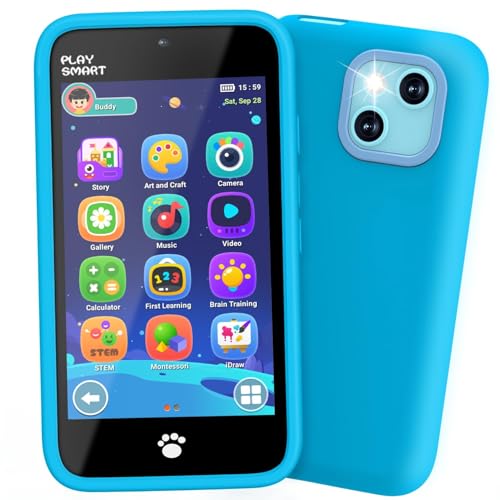
MOMILLA’s toy-smart phone blends learning with basic communication features. It includes 200+ educational puzzle games that support early literacy and critical thinking while offering parental controls to manage screen time and monitor usage. The device doubles as a kid-friendly gift with a dual-camera setup and engaging stickers. While not a full-fledged smartphone, it serves as a supervised, budget-conscious option within a prepaid-leaning context for younger children or early exposure to mobile tech.
Buying Guide
- Safety features: Prioritize devices with robust parental controls, content filtering, screen-time management, and location tracking. These protections reduce exposure to unwanted content and help parents guide digital habits.
- Plan structure: Look for prepaid-like options or devices that tie to flexible monthly plans. Consider data limits, Wi-Fi-only options, and ease of upgrading as your child’s needs evolve.
- Device age-appropriateness: Choose a phone with an appropriate screen size, OS, and app ecosystem. For younger children, a basic or “kids’” device with educational features may be best; for older kids, secure messaging and GPS might be more relevant.
- Carrier compatibility: Confirm GSM/CDMA compatibility and SIM requirements. Some devices are factory unlocked but require specific carriers or SIM cards, which can affect usability on prepaid plans.
- Durability and design: Kids’ devices should withstand drops and rough handling. Consider devices with protective cases, water resistance, and simple, intuitive interfaces to minimize confusion.
- Education and wellness tools: Devices that promote digital wellness—with time limits, app approvals, and usage insights—support healthier screen habits and learning outcomes.
- Privacy considerations: Review how each device handles data collection and monitoring. Ensure parental controls are transparent, repairable, and aligned with family privacy preferences.