Answer: For reliable 12V charging on the move, portable 12V solar panels offer compact, foldable designs with built‑in or separate controllers to protect batteries. This guide highlights top options for RVs, boats, camping, and emergency backup, helping shoppers choose based on power needs, portability, and durability. The top picks skew toward sets that include a separate PWM or MPPT controller and long cable runs for flexible placement. Use this overview to select panels that fit your vehicle, trailers, or off‑grid needs.
| Product | Best For | Key Benefit | Limitation to Consider |
|---|---|---|---|
| DOKIO 100W Portable Foldable Solar Panel Kit | RV, van life, emergency backup | Separate controller for safe charging, long 3m cable | 100W may be low for high‑demand loads |
| SOLPERK 20W Solar Kit | Small batteries, trickle charging | High efficiency, waterproof build | Lower power output |
| Renogy 200W Portable | Power packs and off‑grid setups | High efficiency, versatile charging ports | Higher weight |
| DOKIO 200W Portable | Mid‑to‑large 12V systems | Long cable, separate controller | Heavier, bigger footprint |
| DOKIO 150W Portable Pack | Compact kits for solo travelers | Lightweight with safe charging | Lower wattage than others |
DOKIO 100W Portable Foldable Solar Panel Kit

The DOKIO 100W panel is a compact, foldable unit designed for easy transport and quick setup. Best for RVs, vans, tents, or as emergency backup power. It weighs about 6 pounds folded and stores to a slim footprint, making it ideal for travelers who value portability. A 9.84‑foot cable lets you position the panel in direct sun while keeping the controller shaded for safer operation. The included standalone PWM controller protects against reverse polarity, overcharge, overload, and short‑circuit, and is designed to be replaceable or upgradable later.
Best for: lightweight travelers who want a simple, independent charging setup without hunting for complex connections. This kit shines when you need a ready‑to‑use 12V solution with clear safety protections. Choose this if you want a compact, safe entry point into solar power for camping or emergency charging.
Caution: The 100W output may be insufficient for power‑intensive appliances or long, cloudy days. Ensure your battery bank size matches the expected draw for reliable performance.
SOLPERK Solar Panel Kit 20W 12V
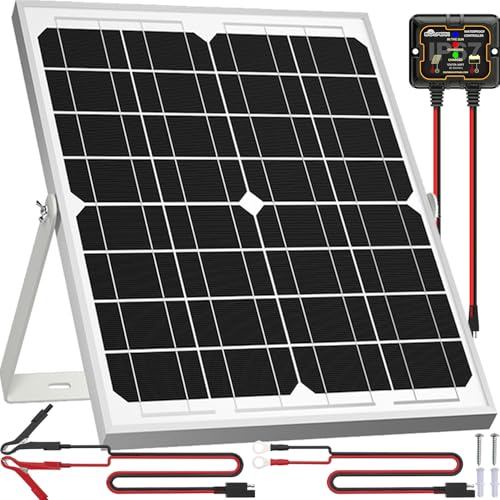
The SOLPERK 20W kit combines a monocrystalline panel with a smart MPPT controller and an adjustable mount bracket. Its high‑efficiency cells (21–30%) make it a strong choice for maintaining 12V batteries in boats, trailers, or outdoor workshops. The build is designed to withstand weather with a low‑iron tempered glass surface and corrosion‑resistant aluminum frame, and it can resist heavy wind and snow loads. The 8A controller improves charging efficiency and adds status indicators for easy monitoring.
Best for: users needing a compact, weather‑resistant charger that can keep small 12V batteries topped up for long periods or during travel. It’s especially suitable for boats, RVs, and other setups where space is tight and daylight is expected to be intermittent.
Caution: With 20W of power, this unit is best for maintaining batteries rather than running high‑draw devices. Check battery capacity and daily sun hours to avoid undercharging.
Renogy 200W Portable Solar Panel

The Renogy 200W panel is a robust choice for higher power needs, featuring industry‑leading 25% efficiency with advanced N‑Type cell technology. It is designed for easy charging of power stations, RVs, boats, and off‑grid systems. The foldable design and a lightweight frame make it easier to transport, with a magnetic closure for quick setup. It includes ports suited for charging multiple devices simultaneously and an MC4 output to connect with portable power stations or 12V systems.
Best for: users seeking higher power output in a portable form, such as those running multiple devices or larger battery banks. It is well suited for campers who need faster charging during sunny days or require more daily energy generation.
Caution: Despite the lighter foldable form, this unit is larger and heavier than smaller kits. Manage weight distribution when mounting on vehicles or racks.
DOKIO 200W Portable Foldable Solar Panel Kit

This 200W kit from DOKIO blends portability with higher output, featuring a 9.84‑foot cable and a separate PWM controller for safe charging. Folding down to a compact size, it suits RVs, vans, boats, trailers, and emergency backup. The panel uses monocrystalline cells for efficient sunlight conversion and a corrosion‑resistant aluminum frame with protective corner guards. The setup is designed for flexible placement and shade management to optimize charging efficiency.
Best for: buyers who want a balance of power and portability, suitable for larger 12V batteries or power stations. It supports flexible installation and safer operation with a dedicated controller.
Caution: Heavier and larger than smaller kits, requiring a bit more storage space and a stable mounting surface.
DOKIO 150W Portable Foldable Solar Panel Kit

The 150W unit offers a compact design with a 9.8‑foot cable and a standalone controller for safer charging. Its 21×20 inch footprint and 7.3‑pound weight make it a practical choice for solo travelers who need reliable 12V charging on the road. The kit emphasizes portability without sacrificing protective features, including a PWM controller to shield 12V systems from common electrical faults.
Best for: travelers who want a light, travel‑ready option that still delivers solid daily charging for 12V batteries and light power stations. It pairs well with smaller rigs or solo camping setups.
Caution: While lighter, it delivers less wattage than the top 200W kits, so plan for your real energy needs accordingly.
Buying Guide: How To Choose A Portable 12V Solar Panel
- Power needs: Match panel wattage to your typical daily draw. Higher wattages (100–200W) suit bigger battery banks or power stations, while 20–50W panels work best for trickle charging and small batteries.
- Controller type: PWM controllers are common and affordable; MPPT controllers are more efficient in variable sun. Consider whether the kit includes a separate controller for safer charging and easy future upgrades.
- Portability and setup: Foldable designs with kickstands or handles are ideal for RVs and camping. Note folded dimensions and weight to ensure you can store and deploy the panel where needed.
- Durability: Look for tempered glass surfaces, corrosion‑resistant frames, and weather resistance to withstand outdoor use. Wind and snow load ratings matter in exposed locations.
- Connection versatility: Check for multiple output options (XT‑60, DC5521, MC4, USB) and whether the kit can interface with various power stations or batteries (LiFePO4, AGM, Gel, etc.).
- Cable length: A long cable (3 m/9.8 ft or more) provides flexibility to place the panel in sun while keeping the controller shaded, enhancing safety and performance.
Frequently Asked Questions
- What size solar panel do I need for a 12V system? — It depends on your daily energy use. For light charging, 20–100W can suffice; for higher consumption, 150–200W or more may be necessary.
- Why choose a panel with a separate controller? — A separate PWM or MPPT controller protects the battery and devices and allows easier upgrades later without replacing the entire kit.
- Is a higher efficiency panel always better? — Higher efficiency helps in limited space or cloudy conditions, but total system design (wiring, battery capacity) ultimately determines performance.
- Can I run appliances directly from a solar panel? — Most 12V panels are designed to charge batteries or power stations. Direct appliance use requires appropriate inverters and safety considerations.
- How important is cable length? — Longer cables give flexibility to place the panel in sun while keeping the controller and connections in shade or inside a vehicle, reducing risks.
- Are foldable panels durable for travel? — Reputable panels use rugged frames and tempered glass; however, handle edges carefully and store in protective cases to extend life.