Answering the search intent: a portable photo viewer lets you instantly preview photos and videos from memory cards or small formats without a full computer setup. This guide highlights top options for travelers, field researchers, hobbyists, and anyone who needs a rugged, compact way to view and manage images on the go. Below are five standout models chosen for clarity, durability, and ease of use. A quick buying table and practical tips follow to help you choose confidently.
Best For
| Product | Key Benefit | |
|---|---|---|
| MUDDY SD Card Reader/Viewer (4.3″ LCD) | Field use, simple viewing | 1080p playback with intuitive menu |
| Stealth Cam 4.3″ LCD Viewer | Rugged environments, quick image management | 5-point touch, durable housing |
| KODAK Slide N SCAN Film & Slide Scanner | Archiving old negatives and slides | 5″ LCD with gallery mode |
| DIGITNOW 35mm Slide Viewer | Portable, 3X magnification | LED illumination, battery/USB power |
| FLYRUIT 10.1″ Frameo Frame | Home or gift use, easy photo sharing | Wi‑Fi sharing, 32GB built‑in storage |
MUDDY 4.3″ LCD Card Reader Viewer

The MUDDY reader pairs a 4.3-inch color LCD with 1080p video playback in a compact shell. It excels for quick field reviews of photos and short clips stored on SD cards. The intuitive menu aims at usability for non-technical users, making it a solid choice for hobbyists who want a straightforward, portable solution. Best for travelers who need a lightweight device to preview media on site and share quickly with friends or colleagues. A possible limitation is that advanced editing capabilities aren’t included, so you may want to pair it with a computer for post-processing.
Stealth Cam 4.3″ Color LCD Touch Screen Viewer

This model emphasizes rugged durability and field reliability. Its 4.3″ color touchscreen supports pan and zoom with a responsive 5-point touch interface and smart gestures, reducing the need for external tools in tough outdoor conditions. It includes a water-resistant housing and sturdy controls, making it better for users who frequently view images under dust, rain, or snow. The main caveat is that some users may prefer a larger display or more advanced editing options, which this device does not prioritize.
Stealth Cam 4.3″ LCD Viewer with Lanyard

This variant mirrors the prior Stealth Cam model but emphasizes ease of carry with a wrist lanyard. It keeps the same high‑contrast 4.3″ display and 1080p playback, making it convenient for on‑the‑go review while you’re in the field or traveling light. Choose this if you value hands‑free carrying and quick retrieval when you’re out in the elements. A potential limitation is that the wrist strap can be a minor nuisance if you’re balancing gear in a backpack or vest pocket.
FLYRUIT 10.1″ Frameo Digital Picture Frame

The Flyruit 10.1-inch frame offers a larger, bright IPS display and built‑in 32GB storage, with Frameo app support for easy remote photo sharing over Wi‑Fi. It’s best for home use, gifting, or offices where you want a decorative yet practical way to display memories. It isn’t a field device; its advantages lie in its size, color accuracy, and the ability to refresh slideshows remotely. Note that it relies on 2.4 GHz Wi‑Fi, which can limit connections in some networks or require router adjustments.
KODAK Slide N SCAN Film & Slide Scanner

The Kodak Slide N Scan merges 22MP JPEG quality with a dedicated 5-inch LCD, making it ideal for archiving old negatives and slides. It supports 135, 126, and 110 formats, plus adapters for multiple film types and a built-in gallery mode for quick viewing. This device targets archival enthusiasts and small collectors who want to digitize physical media at home. A potential drawback is that it requires SD storage (not included) and may have a slower feed for large batches compared with higher-end scanners.
DIGITNOW 35mm Slide Viewer with 3X Magnification

This desktop viewer emphasizes simplicity and portability for 35mm slides and negatives. It provides a 3X magnification with an ultra-bright backlit LED light box to highlight details. It’s a better fit for quick spot checks or family archives rather than professional digitization workflows. A limitation is that it’s primarily a viewing tool with no built-in editing or bulk scanning features, so consider a companion device if you need post-processing capabilities.
KODAK 35mm Slide and Film Viewer
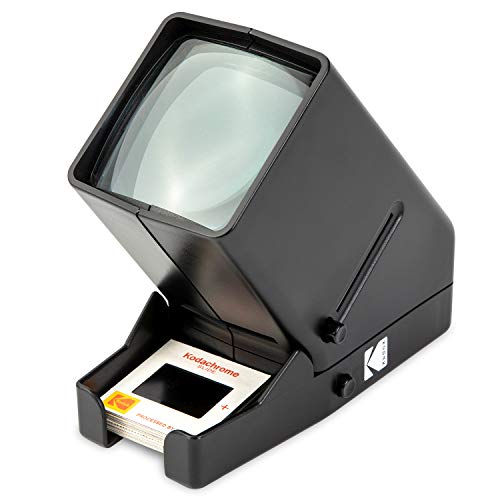
Kodak’s 35mm viewer also highlights 3X magnification and a bright LED light box to render slides and negatives with crisp detail. It’s tailored for personal memories and classrooms, offering a straightforward, affordable option for enjoying old media. The device is best for casual viewing or teaching demonstrations; for high‑volume archiving, a dedicated scanner will be more efficient. It emphasizes a simple, reliable user experience with no complex features to navigate.
Buying Guide
What should you consider when choosing a portable photo viewer?
- Screen size and image quality: Larger screens provide easier viewing, but increase size and weight. Look for at least 4.3″ displays with decent color accuracy for photo previews.
- Media compatibility: Ensure the device supports your source format (SD cards, slides, negatives, USB drives, etc.). If you want to digitize, prioritize scanners with built‑in saving options to SD cards or USB outputs.
- Power options: Battery operation offers true portability. USB power is convenient when you’re near a power source or a laptop, but plan for battery life if you’re in the field.
- Durability: Outdoor or travel use benefits from rugged housings, water resistance, and protective accessories like lanyards or reinforced casings.
- Ease of use: An intuitive interface and simple menus reduce setup time, especially in field conditions. Touchscreens can speed navigation but may require more care in dusty environments.
- Editing and organization: Some devices offer delete, rotate, or basic editing. If you need advanced editing, pair with a laptop or tablet after viewing.
- Connectivity and sharing: For home or gift use, features like Frameo Wi‑Fi sharing add value. In field devices, focus on local playback and quick transfer options.
FAQ
- What is the main difference between a photo viewer and a film/slide scanner?
Viewers primarily display content; scanners digitize negatives and slides into digital files. - Do these devices require a computer to operate?
Many are standalone, but some offer USB or SD card transfer to a computer if needed. - Is a larger screen always better for viewing slides?
Yes, for easier inspection; balance with portability and battery life. - Can I view 1080p video on these devices?
Several models support 1080p playback, though some prioritize still photos and slides. - Are waterproof or rugged models worth it for outdoor use?
Yes, in dusty, wet, or cold environments a rugged housing helps protect components. - Which device is best for archiving old negatives?
KODAK Slide N SCAN and similar film scanners are designed specifically for converting slides and negatives to digital files.