For convenient cardio tracking, compact devices that measure heart rate, oxygen saturation, or ECG readings can be essential. This guide highlights five portable options that are widely used with smartphones and offer quick results. Each product below is selected for accuracy, ease of use, and portability, helping you monitor heart health anytime, anywhere.
| Product | Brand | Key Feature |
|---|---|---|
| KardiaMobile 1-Lead EKG Monitor | AliveCor | Medical-grade 30-second EKG; smartphone app compatibility |
| KardiaMobile 6L EKG Monitor | AliveCor | Six-lead EKG for more detail; unlimited recordings |
| Zacurate Pro Series 500DL | Zacurate | SpO2, pulse rate with large LED display |
| EMAY Portable ECG Monitor | EMAY | ECG recording with USB/Bluetooth connectivity |
| Vibeat Fingertip Pulse Oximeter | Vibeat | High-accuracy SpO2 and pulse rate with alert features |
KardiaMobile 1-Lead EKG Monitor

The KardiaMobile 1-Lead EKG Monitor provides a pocket-size, medical-grade electrocardiogram in about 30 seconds. It is designed for on-the-go use with a simple workflow: place fingers on the sensor, open the Kardia app, and review results on a compatible smartphone or tablet. It detects common rhythms and conditions such as Atrial Fibrillation, Tachycardia, Bradycardia, and Normal Sinus Rhythm. The device supports unlimited recordings and makes sharing results with a clinician straightforward via email. A subscription option, KardiaCare, can offer additional detections and professional reviews, though it is not required for basic use.
Key considerations include device accuracy, ease of use without extra equipment, and compatibility with mobile devices. The 1-Lead format offers essential rhythm insight for many users while remaining highly portable and user-friendly for everyday health monitoring. This model is ideal for users who want a compact EKG solution without a subscription for routine checks.
KardiaMobile 6L EKG Monitor
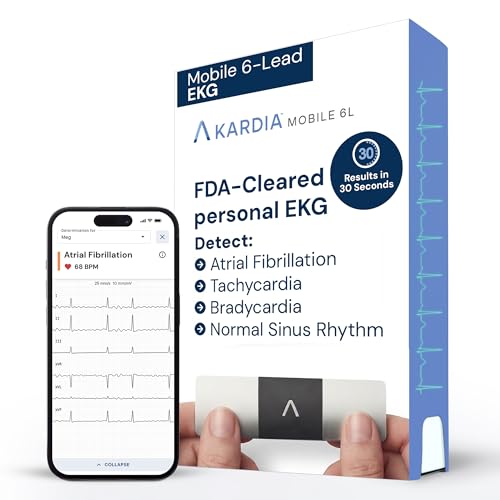
The KardiaMobile 6L provides six views of the heart, capturing a medical-grade six-lead EKG in about 30 seconds. This model delivers significantly more information than a single-lead monitor, enabling better detection of rhythm disorders and structural insights. It supports unlimited recordings and can email results to a clinician or caregiver via the free Kardia app. No subscription is required for the basic features, and Bluetooth connectivity allows straightforward pairing with most smartphones and tablets—no Wi-Fi or PC needed.
Users benefit from enhanced data with multiple lead perspectives, which can be valuable for ongoing monitoring, elderly care, or athletic training. The device remains compact and pocket-sized, focusing on portability while offering richer diagnostic detail than a 1-lead option.
Zacurate Pro Series 500DL Fingertip Pulse Oximeter

The Zacurate Pro Series 500DL is a reliable fingertip pulse oximeter that measures SpO2 (blood oxygen saturation) and pulse rate within about 10 seconds. It features a large LED display for easy reading and is designed for continuous use during activities like sports or hiking. The device is portable, uses standard batteries, and shows a full SpO2 value up to 100%. Its simple operation and clear output make it a popular choice for athletes, travelers, and home health monitoring.
Considerations for use include display readability in bright or dim lighting, battery life, and whether a large display improves usability for the intended user. This model emphasizes quick, durable readings in a compact form factor, suitable for everyday carry and travel.
EMAY Portable ECG Monitor
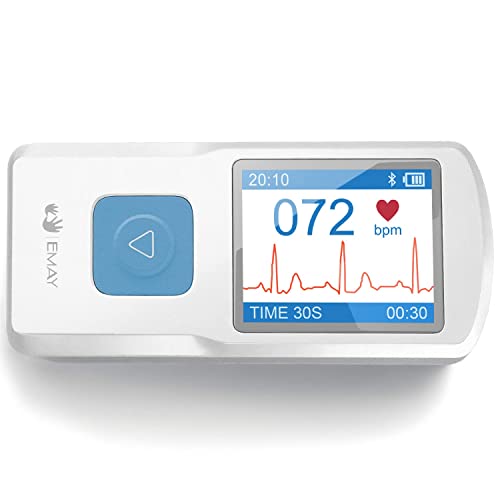
EMAY’s Portable ECG Monitor enables recording and storing Lead I ECG signals while displaying heart rate. It offers connectivity with PCs via USB and with mobile devices via Bluetooth, supporting both software PC and mobile applications for data review, time settings, uploads, and case reviews. This flexibility makes EMAY a practical option for home health monitoring or a clinician-assisted telehealth workflow. The device is compact and designed for portable use, aligning with a on-the-go health monitoring strategy.
Key considerations include data management options, compatibility with personal devices, and the availability of software features like case review and time-stamped recordings. EMAY emphasizes interoperability and ease of transfer for users who prefer an integrated digital health workflow.
Vibeat Fingertip Pulse Oximeter

The Vibeat Fingertip Pulse Oximeter provides a compact solution for tracking SpO2 and pulse rate, with an emphasis on accuracy through research-grade photoplethysmography. The device measures parameters quickly and displays results on an OLED screen, with a built-in alert system if readings fall outside preset thresholds. It ships with batteries and a lanyard for easy portability, making it suitable for travel, sports, or daily health monitoring. The device’s alert features can help users respond promptly to potential concerns during activities.
From a purchasing perspective, consider whether you need real-time alarms, battery longevity, and user-friendly displays. Vibeat highlights rapid measurements and proactive monitoring, which can be advantageous for users who want immediate feedback during exercise or travel.
Buying Guide: Key Purchase Considerations
- Intended use: Choose a device that matches your needs—simple SpO2/pulse rate tracking for travel or more advanced ECG capabilities for clinical monitoring.
- Measurement capabilities: Consider whether you need single-lead or multi-lead ECG, or just basic heart rate and SpO2 readings. Multi-lead options offer more detailed cardiac information.
- Ease of use: Look for one-button operation, clear displays, and straightforward data transfer to smartphones or PCs.
- Data management: Check whether the device supports easy sharing with clinicians, whether it stores multiple recordings, and if it integrates with dedicated apps.
- Connectivity: Bluetooth compatibility, app availability, and cross-device syncing can impact usability, especially for ongoing monitoring.
- Portability: Pocket-sized designs and lightweight builds enhance on-the-go use for travel, sports, or daily health tracking.
- Price and subscriptions: Some devices require optional subscriptions for advanced features; assess your needs to determine if a subscription adds value.
- Regulatory approvals: FDA-cleared or medical-grade devices generally offer higher reliability for personal health monitoring.
- Battery life and durability: For frequent travel, long battery life and robust construction reduce maintenance and replacement needs.
- Support and ecosystem: Consider brand support, software updates, and the availability of companion apps for data review and physician communications.
Overall, portable heart rate monitors vary from compact fingertip oximeters to more sophisticated ECG devices. When selecting, weigh the balance between simplicity, diagnostic detail, and data portability. For many users, a combination approach—one simple SpO2 monitor for daily checks and a separate ECG-enabled device for periodic rhythm assessment—offers a practical solution that fits an active lifestyle.