Looking for a reliable portable dvd burner to read, write, or back up data on the go? This guide highlights five compact, plug-and-play options that work with Windows, macOS, and Linux. Each pick is chosen for different user needs—whether you want ultra-slim portability, strong compatibility, or multi-function hubs. The following sections explain who benefits most from each drive and why they stand out.
| Product | Best For | Key Benefit |
|---|---|---|
| Amicool External DVD Drive | Frequent travelers and students | USB 3.0/Type-C, plug & play |
| Rioddas External CD/DVD Drive | Desktop workstations and mixed setups | Copper mesh tech for stable transmission |
| YOTUO External CD/DVD Drive | On-the-go professionals | Slim, dual USB 3.0 and USB-C |
| ORIGBELIE External CD/DVD Drive | Budget-conscious power users | USB 3.0 with broad OS compatibility |
| Ziweo External CD/DVD Drive | Travel light with multimedia needs | Dual interfaces, compact design |
Amicool External DVD Drive
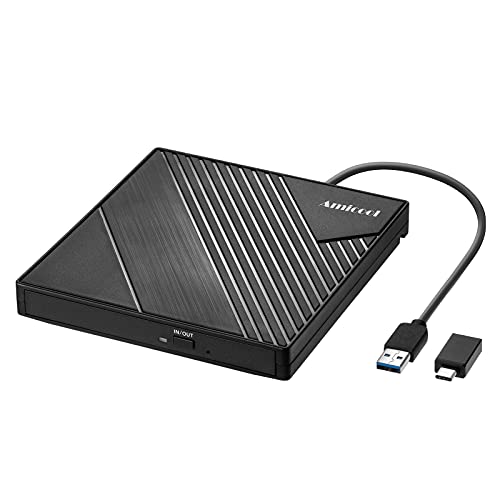
The Amicool model uses dual interfaces—USB 3.0 and Type-C—for data transfer up to 5Gbps. It supports DVD+R, DVD-R, CD-R, and CD-RW read/write, with a maximum DVD read speed of 8x and CD read/write up to 24x. It is plug-and-play and designed for computers, not TVs or standalone Blu-ray players. Best for: users who need fast, straightforward operation on laptops or desktops, especially when Type-C or USB-C connectivity is a priority. Caution: some systems may require direct USB port connections rather than hubs for stable power.
Rioddas External CD/DVD Drive
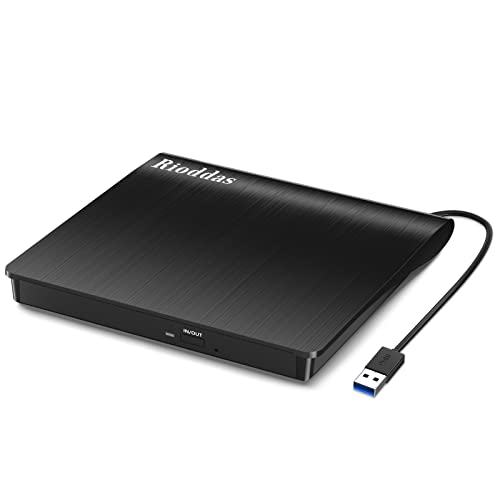
The Rioddas drive emphasizes easy setup with Plug & Play USB power and a back-of-desktop best-practice tip: use a high-power USB port on the motherboard. It connects via USB 3.0 (backward compatible with USB 2.0) for up to 5Gbps. A physical eject button helps recover discs even when the host computer won’t recognize the drive. Best for: desktop users who mix USB 3.0 and USB 2.0 peripherals and want robust fault tolerance. Limitation: does not specify Blu-ray support, so it’s focused on CD/DVD media only.
YOTUO External CD/DVD Drive

The YOTUO drive offers both USB 3.0 and USB-C, with a slim profile and a recessed cable design for easy packing. It reads DVDs up to 8x and CDs up to 24x, delivering up to 5Gbps data transfer. It ships with a compact form factor and a protective fleece pouch. Best for: mobile professionals and travelers who need a lightweight, stylish unit that remains powerful on the go. Limitation: desktop power supply considerations suggest connecting to a rear USB port to avoid power shortage on desktops.
ORIGBELIE External CD/DVD Drive
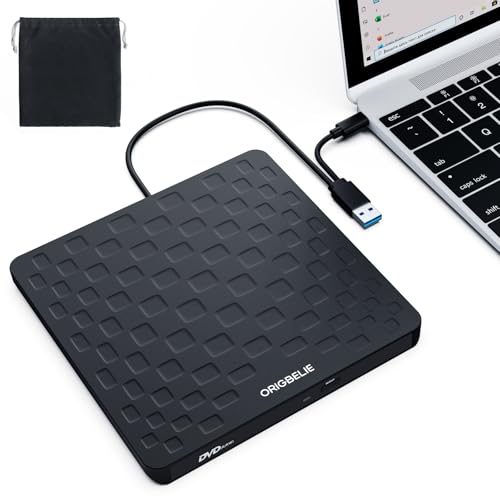
The ORIGBELIE drive is USB 3.0 capable, backward compatible with USB 2.0/1.1, and claims up to 8x DVD and 24x CD speeds. It supports Windows, macOS, Linux, and older OS versions, with power and data delivered through a single USB interface. Best for: users seeking broad OS compatibility and solid performance with a single-port setup. Caution: Mac users may need to ensure the system recognizes the device after inserting a disc.
Ziweo External CD/DVD Drive

The Ziweo drive provides USB 3.0 and USB-C connectivity, with no external power supply required in most setups. It boasts up to 8x DVD read/write and 24x CD read/write speeds, along with 5Gbps data transfer capability. It emphasizes a thin, travel-friendly design and wide compatibility with Windows, macOS, and Linux. Best for: travelers who value portability and dual-interface convenience. Limitation: the integrated cable is non-detachable, which may affect cable management in tight bags.
Buying Guide: Key Considerations For Portable DVD Burners
- Connection types: Look for USB 3.0 plus USB-C support for best transfer speeds and compatibility with modern laptops and desktops. Some models include dual interfaces for flexibility.
- Speed and media support: Check maximum read/write speeds (DVD and CD) and the formats supported. Most drives cover DVD±R/RW and CD-RW, but Blu-ray is usually not supported.
- Power requirements: Many drives are plug-and-play powered through USB. If you notice power issues on desktops, use a rear USB port or a powered USB hub.
- Portability: Slim profiles and recessed cables improve packability. Consider whether a protective case or pouch is included.
- OS compatibility: Ensure the drive lists support for Windows, macOS, and Linux if you work across multiple systems. Some require minor OS settings tweaks for full compatibility.
- Multi-function features: Some models offer USB hubs or card readers, which can be convenient for photographers or travelers transferring media from cameras.
Frequently Asked Questions
- Q: Do these drives play Blu-ray discs? A: No, the models listed primarily support DVD and CD formats. Blu-ray compatibility is uncommon in portable external drives.
- Q: Can I use these drives with TVs or gaming consoles? A: Most are designed for computers and may not work with TVs, game consoles, or standalone Blu-ray players.
- Q: Are Mac users guaranteed plug-and-play? A: Many drives advertise broad macOS compatibility, but some require system tweaks or driver considerations for certain macOS versions.
- Q: What if my computer doesn’t recognize the drive right away? A: Try connecting directly to a rear USB port on desktops, use a different USB port, or restart the computer with the drive connected.
- Q: Is it better to choose USB-C or USB-A only? A: USB-C offers direct modern compatibility on newer laptops; USB-A remains widely compatible. A dual-interface drive covers both needs.
- Q: Do these drives require external power adapters? A: Most are USB-powered and do not require separate power adapters, but a few models may benefit from a powered USB port in certain setups.