Answering the search intent directly: a port replicator docking station expands a laptop’s connectivity with multiple video outputs, USB ports, and charging power. These picks are best for professionals who need seamless external displays, fast data transfer, and a stable power delivery setup. Ideal buyers include remote workers, designers, programmers, and anyone upgrading from a basic laptop port. Below is a concise comparison and five well-suited choices with clear pros, limitations, and suitability notes.
| Product | Best For | Key Benefit |
|---|---|---|
| USB C Laptop Docking Station Dual Monitor 14-in-1 | Power users needing many ports | 4K displays, 100W PD, 10Gbps data |
| Anker 8-in-1 USB-C Hub | Compact multi-monitor setups | Dual 4K HDMI, SD/TF |
| Dell WD19S 180W Dock | Enterprise workflows | Stable, future-ready power |
| Dell Pro Dock WD25 | Dell-centric environments | 100W power, quad display |
| Dell E-Port Replicator PR03X | Legacy desk setups | Comprehensive port set |
USB C Docking Station 14-in-1 With Dual 4K Outputs

This dock expands a single USB-C/Thunderbolt port into 14 outputs, including 2 HDMI (4K), a DisplayPort (4K), Ethernet, SD/TF readers, multiple USB ports, and a 100W PD charger. It’s best for users who want high flexibility for external displays and quick data transfer. Note that some older or particular USB-C devices may not activate HDMI or DP fully.
Who this is best for: professionals needing two 4K monitors, fast file transfers, and robust charging for laptops such as Dell/Lenovo/HP lines.
Why selected: It delivers a broad port set in one hub, enabling rich multimedia output and fast USB data paths in a single setup.
Caution: Compatibility can vary with certain USB-C devices, which may limit HDMI/DP functionality with those units.
Anker Laptop Docking Station 8-in-1 USB C Hub

The Anker dock emphasizes versatility with 2 HDMI outputs, a 1Gbps Ethernet port, SD/TF card readers, and a generous 85W PD input. It supports 4K@60Hz on a single display or 4K@30Hz on dual displays. Best for: users who want reliable multi-monitor support without a bulky setup.
Why selected: It offers a solid balance of display output, data transfer, and charging in a compact form factor.
Caution: macOS users may see identical displays on both HDMI outputs, which may limit independent monitor usage in some configurations.
Dell WD19S 180W Docking Station

The Dell WD19S provides enterprise-grade connectivity with multiple video outputs and up to 180W power delivery through a single USB-C connection. It is designed to support future-ready docking and stable peripheral support in professional environments. Best for: corporate desks and teams needing dependable compatibility with Dell devices and similar ecosystems.
Why selected: Strong reliability for long work sessions and easy IT management in shared office spaces.
Caution: Some setups may require specific Dell configurations or compatible host devices to maximize power delivery and display outputs.
Dell Pro Laptop Docking Station WD25
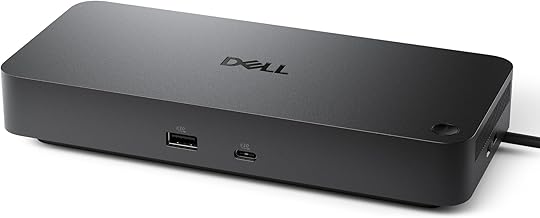
The WD25 dock emphasizes broad compatibility and robust power delivery up to 100W, with DisplayPort and HDMI outputs and multiple USB ports. It’s best for mixed environments that include non-Dell PCs and require stable docking with ample power. Best for: IT-managed offices using diverse hardware from different brands.
Why selected: Combines modern docking features with enterprise-grade power and easy compatibility management.
Caution: While versatile, some enterprise features may be more prominent in specific IT workflows and might require configuration for optimal use.
Dell E-Port Replicator PR03X

The E-Port Replicator PR03X provides a broad mix of legacy and modern ports, including USB, VGA, DVI-D, DisplayPort, and audio, along with a 240W power adapter. It is appropriate for older docking setups or environments requiring a mix of legacy video connections. Best for: users with older display hardware or a need for wide port variety.
Why selected: A trusted option for desk setups that still rely on a combination of VGA/DVI and newer digital outputs.
Caution: Newer laptops may benefit more from modern USB-C/Thunderbolt docks for cleaner cable management and higher bandwidth needs.
Buying Guide: Port Replicator Docking Station Essentials
What should I look for in a docking station?
Check the number and type of video outputs (HDMI, DisplayPort, and resolutions supported). Ensure USB ports and data transfer speeds meet your workflow, and verify USB-C Power Delivery wattage aligns with your laptop’s charging requirements.
Which features matter for dual or triple displays?
Look for docks that explicitly state dual 4K or triple display support and the bandwidth of the PCIe/USB-C connection. Note that some configurations may mirror rather than extend displays on certain operating systems.
Is power delivery important?
Power delivery (PD) lets the dock charge your laptop while in use. Choose a dock with wattage equal to or greater than your laptop’s charger rating to avoid charging slowdowns during heavy tasks.
Compatibility considerations
Some docks are optimized for specific brands (Dell, Lenovo, etc.). If you use non-brand devices, confirm compatibility with non-Dell PCs and whether macOS supports the desired monitor arrangement.
Portability versus capacity
Thin hubs are portable but may have fewer ports. Full-featured docks offer more connections but take up more desk space. Balance your need for ports with desk footprint and travel needs.
How to set up effectively
Connect the dock to one USB-C/Thunderbolt port on your laptop, connect displays and peripherals, and then plug in the power supply. Some layouts may require driver updates or OS-specific display settings to optimize performance.
Protection and reliability considerations
Choose docks from reputable brands to minimize driver conflicts and ensure enterprise-grade reliability for daily use. Consider a dock with a robust construction and good warranty support if you rely on it for critical work tasks.
FAQ
- Do all USB-C docks support 4K dual displays? Not always. Check the dock’s display specifications and ensure your host laptop supports DP Alt Mode and required bandwidth.
- Will a docking station charge my laptop while I work? If it has Power Delivery, yes, provided your laptop is compatible with the dock’s wattage.
- Can I use Ethernet with a USB-C dock? Yes. Most docks include an Ethernet port for stable wired networking.
- Are there compatibility issues with macOS? Some docks mirror displays on both HDMI outputs or have limited multi-monitor configurations. Verify macOS compatibility for your setup.
- Is it better to choose a Dell dock for a Dell laptop? Generally yes, for seamless hardware integration and enterprise features; however, many third-party docks work well across brands if they meet your port and power needs.