PID temperature controllers help regulate heat with precision across a range of projects—from brewing and ovens to incubators and kilns. Below are five popular options that cover different needs, including dual outputs, alarms, and compatible sensors. The following overview captures key features to aid in choosing a device that fits your setup and budget.
| Product | Brand | Key Feature |
|---|---|---|
| Inkbird PID Temperature Controller Kit | Inkbird | High voltage, alarm relay, K-type sensor, SSR support |
| PID Temperature Controller Kit (CGELE) | CGELE | Alarm output, 3/2-wire sensor support, SSR ready |
| PID Temperature Controller Kit (Coiliiot) | Coiliiot | Dual output: Relay & SSR, dual alarms, compact 48×48mm |
| PID Temperature Controller Kit (CNAODUN) | cnaodun | One-way SSR, multiple sensor inputs, alarm output |
| REX-C100 Digital PID Controller (DORHEA) | DORHEA | Expert self-tuning PID, SSR base plate with aluminum heat dissipation |
Inkbird PID Temperature Controller Kit
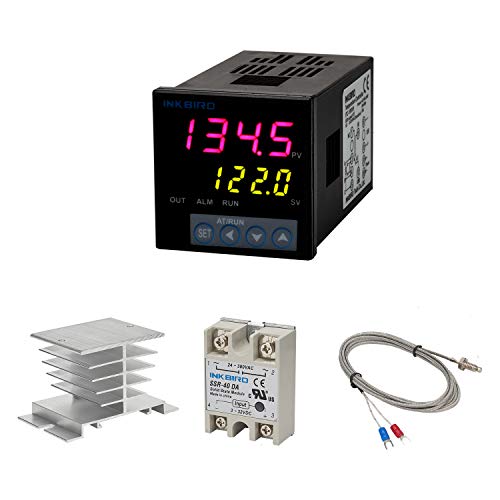
The Inkbird kit provides a robust PID temperature controller with high-voltage compatibility from 100V AC to 240V AC. It includes a Solid State Relay (SSR) 40DA, a K-type thermocouple, and a white heat sink. Features include an alarm output capable of signaling up to AC250V at 3A for resistive loads, with options for ON or NC configurations. It supports 3-wire or 2-wire sensors, which broadens compatibility with common thermocouples and PT sensors. An external SSR relay output is available, and the included 40DA SSR makes installation straightforward for many heating elements.
CGELE PID Temperature Controller Kit
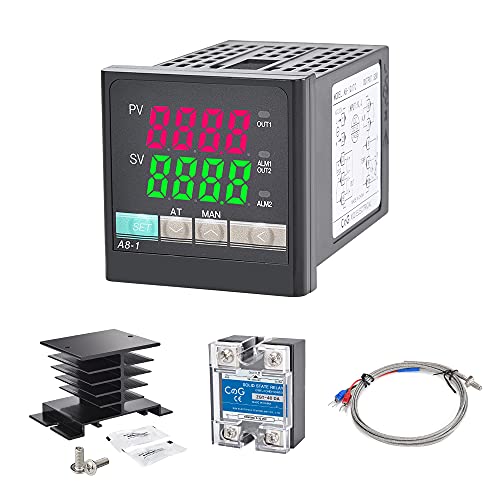
The CGELE kit targets versatile control with an alarm output suitable for buzzer signaling and supports 3- or 2-wire sensors, including various thermocouples and RTD options. It ships with a 40DA SSR for external SSR control. The device is designed for AC input within 100–240V and emphasizes compatibility with common sensor types while providing an alarm feature to prevent overheating or sensor faults.
Coiliiot PID Temperature Controller
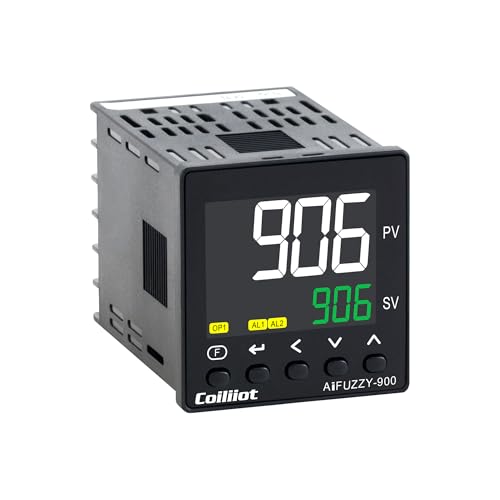
Coiliiot offers a dual-output PID controller with both Relay and SSR options, which provides flexibility for different heating setups. The unit supports up to 5A resistive loads, enabling direct control of small heaters without needing separate relays. It comes with a K-type thermocouple and mounting bracket, and uses a compact 48×48 mm 1/16 DIN panel, with dual alarms to help prevent overheating or device failure. Note that the SSR is not included in the package.
CNAODUN PID Temperature Controller Kit

CNAODUN’s kit centers on a 100–240 VAC power supply with a 40DA SSR included. It supports 3-wire or 2-wire sensors and can accommodate K-type, E, J, N, W3-25, W5-26 thermocouples, PT100 and Cu50 inputs. An alarm output is included for signaling faults or overheat conditions. This option emphasizes sensor versatility and an integrated approach to SSR-based control, suitable for DIY projects or small commercial appliances requiring reliable temperature management.
REX-C100 Digital PID Controller (DORHEA)

The DORHEA REX-C100 controller line focuses on advanced self-tuning PID for fast response, minimal overshoot, and precise temperature control across ranges such as 0–50 and 30–85% RH contexts. It combines a solid-state relay base plate made from aluminum to improve heat dissipation, enhancing SSR reliability. The device is well-suited for power, chemical, packaging, and oven-type applications where quick, repeatable temperature management is important. It integrates standard control and alarm features for safer operation.
Jaybva PID Temperature Controller

Jaybva’s unit supports Fahrenheit and Celsius display, offering a versatile temperature readout with a dual-output design that includes a relayed output and an SSR control line. It’s suitable for espresso machines, incubators, aquariums, and packaging machines, with input compatibility for TC/RTD sensors such as K, J, E, Pt100. The 48×48×80 mm enclosure size fits standard panel cutouts, making it a practical option for compact installations and projects requiring multiple control outputs.
Yosoo Health Gear MC901 PID Controller

The MC901 provides a digital PID with flexible display options for Celsius or Fahrenheit and a high-resolution 0.1° display. It includes both Relay and SSR outputs for versatile control of heating elements and cooling devices. The controller is designed to deliver precise temperature regulation with reliable performance, suitable for laboratories, food equipment, and industrial processes that require accurate temperature management.
AUBER 30-Program PID Controller

The AUBER unit features 30 programmable steps for ramp, soak, and other logic actions with standard PID control enhanced by fuzzy logic for stability. It supports display in Fahrenheit or Celsius, making it adaptable for a range of heater and processing equipment. This model is particularly useful for users who need structured automation sequences alongside temperature control.
Buying Guide
Key purchase considerations help align a PID controller with your application and budget:
- Output type: Choose between Relay, SSR, or dual outputs based on your heating element and reliability needs. Dual-output models offer more flexibility for complex systems.
- Sensor compatibility: Confirm support for K-type thermocouples, RTD sensors (Pt100, Cu50), and 2-wire or 3-wire configurations to match your existing sensors.
- Voltage range: Ensure the unit accepts your supply voltage (100–240V AC is common for global use) and verify SSR ratings for your load.
- Alarms and safety: Look for alarm relays or outputs that trigger audible alerts or external signaling to prevent overheating or sensor faults.
- Mounting and enclosure: Check panel size (often 48×48 mm) and available mounting brackets for a clean, secure fit in your project box or control panel.
- Installation notes: Some kits include all-in-one packages (controller, SSR, and thermocouple), while others require sourcing an SSR separately. Consider whether you want an all-in-one kit or modular setup.
- Ease of use vs. advanced features: Beginners may prefer simpler units with clear displays, while advanced users may seek self-tuning PID, soft-start options, and multi-point programming.
- Support and documentation: Availability of sensor compatibility charts, wiring diagrams, and customer support can influence setup success and troubleshooting.
When selecting, compare how each option handles sensor input, the presence of dual outputs or alarms, and how easy it is to integrate with existing equipment. For hobbyists and small workshops, kits with included thermocouples and SSRs simplify installation. For professional setups, consider models with advanced self-tuning, higher load capacity, and robust enclosures for long-term reliability.