Trail cameras have evolved into high-resolution observers of wildlife, property, and outdoor security. This guide focuses on cameras that deliver standout image quality, fast triggers, and reliable performance across daylight and night conditions. Below you’ll find five top choices with diverse power options, connectivity, and image capabilities to suit different setups and budgets.
| Product | Brand | Key Strength |
|---|---|---|
| MAXDONE Solar Trail Camera WiFi Bluetooth – 4K 64MP | MAXDONE | Self-contained power, high resolution |
| Fargarloo Trail Camera 4K, 120° Wide | Fargarloo | Broad angle, 4K video |
| Zivolixd Trail Camera with 60MP + 4K | Zivolixd | Cellular sharing, 60MP |
| Meidase P90 Pro WiFi Trail Camera | Meidase | WiFi, high-res, easy setup |
| SPYPOINT Flex-M Twin Pack Cellular | SPYPOINT | Cellular with free plan |
Whether you’re scouting game, monitoring a remote property, or documenting wildlife activity, the right camera balances power management, image fidelity, trigger speed, and ease of use. The products below are selected for clear daylight and夜time detail, reliable triggering, and practical connectivity options for American outdoor settings.
MAXDONE Solar Trail Camera 4K 64MP

MAXDONE’s unit emphasizes a self-contained setup, operating without home Wi-Fi connectivity. It creates a local hotspot for setup and file transfer, with a 10–15 m range in open space. A standout feature is the rechargeable 6000mAh lithium battery supported by solar charging and USB-C, enabling long-term field use. Its 4K resolution and 64MP stills deliver sharp daytime imagery and detailed video. The camera’s IP66 rating adds weather resistance for rugged outdoor use. With no subscription required, this model suits remote locations where solar power and reliability trump constant cloud-connected viewing.
Fargarloo Trail Camera 4K, 120° Wide
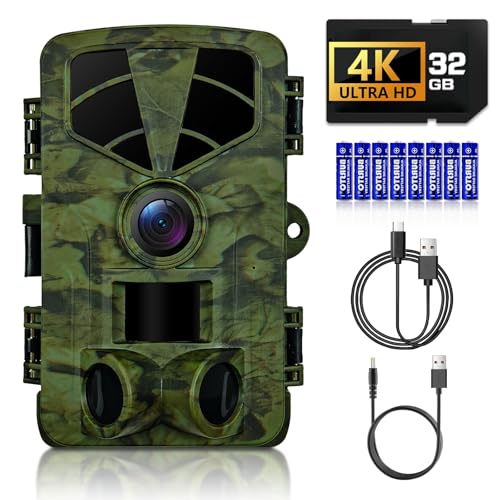
Fargarloo delivers a 4K video experience with a 120° wide-angle lens and 48MP imaging. The camera supports built-in storage (32GB) and has a 2.0″ color LCD for on-site review. Its dual night-vision capabilities use low-glow infrared LEDs to capture clear footage without startling wildlife. The IP66 rating ensures weather resistance for outdoor scouting or security uses, while the app-enabled control enables real-time adjustments and footage preview via Trailcam Go. The model balances wide field coverage and high-detail capture for active wildlife areas.
Zivolixd Trail Camera with 60MP & 4K Video

Zivolixd emphasizes cellular-ready sharing and high-resolution capture. The camera records up to 60MP photos and 4K video, and the package includes a 32GB SD card for immediate use. Its solar- or battery-powered operation supports flexible placements, and the model notes a 0.1s trigger in its feature set. While not elaborated here on connectivity specifics, the device is positioned for rapid, high-detail wildlife documentation and remote monitoring without heavy data demands if offline viewing is preferred.
Meidase P90 Pro WiFi Trail Camera

The Meidase P90 Pro combines 64MP stills with 1296p video, offering a high-detail daytime capture alongside no-glow night vision. It supports direct WiFi/Bluetooth pairing via the Meidase app for immediate previews and downloads, with a Bluetooth-enabled simple setup. The external antenna aids stability in remote locations, and the lack of a required subscription makes it suitable for quick deployments, field scouting, or property surveillance. The device emphasizes user-friendly on-site checks without cloud dependency, ideal for hunters and wildlife observers who value quick access to footage.
SPYPOINT Flex-M Twin Pack Cellular Trail Cameras

SPYPOINT’s Flex-M twin-pack focuses on cellular connectivity with a no-WiFi requirement, IP65 water resistance, and GPS features. It offers 28MP photo resolution and 720p video, with a free photo transmission plan and optional paid plans for larger needs. The system uses cross-carrier coverage to maintain connectivity in challenging zones and supports expansion with solar panels. The model is designed for ongoing, remote monitoring with easy activation and reliable data transmission, making it a solid choice for long-term wildlife tracking and property security where cellular service is available.
Buying Guide
Key factors to consider when choosing a trail camera for high-quality imagery and reliable operation:
- Image Resolution: Look for 60MP+ stills and 4K video for clear, detailed footage, especially in daylight. Some models pair high megapixels with advanced image processing to reduce blur.
- Trigger Speed and Recovery: A fast trigger (0.1–0.2 seconds) helps capture quick-moving wildlife. Recovery time determines how many shots you can get in a short window after an event.
- Night Vision: No-glow or low-glow infrared LEDs minimize disturbance to animals while preserving lighting at night. Consider range and image quality in low light.
- Power Source and Longevity: Solar charging, rechargeable batteries, and external power options extend field life. IP ratings (IP66/IP65) indicate weather resistance for outdoor deployment.
- Connectivity: Cellular models deliver remote viewing and alerts; WiFi/Bluetooth-only setups are fine for on-site control. Note any limitations about internet or cloud requirements.
- Storage and Transfer: Built-in memory (e.g., 32GB) plus support for larger cards; consider direct app transfer or on-device preview capabilities to reduce field downtime.
- App Ecosystem: A clear companion app improves ease of setup, live viewing, and firmware updates. Check compatibility with iOS/Android and supported file formats.
- Battery and Charging Modes: Rechargeable options and solar compatibility reduce maintenance costs and simplify long-term use in remote areas.
- Durability: An IP-rated enclosure and rugged construction ensure resistance to weather, dust, and wildlife interference in outdoor environments.
- Service Plans: Some cellular models require data plans. Compare pricing and plan features, including free photo transmission or tiered data, to fit usage.
Choosing the right camera depends on the balance between image fidelity, field durability, and deployment practicality. For users prioritizing top-tier daytime and nighttime detail with flexible power options, the five cameras highlighted above cover a spectrum of setups—from entirely solar-powered, stand-alone units to cellular-enabled, remotely accessible systems suitable for longer-term wildlife monitoring and security monitoring.