Finding a phone that accommodates hearing loss while remaining simple to use is essential for seniors. The following selections prioritize amplified sound, loud rings, captioned calls, large displays, and intuitive controls. Each model is evaluated for accessibility, connectivity, and usability to help caregivers and individuals choose confidently.
| Product | Brand | Key Accessibility Feature |
|---|---|---|
| CapTel 2400iSPNBT | Hamilton | 40dB amplification, captioned calls on large touch screen |
| SN5147 Amplified | VTech | Up to 90dB ringer, 50dB audio assist, call blocking |
| SN1127 Amplified | VTech | 90dB ringer, +40dB audio booster, large, high-contrast keypad |
| Serene Innovations Big Button | Serene Innovations | 85dB ring, large photo speed dials for memory support |
| Clarity P300 | Clarity | 26dB amplification, adjustable ringer, easy-to-use design |
Hamilton CapTel 2400iSPNBT Captioned Telephone

The Hamilton CapTel 2400iSPNBT provides captioned conversations and amplified audio for hearing-impaired users. Its large touch screen displays captions in real time, helping ensure critical words are understood during calls. The device supports up to 40dB amplification gain and includes Wi-Fi connectivity, answering machine functionality, and a speakerphone for hands-free conversations. An easy-to-navigate interface is designed for seniors, with the option to use internet-based service or traditional telephone lines where available. FCC-certified for U.S. residents with hearing loss.
VTech SN5147 Amplified Corded/Cordless Senior Phone

This model combines corded and cordless versatility with significant amplification and smart call management. It offers up to 90dB extra-loud visual ringer and up to 50dB audio assist, helping users hear conversations more clearly. The smart call blocker automatically prevents robocalls from ringing, and one-touch blacklisting supports easy management of unwanted calls. Photo dial enables quick, visual speed dialing by attaching familiar photos to numbers.
VTech SN1127 Amplified Corded Answering System
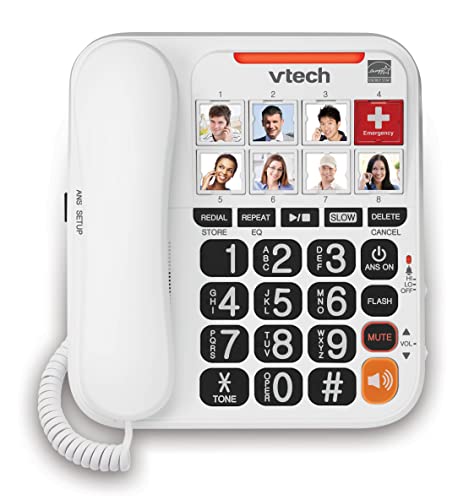
Designed for visibility and ease of use, the SN1127 offers a 90dB ringer and a +40dB audio booster for clearer speech. It includes 8 photo speed dial keys and a dedicated emergency speed dial, helping seniors reach loved ones or caregivers quickly. The system also features a digital answering function with slow playback, allowing messages to be listened to at a comfortable pace, which is helpful for users who need slower speech.
Serene Innovations Amplified Big Button Phone

This phone emphasizes memory and accessibility with oversized, clearly labeled buttons and up to 85dB ring strength. It supports 1-touch speed dialing using pre-stored photos, aiding visual memory. The large buttons simplify dialing for users with limited dexterity, while the high-volume ring helps overcome background noise and hearing challenges. It also targets dementia-friendly use with simple, reliable operation.
Clarity P300 Landline Phone

The Clarity P300 focuses on essential amplification and customization. It offers adjustable ringer pitch and volume settings, alongside a 26 dB amplification level to improve spoken clarity. The device features a straightforward, big-button design that remains accessible for users with dexterity or vision challenges. It remains a practical option for seniors seeking a straightforward, reliable hearing-impaired phone with reliable performance.
Home Intuition Big Button Corded Phone
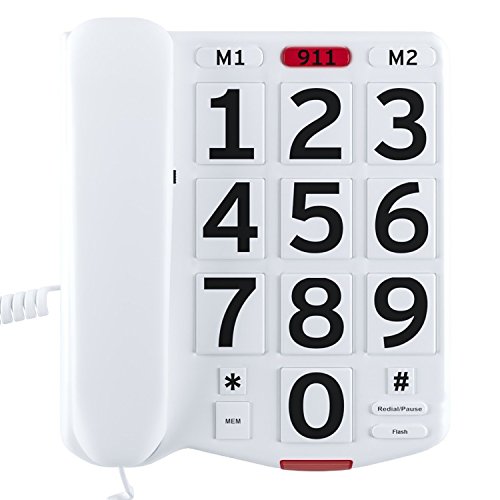
This corded option emphasizes a classic design with large, easy-to-see number buttons and a practical receiver volume control. It complies with FCC Part 68 requirements under the Hearing Aid Compatibility Act, ensuring compatibility with hearing aids. The volume control is user-accessible from the handset, making it a sensible choice for users who need straightforward adjustments without navigating complex menus.
Sacumea Large Button Phone for Seniors

The Sacumea model provides a large, highly visible keypad with an amplified ring, focusing on straightforward dialing for users with limited vision. It includes memory functions and a flashing indicator light to alert users to incoming calls, complementing the high-volume handset. It is designed to reduce confusion and improve reliability for everyday use by seniors with hearing or visual impairments.
Buying Guide: Key Purchase Considerations
- Amplification levels: Look for models offering 40dB or more of audio boost to improve intelligibility during conversations.
- Ringer loudness and types: A strong external ring (e.g., 85dB+) and visual indicators help users notice incoming calls in noisy environments or with severe hearing loss.
- Captioning and display: Captioned calls or large, high-contrast displays assist with understanding spoken words in real time.
- Dialing ease: Large buttons, memory-speed dials with photos, and simplified menus reduce frustration and errors.
- Connectivity and compatibility: Assess whether the phone supports landline, VoIP, or both, and confirm compatibility with the user’s existing service provider.
- Ease of setup and ongoing use: Favor devices with straightforward installation, minimal required maintenance, and clear user guides.
- Additional features: Consider answering machines, call blocking, and Bluetooth or Wi-Fi capabilities if they align with daily needs.
- Safety and accessibility: Devices with emergency speed dials, photo dialing, and large visual interfaces offer enhanced safety for seniors living alone.
Buying Guide: Depth of Options and Perspectives
When selecting a phone for hearing-impaired seniors, it helps to compare devices that emphasize different accessibility aspects—captioning, amplification, and physical usability. Some users prioritize captioned conversations for accuracy in unfamiliar words, while others need maximum loudness and an ultra-simple interface. Corded options may be preferred for those who value reliability, while cordless or Wi-Fi-capable models suit households with flexible layouts. For caregivers, features like fast-dial photo buttons and robust call blocking can reduce daily stress and accidental calls. Always verify the device’s compatibility with local service providers and ensure it meets your household’s daily routine.
Buying Guide: Summary of Key Trade-Offs
- Captioning vs. amplification: Captioning helps comprehension, amplification improves volume. Some models blend both.
- Corded vs. cordless: Corded phones remain reliable during outages; cordless add mobility but may require charging.
- Complexity vs. simplicity: More features can aid accessibility but may increase setup time. Choose based on user comfort with technology.
- Visual aids: Large screens and high-contrast displays reduce strain; photo speed dials aid memory and quick calls.
- Service compatibility: Ensure the device supports your existing landline, VoIP, or hybrid setup and any required services.