Finding the right phone for someone with Alzheimer’s or dementia means prioritizing simplicity, large buttons, memory dialing, and reliable amplification. The following selections are designed to support independence, reduce frustration, and safeguard wellbeing by offering one-touch calling, clear audio, and visible cues. This guide compares five models by ease of use, memory options, hearing compatibility, and emergency features to help families choose confidently.
Summary of Selected Products
- Sacumea Telephones for Seniors with 9 Photo Memory Keys – One-Touch Dial, 110dB+ Amplified Ringer
- Sacumea Extra-Loud 110dB Landline Phone – 3 Photo Speed Dial, Hearing Aid Compatible
- SMPL Big Button Phone for Seniors – 3 Photo Memory Keys, Large Buttons, High Adjustable Volume
- KidsConnect Secure Phone 4G GPS Tracker – Cellular Phone for Seniors with Tracking
- iSoHo Big Button Corded Phone – Lighted Keypad, No Power Needed, Visually Impaired Friendly
Sacumea Telephones for Seniors with 9 Photo Memory Keys
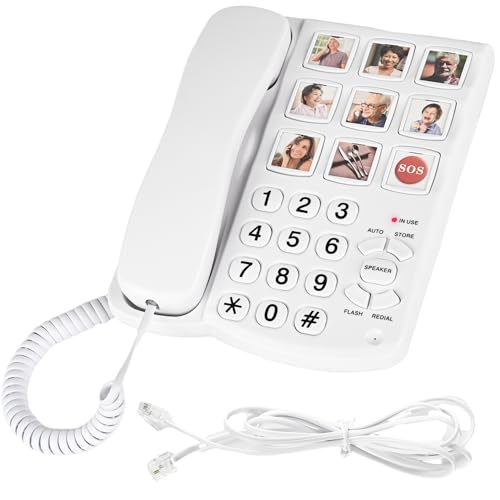
Designed for dementia care, this corded landline prioritizes accessibility with nine dedicated memory keys for one-touch dialing. Family, friends, and emergency contacts can be stored for immediate access. The device also supports memory expansion with additional two-button dialing options, boosting independence. The handset delivers clear audio, and its hands-free mode reduces fatigue while cooking or multitasking. The combination of photo-macros, simple programming, and large key layout addresses common challenges faced by Alzheimer’s patients and their caregivers.
Key features include: nine photo memory keys for quick dialing, straightforward four-step setup, high-volume speaker, and robust compatibility with visually impaired users. This model emphasizes reliable, respectful communication without overwhelming the user with menus or complex options. Its design aligns with in-home care routines, supporting both daily check-ins and urgent calls when needed.
Sacumea Extra-Loud 110dB Landline Phone

This large-button corded phone prioritizes audibility for seniors with hearing challenges. It features three photo speed dial keys, 10 two-touch memory slots, an adjustable ringtone volume, a call indicator light, and hands-free capability. The receiver provides up to 80dB+ of volume, while the ringer can reach 110dB+, ensuring messages are heard clearly. It’s fully compatible with hearing aids, supporting clear comprehension during conversations. The built-in photo buttons enable quick dialing for dementia care and visually impaired users, reducing confusion during calls.
Pros include high-volume customization, dependable corded operation, and a design tailored to dementia-friendly use. The color and layout emphasize legibility, while the photo memory keys support recognition and memory recall. This model is well-suited for emergency contacts and family communication, offering reliable performance with minimal setup.
SMPL Big Button Phone for Seniors

This simple corded landline highlights three memory keys with photo labels for quick connections to important contacts. Large, easy-to-read buttons reduce dialing errors, making it suitable for users with dexterity issues or visual impairments. The phone also provides a fixed high-volume handset and ringer, giving caregivers confidence that essential calls are heard. The design emphasizes ease of use over features, aligning with dementia care requirements where simplicity matters most.
Highlights include photo-based memory keys, prominent dial pad, and adjustable handset ringer. It supports steady communication with family and caregivers, while avoiding unnecessary complexity. For environments prioritizing straightforward operation, this model offers a clear and dependable option.
KidsConnect Secure Phone 4G GPS Tracker

This cellular phone model is designed for seniors and individuals requiring tracking and safety features. It includes a SIM card and 4G GPS capability, enabling location monitoring and emergency alerts. The device emphasizes safety by providing a dedicated tracking function, ensuring caregivers can verify the user’s location. It operates without Internet access for apps or games, reducing distractions and potential confusion. A required cellular plan is part of the setup, ensuring reliable connectivity when needed most.
Considerations include the need for a separate cellular plan, potential monitoring requirements, and ensuring the user is comfortable with a mobile device. While it adds mobility and safety, it may be less suitable for those who prefer a stationary home-based phone with simplified dialing. It serves as a useful option when location awareness is a priority for caregivers.
iSoHo Big Button Corded Phone

This retro-style corded phone reintroduces classic design with modern usability. It features a lighted keypad for visibility, a sturdy ergonomic handset, and no need for power or batteries beyond the landline. The device is well-suited for visually impaired users and dementia care by offering a reliable, straightforward dialing experience. Its compatibility with wall-mounting or desk placement offers flexible setup in various living spaces, while the absence of wireless components reduces potential confusion from digital interfaces.
Strengths include a reliable corded connection, illuminated keys for easy dialing, and a design that minimizes fatigue. It provides a familiar, non-distracting option for seniors who value traditional layouts and clear audio without the complexities of modern smartphones.
Buying Guide: Key Purchase Considerations
- Memory dialing and photo keys: For Alzheimer’s or dementia, memory-based speed dials help identify trusted contacts quickly and reduce dialing errors.
- Audibility and hearing compatibility: Look for high ringer volume, adjustable handset volume, and compatibility with hearing aids to ensure conversations remain clear.
- One-touch and emergency access: Devices with single-button or photo-assisted dialing, plus explicit emergency contact options, provide safety and peace of mind for caregivers.
- Ease of setup and maintenance: Choose simple programming steps, visible labels, and minimal required steps to manage contacts and settings.
- Corded vs. wireless: Corded phones reduce confusion from menus and charging hassles, offering reliable operation in a stationary home environment.
- Visual accessibility: Large buttons, high-contrast displays, and illuminated keys help users with visual impairments or aging eyesight.
- Phone type fit: Consider whether a landline, cellular, or GPS-tracked device best supports the user’s daily routine, mobility, and supervision needs.
- Safety features: SOS or quick-dial emergency options, and the ability to pre-program critical numbers, are valuable for urgent situations.
- Caregiver integration: Some models provide location or contact monitoring that helps caregivers stay connected and informed without intruding on autonomy.
Overall, the best choice depends on individual needs, including the person’s ability to press buttons, hear conversations, recognize contacts, and manage daily routines. A combination approach—one primary device for home use and a secondary, simple mobile option for outings—can offer comprehensive support for both users and caregivers.