When upgrading PC audio, PCI/PCIe sound cards are a reliable way to improve clarity, dynamic range, and surround sound without relying on motherboard codecs. This guide highlights five PCI sound cards that deliver distinct advantages for gamers, audiophiles, and content creators. Each option is chosen for clear audio, flexible connectivity, and upgrade potential within a mid-range budget. Read on to find which card fits your setup and listening goals.
Summary table of selected products
| Product | Brand | Key Strength | Best For | Notes |
|---|---|---|---|---|
| Creative Sound Blaster Audigy FX V2 | Creative | Solid budget upgrade with classic features | General gaming and multimedia users on a budget | Entry-level, reliable performance |
| Creative Sound BlasterX AE-5 Plus | Creative | Hi-res DAC, discrete headphone amp | Hi-fi gamers and headphone enthusiasts | High dynamic range, robust software |
| Creative Sound Blaster AE-7 | Creative | Discrete Xamp bi-amp, 127 dB DNR | Audiophiles and demanding listeners | Advanced hardware for precise sound |
| Creative Sound Blaster Z SE | Creative | 24-bit/192 kHz, 116 dB SNR | Surround sound setups and streaming | Excellent value with strong features |
| Optimal Shop PCIe Sound Card | Optimal Shop | 5.1 channel output, low profile | Compact builds needing surround sound | Budget-conscious option |
Creative Sound Blaster Audigy FX V2

The Audigy FX V2 targets budget-conscious builders who want reliable, straightforward PCIe audio without complex setup. It provides basic 5.1/7.1 capability and reliable drivers. Best for users who want a simple upgrade from motherboard audio and plan to use standard speakers or basic headsets.
Best for: casual gamers, students, and daily multimedia users who seek improved clarity over integrated audio without high-end features.
Limitation: Designed as a budget option; it lacks the premium DACs and advanced headphone amplification found in higher-end models.
Creative Sound BlasterX AE-5 Plus
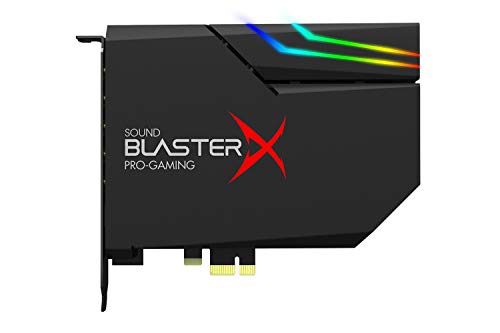
The AE-5 Plus combines a high-quality SABRE32 DAC with a dedicated Xamp discrete headphone amplifier and 5.1/7.1 surround capabilities. It supports Dolby Digital Live and DTS encoding for broad output options, and its 122 dB DNR focuses on pristine audio for both gaming and movies. This card is ideal for audiophiles who want vivid, expansive sound without stepping up to a fully external DAC setup.
Best for: gamers and music lovers who want hi-res playback (up to 32-bit/384 kHz) and a powerful internal headphone amp for high-impedance headphones.
Limitation: The feature set can be overkill for casual listeners and may require software tuning to maximize surround virtualization.
Creative Sound Blaster AE-7 Hi-Res PCIe
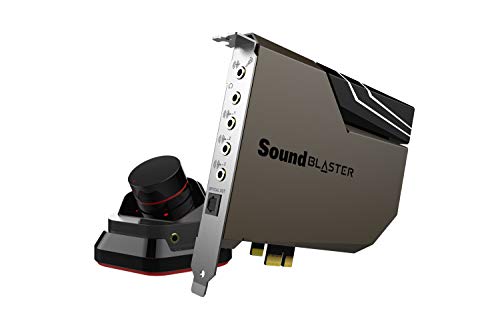
The AE-7 offers top-tier audio fidelity with the ESS SABRE-class 9018 DAC and a robust Xamp bi-amp headphone stage. It supports discrete multi-channel outputs and features a high 127 dB DNR, making it a strong choice for serious listening and critical gaming audio. It also includes a convenient Audio Control Module for quick access to controls. Best for: audiophiles and power users who demand precise, clean sound with substantial headroom.
Limitation: High-end features come at a higher price point and may be underutilized in basic PC audio setups.
Optimal Shop PCIe Sound Card

This PCIe card from Optimal Shop is designed for compact builds, featuring a low-profile bracket suitable for 2U cases and a straightforward 5.1 stereo output. It’s a practical option for users upgrading an older PC without a large PCIe slot footprint. Best for: small form-factor systems and those seeking a simple step up from on-mboard audio with multi-channel output.
Limitation: It may not deliver the same level of modern DAC quality or expansive software control found in premium Creative models.
Buying Guide
What to consider when choosing a PCI sound card
- Outbound channel support: Do you need 5.1/7.1 surround or stereo-only output? Some cards excel in multi-channel music and games, while others focus on stereo purity.
- Digital and analog outputs: Check for optical/Coax SPDIF, line-in, mic-in, and headphone outputs. Headphone amps are important if you use high-impedance headphones.
- DAC and SNR specifications: Higher bit depth and sampling rates typically indicate better audio quality, but real-world results depend on the overall design and drivers.
- Headphone amplification: Dedicated Xamp or similar discrete headphone stages improve drive for demanding headphones (often up to 600 Ω). This matters for audiophiles with high-impedance cans.
- Software and customization: Software suites that offer EQ, virtual surround, and game-specific profiles help tailor audio to your preferences.
- Form factor and compatibility: Ensure the card fits your case and motherboard layout. Low-profile brackets are essential for compact builds.
- Future-proofing: If you plan to upgrade other components, consider cards with broad driver support and ongoing software updates.
Frequently Asked Questions
- What is the main difference between a budget PCI sound card and a premium model?
Answer: Premium models typically offer higher SNR, better DACs, discrete headphone amps, and more advanced surround processing, resulting in cleaner audio and clearer detail, especially at high volumes. - Do I need a PCIe slot for these sound cards?
Answer: Yes. All listed models use PCIe or PCI interfaces. Verify your motherboard has the appropriate slot and available space in your case. - Can a PCI sound card improve gaming audio significantly?
Answer: Yes, especially for those who use dedicated speakers or high-quality headphones. Surround virtualization and dedicated DACs can provide more precise positioning and dynamic range than basic onboard audio. - Is it worth choosing a card with a high-end DAC for casual listening?
Answer: For casual listening, the improvement may be noticeable but subtler. Audiophiles benefit more from Hi-Res DACs and powerful headphone amplification. - Do these cards work with typical PC speaker systems?
Answer: Many do. Ensure the card provides the appropriate discrete or virtual surround options for your speaker setup and that you have compatible connectors. - Are drivers important for gaming performance?
Answer: Yes. Reliable drivers ensure low latency and stable performance in games, plus access to software features like EQ and surround profiles.