Answering the question, these OCf dipole antennas are designed to maximize performance across bands with dipole layouts and balanced-to-unbalanced (balun) options. They appeal to amateur radio operators seeking straightforward, scalable, multiband performance, especially those planning to run on 40/80/160 meters or multiple bands with a single tuner. This guide covers five strong picks, noting who benefits most from each design and where trade-offs occur. A quick at-a-glance table follows to help you compare key points side by side.
| Product | Best For | Band Coverage (typical) | Notes |
|---|---|---|---|
| RadioWavz DX40 Off Center Fed | DX contesters and multi-band operators | 40m, 20m, 10m, 6m | Off-center fed design with tuner help |
| DX160 RADIOWAVZ WINDOM 160M | Low-band enthusiasts | 160m, 80m, 40m, 20m, 10m | Longer end-to-end for wide coverage |
| WINDCAMP Gipsy 5-50MHz HF Dipole | General HF mobile/home use | 5-50MHz | Waterproof balun, weatherized |
| Procomm Dipole Mount | DIY dipole bases | Two mobile sticks compatible | Base mounting, versatile configuration |
| GOOZEEZOO 1:1 Balun Dipole | Balanced-to-unbalanced reliability | 1:1 balun, 1-50MHz | High power handling and broad bandwidth |
RadioWavz DX40 Off Center Fed (OCF) Dipole

The DX40 is an off-center fed dipole designed for multiple bands with practical tuner support. It is described as offering outstanding performance on all bands when paired with a tuner and built to withstand the elements. This makes it a strong choice for DX contesters who operate from varied locations and need reliable, portable multi-band capability. The design emphasizes robustness and field readiness, aligning with operators who travel or face challenging weather conditions.
Who best benefits: Operators chasing multi-band capability with portable or field setups, especially those who value contest-ready performance and weather resistance.
Why selected: Its off-center fed design supports multiple bands without requiring a full multi-wire feed system, simplifying deployment while still delivering broad band coverage.
Limitation: As with many OCF designs, exact SWR or performance will depend on height and nearby structures; a tuner is typically helpful for the non-resonant portions of some bands.
DX160 RADIOWAVZ DX (OCF) WINDOM 160M
The Windom 160M version extends to 160 meters and covers 160/80/40/20/10 meters, typically usable without a tuner on several bands. Its expansive end-to-end width (around 246 feet) and the use of UV-insulated stranded wire emphasize outdoor durability and broad resonance across a wide HF spectrum. A notable feature is its solid power handling for SSB/PEP operations, which makes it attractive for dedicated HF operators.
Who best benefits: Serious HF operators who want a broad banded solution that can be deployed outdoors with long wire elements.
Why selected: The inclusion of wide band coverage up to 160 meters and a tall operating bandwidth makes it a strong all-around HF option for those who have the space to accommodate a longer dipole.
Limitation: The long end-to-end dimensions mean installation space is a critical factor; does not inherently include a built-in tuner for all bands.
GOOZEEZOO Dipole Balun Antenna 1:1

This dipole-focused balun antenna centers on high reception sensitivity and stable performance across 1-50MHz ranges by providing a robust balun function and high power handling. The claimed improvements in signal integrity stem from better balanced-to-unbalanced conversion, reducing common noise paths and enabling clearer reception on crowded HF bands.
Who best benefits: Operators seeking reliable, broad-band reception with a straightforward dipole approach and a strong balun design for reduced common-mode noise.
Why selected: The 1:1 balun design supports a variety of dipole configurations, offering dependable performance across a broad a frequency range and improved signal stability.
Limitation: The description emphasizes reception and noise reduction; for transmitting on noisy or highly loaded environments, ensure your antenna layout and legal power handling align with local regulations.
Procomm Dipole Mount
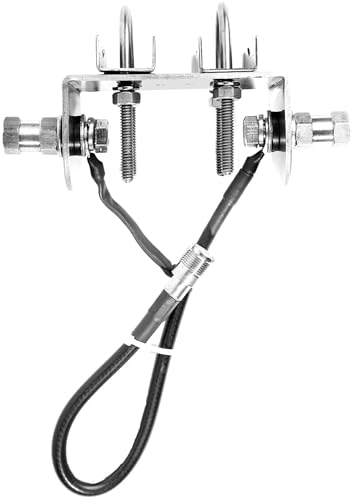
The ProComm Dipole Mount provides a foundation to build a dipole-based base antenna from two mobile sticks. It includes heavy-duty coaxial cable pigtail and stainless mounting hardware, enabling a sturdy home-built dipole setup for vertical or horizontal configurations. This is a practical choice for DIY enthusiasts who want a reliable mounting solution with clear assembly steps.
Who best benefits: Builders who want a solid base for a dipole using readily available mobile elements and a robust mounting system.
Why selected: It enables flexible dipole construction with a durable mounting solution, making it easier to implement in a fixed location or on a trailer/vehicle mount.
Limitation: The product is a mounting system rather than a complete antenna; performance will depend on the user’s specific dipole and installation quality.
Fancasee Universal FM Antenna Dipole

This FM-focused dipole-style antenna aims to improve FM radio reception indoors with a 75-ohm coax arrangement and a flexible connector kit. While not a dedicated ham HF option, it showcases how dipole concepts extend into household audio applications, with broad connector compatibility designed to fit common receivers and AV gear.
Who best benefits: Indoor listeners who want a simple, broadly compatible dipole-based signal improvement for FM radio setups.
Why selected: Demonstrates the versatility of dipole-based antennas beyond HF bands and demonstrates how 75-ohm coax and various connectors can be used in real-world indoor environments.
Limitation: It is not a true HF or multi-band ham antenna, so use cases are narrower for amateur radio contexts.
Antennas Direct VHF Accessory Kit
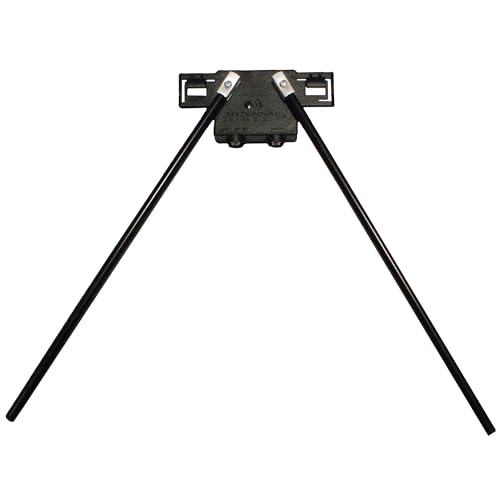
The Antennas Direct VHF Accessory Kit enhances VHF reception for TV antennas and may be used to complement certain mast-mounted setups. It includes a built-in combiner and a weatherproof design for both indoor and outdoor use, expanding signal capture in varied environments. It’s useful for multi-purpose installations that integrate VHF signals with other antenna configurations.
Who best benefits: Users installing VHF TV or related signals who want a weatherproof accessory to improve VHF reception in challenging terrain.
Why selected: Represents how practical, weatherproof accessories can support broader broadcast reception alongside amateur radio implementations.
Limitation: This kit targets VHF TV signals rather than dedicated HF ham bands, so it’s primarily supplementary in nature for ham setups.
Buying Guide: OCFDipole Antennas — Key Considerations
- How much outdoor space can you dedicate? OCF and Windom designs often require wide horizontal spans or tall vertical orientation to maximize bandwidth. Measure available height and clearance to avoid near structures that alter resonance.
- Do you want broad HF coverage or strong performance on a few bands with a tuner? OCF designs can reduce feedline complexity, but exact SWR will depend on height and nearby objects.
- Some models work with tuners to reach non-resonant bands. If you already own a high-quality tuner, an OCF solution that benefits from it can be attractive; otherwise, choose a model designed for tune-free operation on several bands.
- Outdoor deployments need weather resistance. Look for UV-resistant wire, waterproof baluns, and corrosion-resistant hardware, especially in coastal or humid environments.
- DIY-friendly options with mounting hardware and clear instructions reduce setup time. Consider included pigtails, connectors, and the availability of replacement parts.
- Confirm antenna and balun power ratings align with your transmitter. High-power operations require robust balun designs and proper clearances to avoid RF exposure issues.
Frequently Asked Questions
- What is an OCFDipole antenna? It is a dipole antenna fed with an off-center feed to broaden multi-band capabilities and often used with a tuner for additional bands.
- Do I need a tuner with an OCF dipole? Some configurations work well with a tuner, while others provide acceptable SWR across several bands without one. It depends on height, spacing, and installation.
- What space considerations are important? A longer dipole requires more horizontal or vertical space. Ensure there are no nearby power lines or tall structures that can detune the antenna.
- How do I choose among the options? Consider band goals, installation space, budget, and whether you prefer a ready-made unit or a DIY mounting solution.
- Can these antennas improve DX capability? Yes, multiband dipole designs can enhance DX opportunities by resonating on multiple bands, increasing efficiency on long-distance paths when correctly installed.
- Which is best for a beginner? A user-friendly model with clear mounting hardware and good tuner compatibility, like a complete package with mounting hardware, can be easier for beginners to deploy.