Maximize productivity with a single docking station that expands ports, powers your laptop, and drives multiple displays. This guide reviews five top notebook docking stations that support Windows, macOS limitations noted, and a range of display configurations. Each option prioritizes robust USB-C connectivity, high-speed data transfer, and strong power delivery to keep laptops charged during intensive tasks. Below, you’ll find a quick comparison table and detailed product sections to help American readers choose the best docking solution for work, study, or creative projects.
| Product | Brand | Key Benefit | Display Capabilities |
|---|---|---|---|
| Anker Nano Docking Station | Anker | 13-in-1 with detachable hub | Triple display via main dock + hub |
| Baseus Spacemate 11-in-1 | Baseus | Efficient triple monitor extension | 3-monitor support (4K) |
| RayCue 15-in-1 Dock | RayCue | Smart LED status, large port set | Triple 8K/4K options |
| TobenONE 18-in-1 Dock | Tobenone | Most ports in one hub | Triple 4K display |
| Acer Premium 13-in-1 Dock | Acer | 110W PD, triple display | Triple 4K/DSC capable |
The following five products were selected for broad compatibility, extensive port options, and strong power delivery. Each section includes a concise overview, the required imagery, and essential features drawn from product listings.
Anker Nano 13-in-1 Docking Station
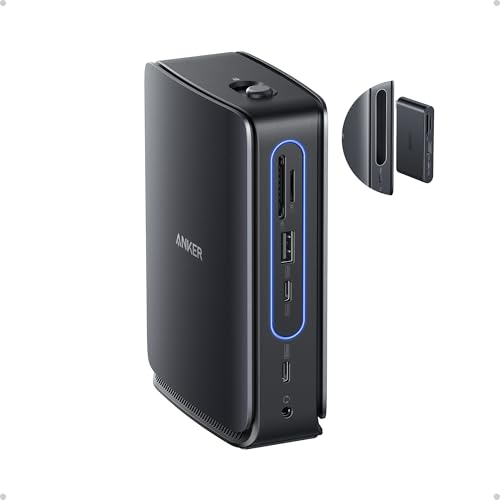
Anker’s 13-in-1 docking solution includes a detachable hub for on-the-go use and a main dock for a full desktop setup. It provides a USB-C upstream, two USB-C data ports, three USB-A data ports, dual HDMI and DisplayPort outputs, Ethernet, audio, SD/TF card readers, and a DC power input. The detachable 6-in-1 hub adds essential ports for travel. On macOS, video output is limited to the HDMI/DP paths, with USB-C not supporting video when used alone.
VVB USB C Docking Station 14-in-1

This 14-in-1 docking station expands a laptop into a versatile hub with 2 HDMI ports (4K), DisplayPort, 100W USB-C PD, Ethernet, USB-C and USB-A ports, SD/Micro SD card readers, and audio. Note that compatibility varies by USB-C device; HDMI/DP video outputs may require supported host GPUs. It emphasizes high data-transfer speeds and flexible external monitor configurations for Windows environments.
Baseus Spacemate 11-in-1 Dock

Baseus offers a compact 11-in-1 dock with two HDMI ports, two DisplayPort connectors, USB-C and USB-A ports offering 10Gbps data transfer, a 100W PD input, Gigabit Ethernet, and a 3.5mm audio jack. It supports triple-monitor output for Windows via HDMI/DP with limitations noted for macOS. It highlights high-speed data transfers and robust expansion for professional workflows.
HP USB-C Dock G5 11-in-1
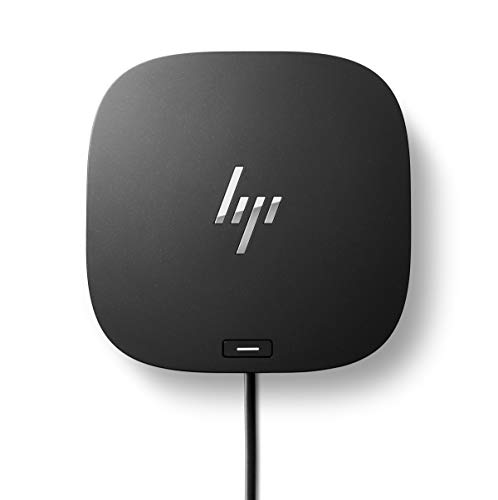
HP’s USB-C Dock G5 targets broad compatibility, including non-HP USB-C and Thunderbolt-equipped laptops. It enables a single-cable solution for charging and data transfer across up to three displays, reducing desk clutter. The dock emphasizes universal compatibility and streamlined workspace organization, with simplified connectivity for mixed-device environments.
RayCue 15-in-1 Docking Station

RayCue’s 15-in-1 dock provides a comprehensive port lineup, including two HDMI outlets, a DisplayPort, two USB-C data ports, four USB-A ports, SD/TF card readers, Gigabit Ethernet, and a 100W PD input. It features a smart LED status screen that reports charging power and resolution. The dock supports triple-monitor configurations with Windows, though macOS viewers should note display extension limitations.
TobenONE 18-in-1 Dock
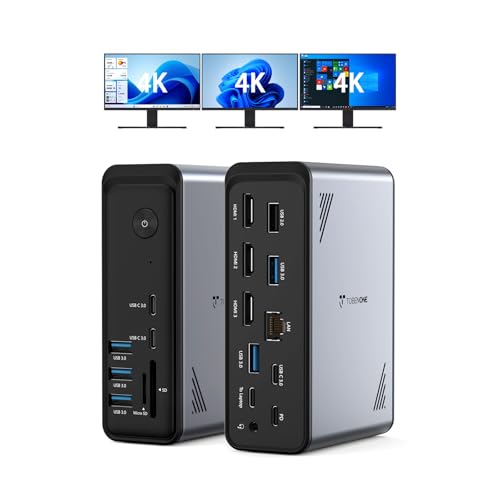
TobenONE’s 18-in-1 docking station stacks ports across nine USB ports plus PD, audio, SD/microSD, RJ45, and three HDMI outputs for triple 4K/60Hz display setups. The dock is designed for busy workspaces that require extensive peripheral support and high-speed data handling, including remote work and design tasks. It works with Windows laptops but note that some configurations may depend on host GPU capabilities.
Acer Premium 13-in-1 Dock

Acer’s 13-in-1 Dock emphasizes a robust 110W PD adapter, dual HDMI, a DisplayPort, USB-C and multiple USB-A ports, Gigabit Ethernet, and SD/TF card readers. It supports triple-monitor output via MST on Windows (with some macOS limitations to mirroring). The included power adapter ensures sustained charging during intensive multitasking and triple-monitor setups.
Buying Guide: Key Purchase Considerations
- Display support and routing: If you need triple displays, verify the number of HDMI/DP outputs and whether MST/DSC is required for 4K at desired refresh rates. Windows hosts often support higher multi-monitor configurations than macOS in docking scenarios.
- Power delivery: Check wattage and PD compatibility. A higher wattage (90W–100W) helps keep laptops charged while running multiple peripherals, especially with 4K displays and CPUs under load.
- Ports and transfer speeds: Prioritize docks with USB-C with 10Gbps or higher, multiple USB-A ports, and SD/TF slots for photographers or multimedia work. Note USB-C data-only paths may limit video on some hosts.
- Compatibility and ecosystems: Some docks advertise universal compatibility but may behave differently across brands or operating systems. Mac users should anticipate potential display mirroring rather than extended desktop in certain configurations.
- Detachable hubs and portability: If you travel frequently, a detachable hub (like Anker’s 13-in-1) provides flexible on-the-go access without sacrificing a full desktop setup at your desk.
- Build and ergonomics: Look for sturdy materials, integrated cable management, and compact footprints that fit your workspace while keeping cables organized.
- Budget and future-proofing: Consider future accessories, the number of connected devices, and the likelihood of needing additional USB-C or USB-A ports as peripherals evolve.
In selecting a notebook docking station, balance the importance of display capacity, power delivery, and port variety against your typical usage—office productivity, content creation, programming, or design work. The listed options provide a spectrum from compact 11-in-1 to expansive 18-in-1 configurations, with varying degrees of macOS compatibility and display flexibility to suit different environments and devices.