Choosing the right network switch is crucial for reliable VoIP performance. This guide highlights five unmanaged and smart switches that balance port count, speed, energy use, and quiet operation. Each option supports clean voice traffic, simple plug-and-play setup, and sturdy builds suitable for home offices and small businesses. Read on to compare features and find a switch that minimizes jitter, latency, and packet loss while staying within budget.
| Product | Brand | Ports | Type | Key Benefit |
|---|---|---|---|---|
| TL-SG108 | TP-Link | 8 | Unmanaged | Metal case; energy-efficient; plug-and-play |
| GS308 | NETGEAR | 8 | Unmanaged | Silent operation; desktop or wall mount |
| GS305 | NETGEAR | 5 | Unmanaged | Compact; plug-and-play; versatile mounting |
| GS308E | NETGEAR | 8 | Managed Essentials | Basic management; secure and monitor |
| TL-SG108S-M2 | TP-Link | 8 | Unmanaged | 2.5-Gigabit ports; energy-efficient |
Note: All products listed are designed to reduce noise, heat, and power use while delivering steady Ethernet connections ideal for VoIP, video conferencing, and real-time collaboration.
TP-Link 8 Port Gigabit Switch TL-SG108

Product highlights include a robust metal housing that improves heat dissipation and EMI protection, ensuring stable performance in VoIP networks. It features 8 auto-negotiation 10/100/1000 Mbps ports with MDI/MDIX auto detection and plug-and-play operation, reducing setup time. An energy-efficient design lowers power consumption while expanding network capacity, which can help manage multiple VoIP endpoints and QoS-ready traffic with low latency.
NETGEAR 8-Port Gigabit Unmanaged Essentials Switch GS308
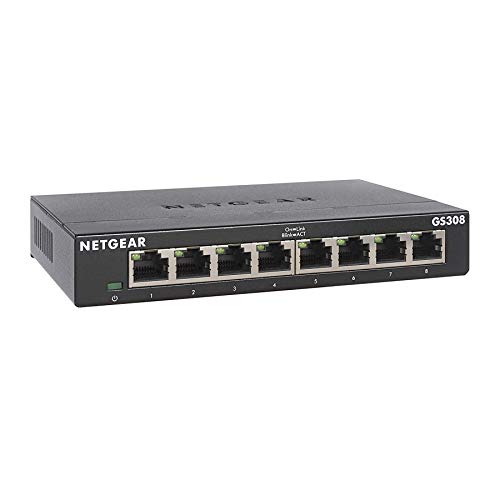
GS308 offers eight Gigabit ports with straightforward plug-and-play setup. Its silent operation and compact footprint make it suitable for desks, small offices, or conference rooms where VoIP devices and desk phones require stable, consistent connectivity without interruptive fan noise. The ability to place the switch on a desk or wall-mount adds flexibility for arranging VoIP hardware in tight spaces.
NETGEAR 5-Port Gigabit Essential Switch GS305

GS305 provides a compact 5-port solution ideal for smaller VoIP setups or segmenting a home office network. Like other unmanaged switches, it requires no software, offering quick plug-and-play setup. Its desktop or wall-mount compatibility supports flexible placement, which can be useful when wiring multiple VoIP devices and ensuring direct, short cabling for critical voice traffic.
NETGEAR 8-Port Easy Smart Managed GS308E

GS308E adds essential management features to an 8-port switch, offering a basic interface to configure security, monitoring, and QoS. This makes it a better choice when voice traffic requires prioritization or when you want visibility into device activity. The desktop or wall-mount design keeps wiring neat in both home and small-office environments, contributing to more reliable VoIP performance.
TP-Link TL-SG108S-M2 2.5G Unmanaged Switch

TL-SG108S-M2 provides eight ports with 2.5-Gigabit speeds, enabling higher bandwidth for VoIP deployments that rely on video calls, higher-quality codecs, or 2.5G devices in the network. Auto-negotiation simplifies setup, while the energy-efficient design helps keep operating costs low. This model is well-suited for small offices needing faster uplinks to servers or APs without extra complexity.
TP-Link Litewave LS1005G 5-Port Switch

LS1005G is a compact, budget-friendly option with five 1-Gigabit ports designed for easy expansion. Its fanless design ensures quiet operation, which is beneficial in voice-conferencing spaces. Energy-efficient features help manage power use while providing straightforward, reliable Ethernet connectivity for VoIP devices and basic office networks.
Buying Guide: Key Purchase Considerations for VoIP Networks
- Unmanaged vs. managed: Unmanaged switches are simplest for VoIP setups with basic QoS needs, while managed switches offer device-level monitoring, VLANs, and traffic prioritization for more complex networks.
- Port speed and type: For most VoIP tasks, Gigabit ports (1 Gbps) suffice. If you have high-bandwidth devices or plan to run VoIP alongside video, consider switches with 2.5G options to provide headroom.
- Power efficiency and heat: Metal chassis and energy-saving features help maintain performance over long calls and reduce cooling requirements in small rooms.
- Placement and noise: Fanless designs minimize ambient noise in conference rooms and home offices, which is beneficial during calls.
- Form factor and mounting: Desktop, wall-mount, or compact footprints should align with your office layout and cabling strategy to keep voice traffic clean and direct.
- Security and management: If you manage multiple devices or need QoS for prioritizing VoIP traffic, a basic managed switch with ACLs and QoS rules can improve call quality significantly.
In evaluating options for VoIP reliability, prioritize models offering decent port density, quiet operation, and predictable performance under mixed traffic conditions. The picks above cover a range of budgets and complexity, helping you balance simplicity with control as needed.