Looking for a reliable laptop to power a music studio setup? This guide highlights five practical options that balance performance, portability, and value for different kinds of creators—songwriters, producers, and podcasters. Whether you need a portable Chromebook for on-the-go ideas or a powerful Windows machine for multi-track sessions, each pick is chosen to support recording, editing, and playback with confidence. The quick comparison table below helps you spot the best fit at a glance.
| Product | Brand | Why it’s a fit for music work |
|---|---|---|
| HP Chromebook 14 | HP | Lightweight, long battery life, solid cloud-first workflow for quick demos and note-taking. |
| Microsoft Surface Laptop Studio | Microsoft | High-end graphics and fast CPU for creative apps, versatile screen, great for multi-media projects. |
| ASUS Vivobook Go 15.6” | ASUS | Budget-friendly multitasker with solid performance for recording and editing on a budget. |
| Dell Precision 3620 | Dell | Desktop-class workstation capabilities for heavy DAW projects and large sample libraries (renewed listing). |
| OHAYO 60W Speakers (not a laptop) | OHAYO | Included as a reference for accurate studio monitoring in a desk setup (not a laptop). |
Focusrite Scarlett Solo Studio 4th Gen Bundle

The Focusrite Scarlett Solo 4th Gen bundle is centered on home-recording simplicity. It combines a USB audio interface, a condenser microphone, and headphones to help voice, guitar, or songwriting projects sound studio-ready. This setup is best for solo singers, spoken-word podcasters, and indie musicians who want a plug-and-play path to clean, professional-sounding tracks without a big outlay.
Best for: solo performers, podcasters, and small project studios seeking a turnkey recording solution that minimizes setup time and learning curve. Why selected: it uses high-end converters and the Air mode in 4th Gen for vocal presence and harmonic drive, aligning with a clean, upfront mix essential for demos and finished takes.
Limitation: the bundle is wired to a single-channel design, which may limit multi-instrument recording without additional gear.
HP Chromebook 14 Laptop
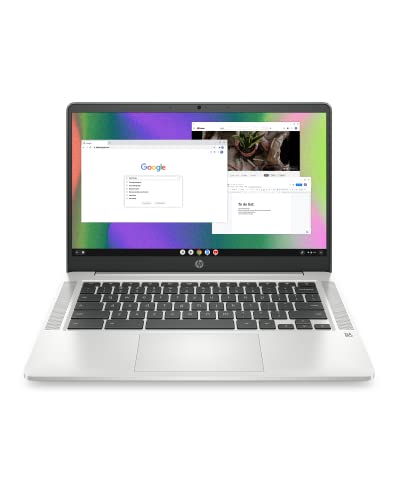
The HP Chromebook 14 emphasizes portability and cloud-based workflows, making it a practical choice for quick music ideas, lyric drafting, and collaboration in a lightweight package. While not a powerhouse DAW machine, it supports browser-based music apps and streaming, which suits writers and producers who travel or work in shared spaces.
Best for: songwriters and creators who prioritize mobility and battery life, plus those who rely on cloud music tools and collaboration platforms. Why selected: its 14-inch form factor and long battery life complement on-the-go recording and note-taking needs. Limitation: limited local DAW performance may constrain heavy multi-track sessions or large sample libraries.
Microsoft Surface Laptop Studio

The Surface Laptop Studio combines a versatile 14.4-inch touchscreen with robust processing power, making it a leading option for creative studios. It’s well-suited for musicians who need smooth rendering in digital audio workstations, multimedia editing, and on-screen composition. The device’s flexibility—from laptop to stage-ready tablet—helps in arranging scenes, scoring, and quick editing sessions.
Best for: producers and multimedia artists who require a high-performance Windows laptop with touch and pen support for creative workflows. Why selected: strong CPU/GPU pairing supports demanding tasks, while the form factor supports on-stage presentations and on-site studio work. Limitation: premium features translate to a higher price point and potentially more power draw than lighter laptops.
ASUS Vivobook Go 15.6”

The ASUS Vivobook Go is a budget-friendly option that still delivers adequate multitasking for coding, editing, and light music production tasks. It features a 15.6” Full HD display and a Ryzen-based processor, which makes it a solid choice for students, hobbyists, or bedroom studios building a multi-application flow without a heavy investment.
Best for: beginners and budget-conscious creators who need a dependable machine for basic recording, streaming, and music production software. Why selected: price-conscious performance with a solid display and enough RAM to handle typical DAW sessions. Limitation: entry-level specifications may limit very large projects or extensive virtual instrument usage.
Dell Precision 3620 (Renewed)

The Dell Precision 3620 is a workstation-class machine suitable for more demanding music production tasks, such as large sample libraries and CPU-intensive mixing. This renewed listing can appeal to users who require a desktop-grade environment for a home studio with upgraded RAM and storage capacity. It’s best for long, heavy sessions where stability and processing power matter.
Best for: studio professionals and enthusiasts who require substantial processing headroom for dense projects. Why selected: designed for reliability in multi-track DAW environments with ample memory and storage. Limitation: being a renewed desktop unit, it sacrifices portability and may require a dedicated workspace.
Buying Guide: Choosing the Right Music Studio Laptop
How should you pick among these options for your home studio? Start by clarifying your core needs: portability, power, and budget.
- Portability vs. power: If you travel or perform live, prioritize lightweight laptops with solid battery life (HP Chromebook, ASUS Vivobook Go). For multi-track recording and large projects, a higher-power machine like the Microsoft Surface Laptop Studio or Dell Precision is more suitable.
- Operating system: Windows-based systems (Surface Studio, Dell Precision, ASUS Vivobook Go) integrate with broad DAW ecosystems (Ableton, Logic Pro on Mac, FL Studio, etc.). If you rely on Chrome-based apps or cloud workflows, the Chromebook is a strong fit.
- Display and control: A larger, high-contrast display helps with waveform editing and plugin management. Touch-enabled options (Surface Laptop Studio) offer new ways to interact with virtual instruments.
- Storage and RAM: For complex projects, aim for at least 16GB RAM and 512GB SSD. If budget is tighter, a 8GB RAM model can manage simpler sessions with careful project management.
- Expandability: Check expansion options such as USB-C/Thunderbolt, audio interfaces, MIDI controllers, and external drives to grow your setup without replacing the core laptop.
When comparing the five options, the key decision factors are whether you need mobility for field recording or a stable desktop workstation for heavy productions. The Focusrite Scarlett bundle is a plug-and-play starter for vocal and guitar work. The Microsoft and Dell models provide more raw processing headroom for larger projects. The Chromebook and budget ASUS model suit writers and hobbyists prioritizing cost efficiency and cloud-based workflows.
Frequently Asked Questions
- What’s the best laptop for home studio beginners?
Answer: An affordable model with enough RAM and a stable OS to run common DAWs, like the ASUS Vivobook Go or the HP Chromebook, is ideal for beginners. - Do I need a dedicated audio interface with a studio laptop?
Answer: If you plan to record with microphones or guitars, a USB audio interface (like the Focusrite bundle) provides better preamps and sound quality than built-in sound. - Is a Windows laptop better than a Chromebook for music production?
Answer: Windows generally offers broader DAW compatibility and plugin support, though Chromebooks can work for cloud-based workflows and light editing. - How much RAM do I need for multi-track recording?
Answer: 16GB is a practical baseline for larger projects; 8GB can handle smaller sessions but may limit plugin loading and large sample libraries. - Should I buy a desktop workstation or a laptop for music production?
Answer: A desktop workstation provides more power and expandability for big projects, while a laptop offers portability for mobile recording and on-site work. - What features matter most for music work on a laptop?
Answer: CPU speed, RAM, fast storage, reliable audio drivers, and compatibility with your preferred DAW and plugins.