The shift from analog tapes to digital archives is essential for preserving family memories and old footage. This article reviews five top mini DV to digital converter options that support Mini DV and other analog formats, highlighting ease of use, storage options, and output quality. Each choice offers plug-and-play simplicity, compatible inputs, and direct-to-digital recording, making it easier to convert VHS, Hi8, and Mini DV content without a PC. Explore these reliable devices to safeguard your cherished memories in modern formats.
| Product | Brand | Key Benefit | Storage |
|---|---|---|---|
| VHS to Digital Converter (Portta) | Portta | Integrated LCD preview and standalone operation | USB/TF |
| VHS to Digital Converter 2.0 | DigitPro | HD recording up to 1080P with smart settings | USB/TF up to 512GB |
| Video Capture Card (VIXLW) | VIXLW | PC/Mac capture, driverless setup | USB |
| Capture Card USB Video Converter | VIXLW | HD 720P capture, easy installation | USB |
| ClearClick Video to Digital Converter 2.0 | ClearClick | One-button recording, USB/SD storage | USB/SD |
Portta VHS to Digital Converter

Portta’s device functions as a complete converter/recorder, transforming analog video and audio into digital MP4 and MP3 formats with up to 1080P 30Hz recording. It accepts AV/RCA (CVBS+R/L), S-Video, and AUX inputs, and it includes a 3.0″ LCD preview screen and built-in speaker for direct playback. A key advantage is its standalone operation—no PC, software, or drivers required. Note that this unit does not play tapes by itself; it records them. Storage flexibility is provided by USB drives and TF cards, though high-capacity devices may require dedicated power. Ideal for quick digitization projects without a computer.
- Video formats: MP4; Audio: MP3
- Supports NTSC and PAL variants
- Direct playback and snapshot preview on the device
- HDMI output for external displays when applicable
VHS to Digital Converter 2.0

DigitPro’s 2.0 model offers one-touch digital conversion for VHS, VCR, DVD, Hi8, and camcorders. It records directly to digital formats (MP4/MP3/WAV) without a computer, with a 3.5-inch HD preview screen and built-in speakers for real-time playback. It supports USB/TF storage up to 512GB and features auto pause/resume on signal loss, time watermarking, and scheduled recording. The device handles NTSC/PAL inputs and provides adjustable resolutions, making it suitable for multi-region collections and long-form transfers. A strong choice for users prioritizing modern file formats and easy setup.
- Resolution: up to 1080P 30Hz
- Smart features: auto pause/resume, time watermark, scheduling
- Real-time preview via 3.5″ LCD
VIXLW Video Capture Card

This VIXLW model focuses on capturing from analog sources to a PC or Mac via USB. It supports RCA and S-Video inputs and converts to HD 720P USB output. The capture process is driverless and straightforward, emphasizing ease of use for both Windows and Mac users. It’s particularly appealing for digitizing memories directly onto a computer without extra software. The device emphasizes compatibility and simplicity, making it a practical pick for casual digitization tasks.
- Plug-and-play with PC/Mac
- RCA/S-Video to USB 720P capture
- No external power required
Capture Card USB Video Converter (VIXLW)

This VIXLW USB video grabber emphasizes an analog-to-digital workflow for RCA inputs into a PC. It delivers 720P USB output with integrated audio capture and driverless setup. It’s designed for users who want to digitize from multiple analog sources while keeping the workflow simple and cost-effective. The device is compatible with common video editing software and supports straightforward file creation, making it a practical tool for home archiving projects.
- USB capture with RCA inputs
- HD 720P output for easy editing
- Driverless software-free setup
ClearClick Video to Digital Converter 2.0
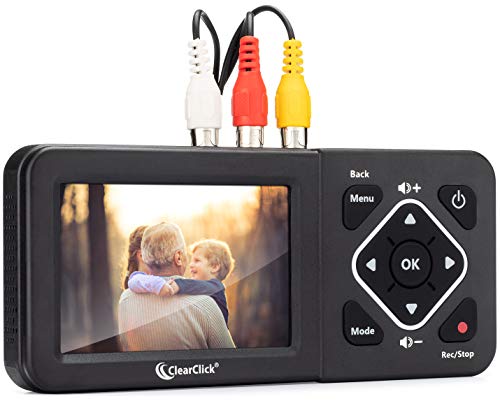
ClearClick’s 2.0 model emphasizes simplicity with one-button recording. It supports recording from VCRs, VHS tapes, AV/RCA sources, Hi8, Camcorders, DVDs, DVRs, and retro gaming systems. It records directly to USB flash drives or SD cards (up to 512GB) without needing a computer, though a working VCR/camcorder and tapes are required. The SD/USB storage requirement and lack of HDMI input reflect a straightforward archival solution for older media. This makes it a solid pick for those who want a dedicated, easy-to-use recorder without computer dependencies.
- Direct USB/SD card recording
- Supports a wide range of analog sources
- Requires working tapes and VCR/camcorder
Buying Guide: Key Considerations When Choosing a Mini DV To Digital Converter
When selecting a converter, consider how you plan to store and access your videos, the formats you need, and whether you want standalone operation or PC-based capture. Here are important factors to weigh.
- Input compatibility: Ensure the device handles your sources (RCA, S-Video, AV, or HDMI). If you own Mini DV or Hi8 tapes, confirm that the converter supports those formats and can manage NTSC/PAL variations.
- Output formats: Look for MP4, MP3, WAV, or direct USB/SD card recording. If you want to edit footage later, MP4 with H.264 is widely supported.
- Storage options: USB drives or SD/TF cards offer portable archiving. Check maximum supported capacity and whether the unit requires external power for large drives.
- Display and previews: A built-in LCD or real-time preview helps you verify framing and quality before recording. This can save time in post-processing.
- Ease of use: Driverless operation and plug-and-play setups reduce complexity. Consider whether you prefer a dedicated recorder (no PC) or a PC-based workflow for editing.
- Video quality and formats: Some devices cap at 720P while others support up to 1080P. Decide if you need high-definition transfers for family footage or simple preservation.
- Reliability and durability: Read user reviews for long-term performance, particularly for devices relying on analog inputs and aging tapes.
- Software compatibility: If you choose a PC-based capture card, verify compatibility with Windows and macOS, and confirm available drivers or recommended software (OBS, QuickTime, etc.).
- Power and portability: Some models require external power for high-capacity storage, while others are fully bus-powered. Consider your setup and portability needs.
These considerations help balance convenience, cost, and quality. For households digitizing a mix of old tapes and gaming cartridges, a dual approach—one standalone recorder for quick transfers and a PC-based capture option for detailed editing—often produces the best long-term results.