Finding a reliable midrange 3D printer means balancing speed, print quality, ease of use, and build volume without breaking the bank. This guide highlights five solid choices that appeal to both beginners and seasoned builders. Each option combines practical features like auto-leveling, fast travel speeds, and durable all‑metal cores with approachable pricing. Use the quick table below to compare core specs at a glance, then dive into detailed sections for each model.
| Product | Brand | Build Volume | Special Feature |
|---|---|---|---|
| FLASHFORGE Adventurer 5M | FLASHFORGE | 220x220x220 mm | Fully Auto Leveling; 600 mm/s high-speed printing |
| FLASHFORGE AD5M | FLASHFORGE | 220x220x220 mm | Fully Auto Calibration; All-Metal CoreXY |
| FLASHFORGE Adventurer 5M Pro | FLASHFORGE | 220x220x220 mm | 600 mm/s; 280°C detachable nozzle |
| Creality Ender 3 | Creality | 220x220x250 mm | Resume Printing; Open Source |
| ELEGOO Mars 5 Resin | ELEGOO | 5.65 x 3.53 x 5.91 inches | 4K Mono LCD; Automatic Leveling |
Below, each product section provides an objective look at capabilities, supported materials, and practical considerations to help you choose a printer that best fits your workflow—whether you’re prototyping, manufacturing small runs, or pursuing hobbyist projects.
FLASHFORGE Adventurer 5M 3D Printer

The Adventurer 5M focuses on automated workflow improvements and fast throughput. It features one-click automatic bed leveling to ensure consistent first layers and adhesion, reducing manual setup time. CoreXY architecture supports higher travel speeds with precise motion control, making it suitable for rapid prototyping and production-oriented tasks. The printer includes a detachable 280°C nozzle for broad material compatibility and a dual-sided PEI platform for easy part removal. This model is intended for users who value speed and reliability in a midrange package.
FLASHFORGE AD5M 3D Printer

The AD5M emphasizes auto-calibration and high-speed capability with a Core XY all-metal motion system. It is designed to provide reliable first-layer quality without manual calibration. With a compact footprint and a streamlined maintenance routine, this model targets creators who want a dependable midrange machine that minimizes setup complexity while delivering consistent results across varied print jobs.
FLASHFORGE Adventurer 5M Pro

The Adventurer 5M Pro expands on the base 5M with a faster travel speed and enhanced nozzle options. It supports multiple nozzle sizes to balance print speed and detail. The printer’s auto-leveling features, combined with a robust all-metal framework and a flexible bed system, contribute to stable high-speed operation and reliable print quality. This model is appropriate for users who require speed without sacrificing details in mid-size builds.
Creality Ender 3
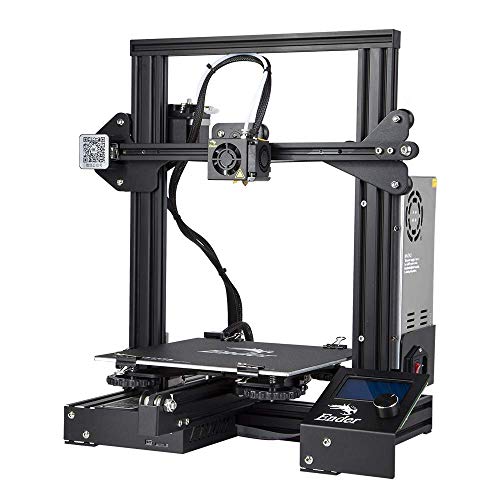
The Ender 3 family is widely recognized for value and upgrade potential. It offers resume printing after power loss and a strong community for upgrades. With a build volume of about 220x220x250 mm, it supports common filaments like PLA and PETG and provides a straightforward entry point into 3D printing. Stable print quality improves with aftermarket components, making it a good midrange choice for learners who want room to grow.
ELEGOO Mars 5 Resin 3D Printer

The ELEGOO Mars 5 uses a 4K monochrome LCD for fast curing and high-resolution resin prints. It includes automatic leveling and a compact form factor suitable for desktop setups. Resin printing brings excellent surface finish and detail, but it requires resin handling and post-processing workflows. This midrange resin option is ideal for users needing precise, small-scale parts, minis, or detailed models with smooth surfaces.
Buying Guide
Key considerations help narrow the field when choosing a midrange 3D printer. Here are practical angles from multiple perspectives:
- Print technology: FDM printers (filament) deliver larger build volumes and broader material compatibility, ideal for prototypes and functional parts. Resin printers yield higher detail for miniatures and detailed parts but require post-processing and resin handling.
- Auto-leveling and bed calibration: Auto leveling reduces setup time and improves first-layer consistency, especially for beginners. Consider printers with a reliable auto-bed leveling system for steady results.
- Speed versus quality: Higher travel speeds can boost throughput but may challenge rapid, intricate finishes. Look for a balance that matches your typical project size and required fidelity.
- Build volume: Larger beds enable bigger models or multiple parts per print, but cost and footprint rise with size. Choose a volume that aligns with your typical projects and workspace.
- Maintenance and upgrades: Open-source ecosystems and modular components allow upgrades (nozzles, hotends, frame reinforcements). A strong support community helps with troubleshooting and improvements.
- Material compatibility: PLA remains beginner-friendly; PETG, ABS, and flexible filaments expand capability but may require enclosure or environmental considerations. Resin systems favor precision but demand resin management and curing.
- Ease of use: Automated features, intuitive interfaces, and quick-start guides reduce learning curves. For home studios or classrooms, simplicity and reliability matter more than raw spec.
- Noise and ventilation: High-speed printers can generate noticeable noise. Enclosures and proper room ventilation help maintain a comfortable workspace.
- Support and warranty: A solid warranty and accessible customer support reduce risk when adopting a midrange machine for ongoing projects.
When evaluating the options above, consider your primary use cases: rapid prototyping and functional parts (favor high-speed, reliable bed leveling), or detailed, high-precision models (favor resin-enabled systems or advanced nozzles on an FDM platform). Each model brings particular strengths, so match features to your workflow, available space, and long-term goals to maximize return on your investment.