For listeners seeking clear midrange performance with solid efficiency, mid-range speaker drivers offer a balanced path between compact full-range designs and larger woofers. This guide highlights five mid-range drivers that are well-suited for compact to mid-sized speakers, home audio, and car audio applications. Each option is chosen for its balance of performance, affordability, and ease of integration. Below you’ll find quick at-a-glance details and then deeper explanations for each product to help you decide which is best for your setup.
Buyer perspective at a glance:
- Best overall mid-range clarity: Dayton Audio PS95-8 and DS18 PRO-HY6MSL.
- Best compact front-coverage for small enclosures: Dayton Audio PC83-4 and GRS 3FR-4.
- Best value upgrade for car audio midrange: PYLE-PRO PDMR5 and Skar FSX series options.
Product Comparison Snapshot
| Product | Key Strengths | Typical Use Case |
|---|---|---|
| Dayton Audio PS95-8 | Detailed, natural sound; copper pole cap reduces inductance | Compact, high-fidelity full-range installations |
| Dayton Audio PC83-4 | Smooth full-range response; copper cap to extend high frequencies | Small enclosures with simple driver designs |
| GRS 3FR-4 | Coated paper cone; economical ferrite magnet | Budget-friendly midrange replacements |
| PYLE-PRO PDMR5 | High sensitivity; strong power handling | Car audio upgrades and quick installs |
| Skar Audio FSX65-4 / FSX10-8 | High power handling; ferrite magnet; midrange clarity | Moderate-to-large midrange needs in vehicles |
Dayton Audio PC83-4 3″ Full-Range Driver
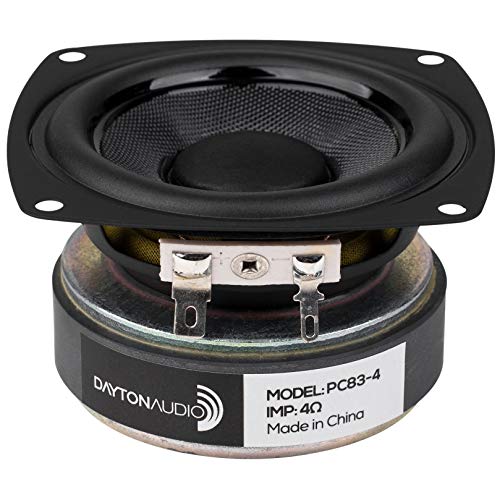
Best for compact enclosures where a simple, true full-range response is desired. The copper cap helps control inductance to extend the high-frequency response, while the poly damped woven glass fiber cone smooths out cone break-up for a cleaner roll-off. Ideal for small bookshelf speakers or compact DIY projects where a straightforward, single-driver solution is preferred.
- Best for: Small speaker builds needing a true full-range driver in a compact form.
- Why selected: Combines a smooth response with simple enclosure requirements.
- Caution: Performance can be limited by very small enclosures and listening distance; consider enclosure tuning for best results.
Dayton Audio PS95-8 3-1/2″ Point Source Full Range Driver 8 Ohm

This driver emphasizes natural, detailed full-range sound with reduced distortion thanks to a copper pole cap that lowers inductance. The phase plug design helps spread dispersion evenly, supporting smoother off-axis response. It’s a good choice for listeners who want a clear, characterful mid-to-high range without a separate tweeter.
- Best for: Users prioritizing natural mids with accurate high-frequency extension in a small-to-medium cabinet.
- Why selected: Balanced sonic signature with low distortion characteristics.
- Caution: May require careful crossover planning if paired with additional midrange or treble drivers.
Dayton Audio PC68-4 2-1/2″ Full-Range Driver
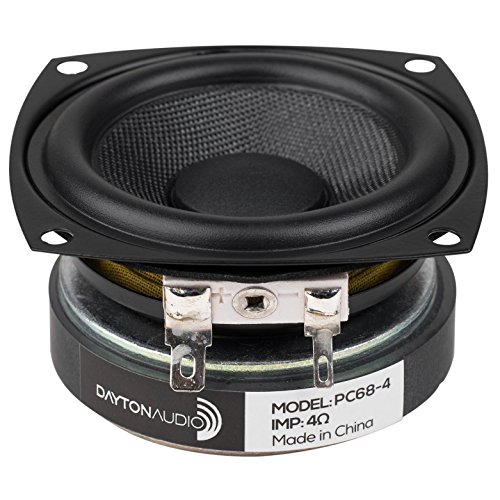
Small but capable, the PC68-4 uses a poly damped cone and a high-energy ferrite magnet to deliver higher efficiency and broader output in a compact footprint. It’s particularly suitable for portable or compact speaker projects where a simple, single-driver approach is desirable.
- Best for: Tiny enclosures where space is a premium and a single-driver approach is preferred.
- Why selected: Higher efficiency and better transient response for its size.
- Caution: Very limited low-end extension; pair with appropriate bass reinforcement if needed.
GRS 3FR-4 Full Range 3″ Speaker Driver 4 Ohm
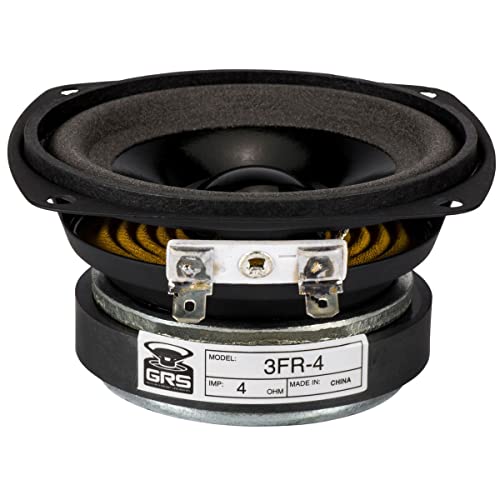
The GRS 3FR-4 offers a cost-effective option with a coated paper cone and a foam surround for clear output. Its pincushion-frame and front gasket simplify mounting and help reduce mounting-induced vibrations, making it a practical choice for budget builds and classroom projects where simple, reliable performance matters.
- Best for: Budget-friendly midrange replacements or entry-level DIY speakers.
- Why selected: Economical choice with straightforward installation.
- Caution: Lower power handling and efficiency compared with higher-end designs; not ideal for high-volume applications.
PYLE-PRO PDMR5 – 5″ High Performance Midrange Driver

Designed for midrange emphasis in automotive and home audio, this 5″ driver provides a broad frequency range from a robust magnet structure. It claims strong sensitivity and a higher-output design suitable for upgrading factory car speakers or builds that want a punchy midrange without a separate mid-tweeter pair.
- Best for: Car audio upgrades or DIY systems needing a robust midrange with simple installation.
- Why selected: High sensitivity and solid midrange projection for smaller amplifiers.
- Caution: 5″ format may require careful enclosure or mounting to maximize bass extension.
Skar Audio FSX Series Midrange Drivers (FSX10-8 and FSX65-4)
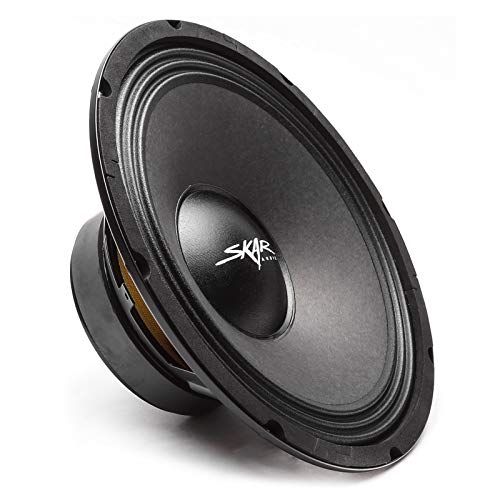
The Skar FSX line includes a larger 10″ model and a 6.5″ option. Both are designed for pro-audio style midrange performance with substantial wattage handling. The 10″ model offers higher air-mover capability for louder midrange output, while the 6.5″ provides a balanced compromise between size and power. Excellent for home theater fronts or midrange-focused soundbars where more physical driver size is feasible.
- Best for: Enclosures or setups requiring higher midrange output and higher power handling.
- Why selected: Clear, punchy midrange with robust magnet structures for demanding listening levels.
- Caution: Larger drivers require more enclosure space and proper mounting; ensure fit before purchasing.
Buying Guide: Mid Range Driver Essentials
Choosing the right mid-range driver involves balancing enclosure size, power handling, and the sonic character you desire. Consider these practical questions as you compare options:
- What enclosure size do I have, and can the driver physically fit without compromising other components?
- Do I need a single-driver midrange solution, or will I pair it with a tweeter or woofer for a broader sound?
- What is the target listening level, and does the driver’s RMS and peak power align with my amplifier or head unit?
- How important is efficiency (sensitivity) for your system, especially in car installs or low-power amplifiers?
- What is the expected frequency response, and does the driver cover the midrange range with minimal distortion?
- Are enclosure materials and mounting options compatible with the driver’s mounting depth and screw pattern?
Key Considerations by Use Case
- Home audio: Prioritize drivers with smooth off-axis response and low distortion for living room listening.
- Car audio: Favor higher sensitivity and robust power handling to overcome road noise and electrical systems.
- DIY compact projects: Look for small, efficient drivers that deliver respectable mids in a tight enclosure.
Comparison Summary
- Best overall midrange clarity: Dayton Audio PS95-8 and DS18 PRO-HY6MSL (compact, precise sound with strong midrange presence).
- Best value for small enclosures: Dayton PC83-4 and GRS 3FR-4 (affordable, easy to install).
- Best for car upgrades: PYLE-PRO PDMR5 and Skar FSX series (high sensitivity and strong midrange performance).
Frequently Asked Questions
- What is a mid-range driver best used for?
Mid-range drivers are designed to reproduce mid frequencies with clarity and power, filling the vocal and instrument range in compact to mid-sized systems.
- Do mid-range drivers require crossovers?
Many setups use a crossover to limit frequencies outside the driver’s optimal range. Exact needs depend on the overall system design.
- Can I use a mid-range driver as a full-range replacement?
Yes, in small enclosures, but you may need to tune the enclosure and consider treble response for a balanced sound.
- What factors influence midrange loudness?
Sensitivity (efficiency), voice coil size, magnet strength, and enclosure design all affect perceived loudness and headroom.
- Are ferrite magnets better than neodymium for midrange drivers?
Ferrite magnets are common in affordable drivers and provide reliable performance. Neodymium offers higher energy density but at a higher cost.
- Which driver is best for a budget build?
GRS 3FR-4 or Dayton PC68-4 provide good balance of cost and performance for entry-level projects.