If you’re a video blogger, you need crisp, clear audio that keeps viewers engaged. This guide highlights five reliable microphones that work well for YouTube, TikTok, live streams, and podcasts. Each pick suits different setups—from handheld mobile recording to studio-like home setups—so you can choose the best fit for your content style and devices. The table below summarizes the key options to help you compare at a glance.
| Product | Best For | Connectivity | Notes |
|---|---|---|---|
| Mini Mic Pro (Latest Model) – 2 Pack | On-the-go creators, iPhone/Android, simple plug-and-play | USB-C, Lightning adapters | Two mics included; wind protection |
| Hollyland Lark A1 | Mobile live streaming, outdoor filming | USB-C / Lightning receiver | 3-level noise cancellation |
| ZOPPLM Mini Microphone | Vloggers needing easy setup | USB-C / Lightning adapters | DSP noise reduction |
| Labstandard Professional Wireless Lavalier | Interviews, dual-mic setups | Lightning & USB-C receivers | Real-time auto-sync, multi-channel |
| AKG Pro Audio Ara USB-C Condenser | Desk setups, podcasts, streaming | USB-C | Dual capture patterns |
Mini Mic Pro (Latest Model) — 2 Pack

The Mini Mic Pro is a wireless lavalier system designed for iPhone, iPad, and Android devices. It emphasizes plug-and-play functionality with no apps or Bluetooth required. This makes it a strong choice for creators who want quick setup and reliable performance in everyday recording situations. Best for: content creators who value simplicity and portability, especially when recording on the go or during spontaneous interviews.
Key reasons to choose this model include its universal adapters (USB-C and Lightning) and a compact form factor that clips discreetly to clothing. It supports clear voice capture and includes wind protection to reduce outdoor wind noise. A potential limitation is that it relies on wireless transmission, so users in environments with heavy radio interference may notice occasional drops—though it’s designed to minimize this with robust hardware.
Who it’s best for:
– Vloggers who film minimally with a phone or tablet
– Interview-style creators in busy or outdoor environments
– Travellers who need a small, two-mic setup for collaboration
Selected for this guide because it combines portability, straightforward use, and strong default audio quality. The two-pack option is convenient for duo-recordings or back-up during shoots.
Hollyland Lark A1 Wireless Microphone

The Hollyland Lark A1 delivers true studio-style sound for iPhone and Android devices with a dynamic 48kHz/24-bit capability and up to 200 meters of range. Its three-level noise cancellation helps tailor performance to noisy or windy environments. This model is especially well-suited for live streaming and field reporting where dependable, clean audio matters. Best for: mobile filmmakers and live streamers who need reliable wireless performance with flexible noise control.
Why it stands out: high-resolution sound with solid handling of sudden loud moments, which makes it suitable for both indoor interviews and outdoor shoots. A caution: while it’s plug-and-play, users should test in new environments to ensure the receiver connection remains stable, especially in crowded wireless spaces.
Who it’s best for:
– Content creators who stream or shoot outside a fixed studio
– Teams recording interviews or multi-person sessions
– Anyone who wants minimal post-production audio fixes
ZOPPLM Wireless Mini Microphone
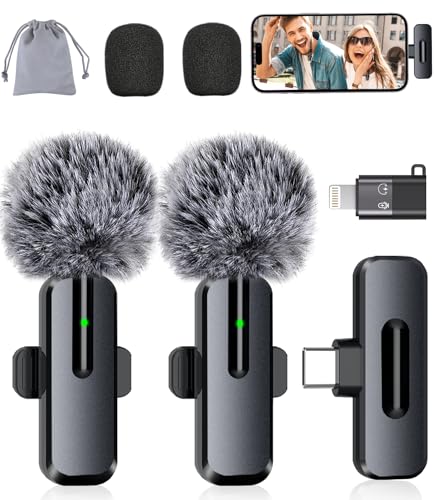
The ZOPPLM mini microphone emphasizes studio-quality sound with an emphasis on simplification and universal compatibility. It includes USB-C and Lightning adapters for quick connection to phones, tablets, or laptops, making it a versatile choice for bloggers who switch between devices. Best for: creators seeking a straightforward, no-fuss mic that works across many devices.
What to know: its DSP-based noise reduction helps mitigate outdoor wind and background noise, improving intelligibility in real-world environments. A potential limitation is that the price-to-performance balance depends on the environment; in extremely noisy settings, you may still need wind protection and careful microphone placement.
Who it’s best for:
– YouTube personalities who document on the go
– Podcasters who also vlog with mobile devices
– Creators seeking quick, cross-device compatibility
Labstandard Professional Wireless Lavalier

The Labstandard system targets more serious interview-style workflows with dual wireless mics and real-time auto-sync. This kit supports both Lightning and USB-C devices, which is handy for creators who record across iPhone/iPad and Android ecosystems. Best for: videographers who conduct dual-mic interviews or need synchronized audio with minimal editing effort.
Highlights include 2.4G transmission with low latency and multi-channel real-time mixing. A caveat: this setup is more feature-rich and may be more than needed for solo vloggers, who could opt for simpler single-mic options. Battery life is solid for long shoot days, but plan charging around multi-mic usage.
Who it’s best for:
– Interview-based vloggers or YouTubers
– Content creators who require synchronized background audio with multiple mics
– Small production teams filming with a single, portable kit
AKG Pro Audio Ara USB-C Condenser

The AKG Pro Audio Ara is a USB-C condenser microphone offering two capture patterns, designed for podcasters, streamers, and video bloggers who want a desktop-friendly solution. The dual-pattern capability enables you to switch between cardioid and figure-eight to tailor your soundstage, whether you’re solo recording or capturing a conversation. Best for: desk-based creators who want flexible mic patterns and straightforward USB-C connectivity.
Why consider this model: it provides a high-resolution 24-bit/96kHz signal and easy plug-and-play setup across computers and compatible devices. Limitation: it’s a desktop condenser mic, so you’ll benefit from a stable desk setup or mic stand rather than handheld use.
Buying Guide
What should you consider when choosing a microphone for video blogging?
- Device compatibility: Ensure the mic supports your primary devices (iPhone, Android, iPad, laptop). Adapters like USB-C and Lightning are valuable for cross-device use.
- Usage scenario: Are you filming outdoors, in a studio, or on the go? Wireless lavaliers excel for mobility, while USB-C condensers suit desk setups.
- Number of mics: Solo creators may favor a single-mic setup, while interviews or co-host formats benefit from dual mics or multi-channel systems.
- Noise handling: Look for noise reduction features, wind protection, and DSP processing if you record in noisy environments.
- Battery life and range: For wireless mics, consider operational hours per charge and transmitter-receiver range to avoid interruptions.
- Post-production impact: Some mics capture inherently better signals; choose those that minimize post-editing while offering clean, natural voice reproduction.
- Portability and setup time: If you travel or shoot spontaneously, lighter, plug-and-play mics save time and reduce setup friction.
Practical setup tips
- Test your mic in the actual recording environment before an important shoot to gauge wind, echo, and background noise.
- Position lavalier mics about 6–8 inches below the speaker’s chin to balance proximity and visibility.
- Use wind protection when filming outdoors to reduce gust-related noise.
- Consider a small desktop stand or boom arm for desk-based mics to improve positioning and reduce handling noise.
What’s the right choice for you?
- On-the-go mobile filming with phone use: Mini Mic Pro or ZOPPLM for quick setup and compact design.
- Mobile live streaming and outdoor shoots: Hollyland Lark A1 offers robust noise control and range.
- Interviews or dual-speaker formats: Labstandard provides dual mics with real-time syncing and mixed channels.
- Desk-based podcasting or streaming: AKG Ara offers flexible pickup patterns and USB-C simplicity.
FAQ
- Do wireless lavalier mics work with iPhone and Android?
Yes. Most modern wireless lavaliers include adapters for USB-C and Lightning to connect to both iPhones and Android devices. - Is a windscreen necessary for indoor filming?
Not always, but wind protection helps reduce echoes and background noise in less controlled environments. - Can I use these mics for both video and podcasting?
Yes. Many mics are suitable for both video recording and podcasting, depending on pickup patterns and the recording setup. - Should I buy a two-pack microphone kit?
A two-pack is useful for interviews or co-host formats, allowing simultaneous recording without swapping mics. - What determines the best mic for a given creator?
Consider device compatibility, environment, number of speakers, and whether you need portability or studio-like sound. - Do these microphones require apps or Bluetooth to work?
Most listed items offer plug-and-play operation without requiring apps or Bluetooth, but some environments may benefit from minor configuration.