Answering the needs of voice actors, podcasters, teachers, and hobbyists, the right microphone for narration should deliver clear, noise-free sound with simple setup. This guide highlights five versatile options suitable for home studios, classrooms, and on-the-go recording. Each pick targets different user profiles—from beginners seeking plug‑and‑play USB mics to creators needing rugged XLR options or wireless lavalier mics for mobility.
Buyer focus: Best for beginners wanting easy USB setup; better for multi‑device use in casual studios; choose this if you need flexibility between USB and XLR; avoid this if you require broadcast‑quality studio-grade gear or wireless sensing in extreme environments. The table below summarizes the featured models to help you compare at a glance.
| Product | Best For | Key Benefit | Limitations |
|---|---|---|---|
| Dejasound Upgraded Studio Recording Microphone | Home studios, podcasters | USB plug‑and‑play with isolation shield | Includes shield; may be bulkier on small desks |
| FIFINE Studio Condenser USB Microphone (T669) | Voice overs, YouTube, streaming | Bundled arm stand and pop filter | Not Xbox compatible |
| FIFINE USB Microphone K669B | Windows/Mac users, Zoom, meetings | Solid metal design, volume knob | Some features inactive on XLR |
| TONOR TC-777 Podcast Microphone | Podcasters, streamers | Cardioid pattern, included boom stand | Not compatible with Xbox |
| ZOPPLM Wireless Lavalier Microphone | On‑the‑go videos, interviews | Wireless plug‑and‑play with USB‑C/Lightning adapters | Lavalier mic less ideal for studio voice-overs |
Dejasound Upgraded Studio Recording Microphone

The Dejasound DJM5 condenser microphone is a convenient, all-in-one USB microphone designed for podcasting, singing, and home-studio work. Its cardioid pickup reduces background noise by focusing on the sound in front of the mic, making it well-suited for narration in a quiet room or a busy home environment. The 16mm diaphragm and 192kHz/24Bit sampling provide detailed capture of vocal clarity, helping your narration sound crisp and professional.
Best for: beginners and intermediate narrators who want a straightforward USB setup with minimal external gear. It’s particularly useful for those who record directly into PCs, smartphones, or laptops without extra audio interfaces. The built-in features—echo control, mute button, and a 3.5mm headphone jack—offer quick on‑the‑fly adjustments during recording sessions.
Limitations: While the included isolation shield helps control room reflections, it adds desk space and can require a stable desk arrangement. If you plan to upgrade to a dedicated audio interface later, this model’s USB‑first approach might feel limiting.
Mini Mic Pro (Latest Model) — Wireless Lavalier Microphone Pack

The Mini Mic Pro is a compact, wireless lavalier microphone system designed for iPhone, iPad, and Android devices. It ships with USB-C and Lightning adapters for immediate plug‑and‑play use, making it a strong option for narration on the go—especially for video bloggers, interviewers, and field reporters. Its wind protection and noise reduction features help maintain cleaner voice capture in outdoor or busy environments.
Best for: content creators who record narration while moving or doing video shoots, needing a discreet mic that works with mobile devices. It’s also suitable for quick voiceovers when a tripod or handheld setup isn’t feasible. A caveat is that lavalier mics typically require proximity to the speaker’s mouth to maximize clarity, and there may be some off-axis changes when the subject moves.
FIFINE Studio Condenser USB Microphone (T669)

The FIFINE T669 Studio Condenser USB Microphone kit emphasizes ease of use with a built-in desktop arm, shock mount, and a double pop filter. It’s a versatile option for podcasting, voiceovers, and narration in a home studio. The cardioid capsule helps capture front‑facing voice while minimizing ambient noise, delivering clear, direct narration for projects like audio books or educational videos.
Best for: narrators who want an all-in-one studio setup with a boom arm and pop filter included. It is particularly helpful for desk‑bound recording tasks and online meetings. Limitation: the kit is not Xbox compatible, so gamers seeking cross‑platform use should consider alternatives.
FIFINE USB Microphone K669B

The FIFINE K669B USB microphone features a solid metal build and a simple plug‑and‑play USB connection. Its cardioid polar pattern and adjustable gain make it suitable for narration, podcasts, and voiceovers on Windows or Mac systems. A dedicated volume knob allows quick control during sessions, which helps maintain consistent vocal levels across scenes or chapters in a narration project.
Best for: users who want a durable, desk-friendly USB mic with easy volume control. It’s a good match for students, freelancers, and freelancers producing narrated content. Limitation: some users may eventually want XLR for higher fidelity or professional routing in complex studios.
ZOPPLM Wireless Mini Microphone — 2 Pack Lavalier
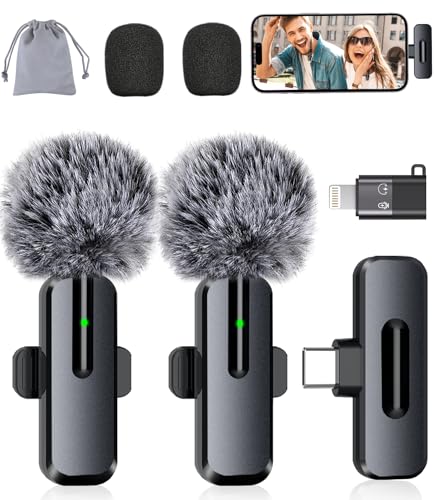
The ZOPPLM 2‑pack wireless lavalier system offers convenient plug‑and‑play connections with USB‑C and Lightning adapters for phones and tablets. The dual‑mic setup is useful for interview-style narration or multi-person voiceovers where mobility is important. Wind protection and DSP processing help reduce noise in outdoor or busy environments.
Best for: mobile narrators and interview-based projects where two mics are advantageous. Choose this if you need to record multiple voices in a single take. Limitation: wireless lavalier mics can suffer from occasional signal drop or proximity changes; consider using a lavalier with a wired backup for critical sessions.
Buying Guide: How to Choose the Right Narration Microphone
- USB mics offer plug‑and‑play simplicity for immediate narration work. XLR mics require an interface but can deliver higher fidelity for long‑term studio setups.
- Polar pattern: Cardioid mics focus on the voice in front and suppress side noise, ideal for narration in home studios. If you record with multiple speakers, consider a multi‑pattern or a lavalier solution for mobility.
- Built‑in features: Pop filters, shock mounts, and boom arms reduce plosive sounds and desk vibrations. Monitor headphone jacks and mute controls help manage sessions without interrupting flow.
- Environment: If your space has echoes, look for mics with good off‑axis rejection or add acoustic treatment. Isolation shields can help but occupy desk space.
- Portability: For field narration, wireless lavaliers and compact USB mics offer flexibility. If you record primarily at home, a sturdy desk mic with a simple USB connection may be more efficient.
- Future expansion: If you anticipate upgrading to an audio interface or a larger studio, choose USB‑XLR capable mics or at least ensure an upgrade path exists with your chosen model.
FAQ
- What mic is best for narration on a budget? USB condensers like the Dejasound or FIFINE options provide clear voice capture with simple setup and are suitable for beginners.
- Do I need an XLR mic for narration? Not necessarily. USB mics are sufficient for most narration tasks. XLR mics offer more control and quality for growing studios when used with an audio interface.
- Is a lavalier mic good for narration? Lavalier mics work well for on‑the‑go narration, interviews, and video work. They’re less ideal for long monologues in controlled studio environments unless used with a reliable wind filter and proper placement.
- Can I use a mic for both podcasting and voiceover work? Yes. Look for mics with smooth frequency response and a cardioid pattern to keep voice clear and reduce room noise in typical narration settings.
- What setup minimizes room echo? Combine a good microphone with basic acoustic treatment (panels, rugs) and a possible isolation shield or desktop reflection filter for clearer voice capture.
- Do I need a desk stand or boom arm? A desk stand or boom arm helps position the mic consistently, reducing handling noise and allowing comfortable narration angles during long sessions.