Answering the question, which computer mouse is best for my setup? This guide highlights five practical options that cover everyday productivity, budget-friendly reliability, portable use, and gaming-ready precision. Each product suits different buyers: students and office workers need ambidextrous designs and reliable tracking; travelers want compact, lightweight options; and casual gamers may value extra DPI and programmable features. Below is a quick summary table of the chosen mice to help you compare at a glance.
| Product | Best For | Key Benefit | Note |
|---|---|---|---|
| Logitech M185 | Ambidextrous daily use | Long battery life, universal compatibility | 2.4 GHz wireless |
| Logitech B100 | Budget, wired reliability | Simple, precise | 800 dpi |
| TECKNET 2.4G Wireless (Purple) | Portable with adjustable DPI | 5 DPI levels, ergonomic | Compact and travel-friendly |
| Amazon Basics 3-Button | Plug-and-play simplicity | 1000 dpi optical tracking | USB wired |
| Acer Wireless Mouse | Mid-size comfort | 3 DPI levels, USB receiver | Plug-and-play |
Logitech M185 Compact Ambidextrous Wireless Mouse

The Logitech M185 is designed for universal compatibility and ambidextrous comfort. It runs on 2.4 GHz wireless with a long battery life, supported by a smart sleep mode. Best for students, writers, and everyday computer users who want a reliable, no-frills setup. The compact form fits well in either hand, reducing fatigue during long sessions. A limitation is the single AA battery life depending on usage, which can be shorter with heavy activity, and some users may prefer rechargeable options.
Logitech B100 Ambidextrous Wired Mouse
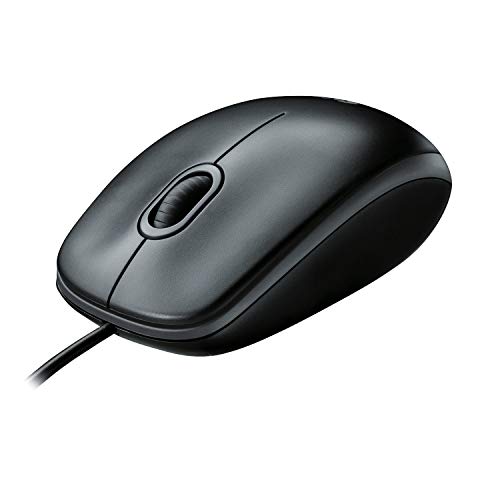
The Logitech B100 offers a straightforward wired experience with an ambidextrous shape. With 800 dpi sensitivity, it provides precise cursor control for document editing and web navigation. This mouse suits budget-conscious buyers who want reliable, plug-and-play operation without worrying about batteries. A caveat is that the wired connection eliminates wireless convenience, and the 800 dpi may feel slow on high-resolution displays or fast gaming tasks.
TECKNET Wireless Mouse, 2.4G Ergonomic (Purple)

The TECKNET 2.4G wireless mouse combines compact design with ergonomic shaping and five DPI levels (800–2600). It’s well-suited for travelers and users who need adjustable precision on various surfaces. The note to consider is that glass surfaces are not included in its marketing materials, suggesting some surfaces may affect tracking. USB-A is required, so Mac users with only USB-C ports may need adapters.
Amazon Basics 3-Button USB Wired Mouse

The Amazon Basics wired mouse is a reliable plug-and-play option with a 1000 dpi optical sensor, designed for Windows and Mac. It’s ideal for users who want a straightforward, no-frills mouse without battery concerns or wireless interference. A potential drawback is that USB-C only devices require adapters, and wired mice may feel less flexible for mobile use.
Acer Wireless Mouse for Laptop

The Acer wireless mouse targets mid-size comfort with three DPI levels (800/1200/1600) and a 2.4 GHz receiver. It’s best for desktop users who want a dependable, travel-friendly option with a simple, driver-free setup. A limitation is that side buttons may not work on Mac, which can affect users who rely on those controls for browsing or productivity tasks.
Buying Guide: Key Considerations For Your Next Computer Mouse
- Connection type: Decide between wireless (2.4 GHz or Bluetooth) or wired. Wireless offers freedom of movement; wired provides constant reliability and no battery concerns.
- Shape and size: Ambidextrous designs suit both hands, while ergonomic contoured shapes reduce fatigue. Consider hand size and grip style (palm, claw, fingertip).
- DPI and precision: Higher DPI improves sensitivity for high-resolution displays or precise editing. Look for adjustable DPI if you work across tasks.
- Buttons and programmability: Extra buttons help with productivity or gaming. Check whether the mouse supports customization through software or hardware.
- Battery life and charging: For wireless mice, longer battery life reduces replacements. Rechargeable options add convenience but may require charging breaks.
- Compatiblity: Ensure compatibility with your OS (Windows, macOS, Linux) and devices like laptops, desktops, or Chromebooks.
- Durability and weight: For frequent travelers, a lightweight, durable model is preferable. Heavier mice can be tiring over long use.
FAQ: Quick Answers For Buyers
- What’s the difference between wired and wireless mice? Wired mice connect via USB and avoid battery changes; wireless mice provide more desk freedom but require power.
- Is a higher DPI always better? Not necessarily. Higher DPI improves sensitivity on high-resolution displays, but it can make precise tasks harder if not matched to sensitivity settings.
- Are ambidextrous mice suitable for right-handed users? Yes, ambidextrous designs fit either hand, though some may sacrifice ergonomic padding for symmetry.
- Do all USB mice work with Chromebooks? Most USB mice work with Chromebooks, but some features may require specific drivers or compatibility notes.
- Can I use a mouse with a USB-C only laptop? If the mouse uses USB-A, you may need an adapter or a USB-C hub.
- Should I buy a gaming mouse for everyday tasks? A gaming mouse can offer extra programmable buttons and higher DPI, but for standard tasks a basic model often suffices.