Answering the need for reliable, stage-ready saxophone mics, this guide highlights five top options ideal for live performances, teaching demonstrations, and small gigs. The selections favor clip-on and wireless systems designed to reduce feedback, minimize noise, and preserve natural tone. Best for performers who move on stage, educators conducting lessons, and venues seeking consistent amplification in challenging acoustics.
The following table compares the five featured saxophone mics, focusing on suitability, key strengths, and ideal use cases. Use this as a quick reference to pair each option with your performance style.
| Product | Best For | Key Strength |
|---|---|---|
| Lefiko 2.4G Wireless Saxophone Microphone System | Small gigs, teaching, practice | Stable wireless with 12 ms latency |
| MICVISTA Wireless Saxophone Microphone System | Clip-on versatility, long-range use | Noise cancellation and easy setup |
| SGPRO Saxophone Microphone Wireless Condenser | Brass instruments, live performance | Condenser capsule and adjustable gooseneck |
| XIAOKOA Wireless Sax Microphone | Stage performances, street gigs | UHF stability with digital display |
| NUX B-6 Saxophone Wireless System | Professional sax players seeking clarity | High-resolution digital audio and sax-focused design |
Lefiko 2.4G Wireless Saxophone Microphone System

Best for teaching and small performances, Lefiko uses a 2.4GHz wireless link for stable transmission with low latency. The system targets sax and other brass instruments, delivering a clear, balanced tone across setups. The 360° adjustable gooseneck allows precise placement for natural sound pickup. Choose this if you need a compact, easy-to-set system with reliable interference resistance for classrooms or intimate venues.
Who it’s best for: teachers, students, and solo performers in small venues. Why selected: its 12 ms latency and multiple instrument compatibility minimize setup hassles while maintaining sound integrity. Limitation: performance can be affected by crowded wireless environments with many devices operating in close proximity.
MICVISTA Wireless Saxophone Microphone System

This MICVISTA setup emphasizes clip-on convenience with a clear, noise-reduced signal. It targets saxophones and other brass instruments, making it a solid choice for performers who value quick setup and consistent sound in variable environments. The system supports stable long-distance transmission with effective interference control, suitable for street performances or live teaching sessions.
Who it’s best for: gigging players who move around the stage and need an unobtrusive mic. Why selected: easy plug-and-play operation and strong anti-interference performance. Limitation: may require careful mic placement to avoid handling noise on very windy outdoor stages.
SGPRO Saxophone Microphone Wireless Condenser
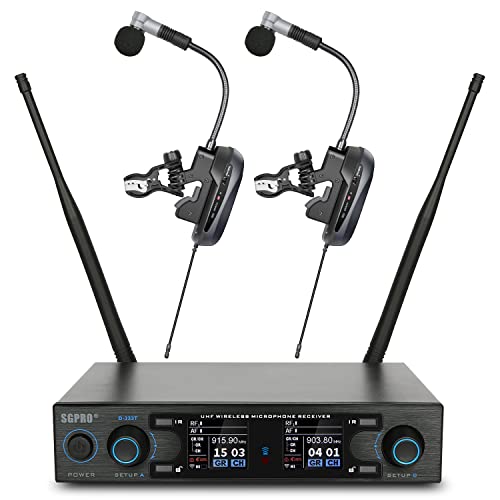
SGPRO offers a condenser capsule system designed for brass instruments like saxophones. The bronze-made gooseneck provides flexible positioning, and the included clip with silicone padding protects the instrument while ensuring stable pickup. Best for performers who need a high-fidelity, studio-like tone on stage, this option excels in well-controlled venues where sound reinforcement matters.
Who it’s best for: players who want detailed, natural tone with dependable articulation. Why selected: condenser design yields crisp high end and enhanced detail. Limitation: condenser mics can be more sensitive to feedback in loud venues if not paired with proper monitoring or isolation.
XIAOKOA Wireless Sax Microphone

UHF wireless technology with a long transmission range makes this option suitable for larger stages or outdoor performances. The built-in LED display lets performers monitor frequency, battery power, and volume at a glance. A silicone shock-proof clip helps fix the mic on the instrument without harming it, minimizing handling noise and vibration-induced artifacts.
Who it’s best for: stage performers who need clear visibility of settings and extended range. Why selected: practical LED display and robust clip design. Limitation: performance may vary if the user operates near many RF devices in dense wireless environments.
NUX B-6 Saxophone Wireless System

Designed specifically for saxophonists, the NUX B-6 includes a compact wireless setup and three preset EQ scenes tailored to saxophones. The system aims to deliver natural tone with minimal processing while offering a dependable 2.4GHz channel and solid performance in typical gig settings. Best for players seeking sax-centric optimization without complicated calibrations.
Who it’s best for: professional sax players and serious hobbyists who value instrument-centric tuning. Why selected: sax-focused EQ presets and compact design. Limitation: like many wireless systems, performance can be affected by RF congestion; ensure proper channel selection.
Buying Guide: How To Choose A Saxophone Live Microphone System
- Consider your venue and mobility. If you perform from different spots, a wireless system with a stable range and low latency reduces discrepancies in tone as you move.
- Clip-on vs. headset. Clip-on mics keep the instrument’s natural feel, but you may prefer a condenser head if you require extra fidelity in controlled environments.
- Frequency stability. UHF systems tend to be less prone to interference in busy venues, but always check compatibility with other gear on-site.
- Gooseneck adjustability. A flexible, safe attachment reduces handling noise and helps place the mic for optimal tone capture on the sax bell or body.
- Power and monitoring. Look for LED displays, battery indicators, and straightforward on/off controls to simplify live setup.
- Tone emphasis. Some mics offer a brighter high end or more midrange warmth. Match the mic’s tonal character to the saxophone’s natural projection and the room acoustics.
Frequently Asked Questions
- What type of microphone is best for live saxophone performance?
– A clip-on or condenser mic designed for brass instruments often provides a natural, direct sound with minimal feedback when properly positioned. - Do wireless sax mics introduce noticeable latency?
– Many modern systems offer sub-20 ms latency; the Lefiko option lists around 12 ms, which is typically sufficient for performers. - Is a condenser mic better than dynamic for sax on stage?
– Condenser mics can capture more detail and high-end clarity but may be more sensitive to feedback; dynamics are generally more forgiving in loud venues. - What should I check before buying a sax wireless system?
– Check range, battery life, compatibility with your sax, ease of clip placement, and whether the system supports multiple channels to avoid interference. - Can I use vocal mics for saxophone live?
– Vocal mics are not optimized for brass tone; sax-specific systems typically deliver a more natural balance and reduce feedback risk in live settings. - Do these mics require special adapters or accessories?
– Most clip-on and wireless kits include the mic, clip, gooseneck, and transmitter; some setups may need a separate receiver or base station compatible with your sound system.