Answering the common question, these mics are well-suited for recording trombone with clarity, warmth, and minimal interference. The top picks are ideal for brass players, teachers, and hobbyists looking for crisp articulation and strong projection. Choose between USB condensers for simple, quick setups or dedicated XLR/clip-on systems for studio-quality flexibility and real-time monitoring. The following selections emphasize solid handling of brass tones, easy positioning, and reliable transmission where applicable.
| Product | Strength | Best For |
|---|---|---|
| Lefiko 2.4G Wireless Saxophone Microphone System | Stable 2.4G wireless with 12ms latency; 360° gooseneck | Students, teachers, small ensemble rehearsals |
| XIAOKOA UHF Wireless Saxophone Microphone | UHF stability; long range up to 164 ft; digital display | Stage performances and outdoor gigs |
| KENBAIDIO Saxophone Microphone System | Clip-on cardioid pickup; up to 196 ft range; wide instrument compatibility | Live performances and teaching studios |
| FIFINE AM8 USB/XLR Dynamic Microphone | Dual USB/XLR, mute button, RGB lighting; cardioid | Streaming, practice, home studio setups |
| Dejasound Upgraded Studio Recording Microphone | USB condenser with isolation shield and pop filter; 192kHz/24-bit | Podcasting, vocal recording, home studios |
FIFINE AM8 USB/XLR Dynamic Microphone

The FIFINE AM8 is a dynamic microphone that supports both USB and XLR connections, offering flexible setup options for trombone recording. With a cardioid pick-up pattern, it focuses on the front sound source while reducing rear noise, making it suitable for close-miked brass recordings. Best for home studios, podcasters, and streamers who want an all-in-one solution. A direct USB connection allows quick start for beginners, while the XLR option provides higher-fidelity routing for more advanced setups when paired with an audio interface.
Who it is best for: Beginners needing plug-and-play USB, or hobbyists seeking a robust all-in-one mic for trombone practice and online sessions.
Why selected: Combines simplicity and quality with practical mute control and input versatility. The main caution is that RGB features and some LEDs are inactive when using XLR, so users should plan a connection path accordingly.
Lefiko 2.4G Wireless Saxophone Microphone System

Designed for brass instruments, Lefiko’s wireless system is a practical choice for trombone players in teaching studios, practice rooms, and small gigs. The 2.4G wireless connection minimizes latency, while the 360° gooseneck allows flexible positioning to optimize tone pickup. Automatic frequency hopping helps reduce interference in enclosed spaces. The clip-on design keeps hands free during performance. This option is best for mobility and real-time brass capture in live or rehearsal settings.
Best for: Brass players who need freedom of movement and reliable real-time audio during rehearsals or teaching sessions.
Limitations: Wireless systems can be sensitive to RF interference in crowded environments; ensure a clear signal path or consider a wired backup for critical recordings.
MAYBESTA Wireless Mini Lavalier Microphone Kit

While primarily marketed for mobile recordings, MAYBESTA’s 2-pack lavalier mics can capture trombone practitioners who need hands-free operation during rehearsals or teaching demonstrations. paired with a compatible device, these mics offer compact convenience for quick capture of warm brass tones in controlled environments. Best for on-camera practice videos or quick field recordings where mobility is a priority.
Best for: Content creators who want small, discreet mics for teaching demos or on-camera practice sessions.
Limitations: Lavalier mics may not deliver the full body of a trombone’s projection compared with a dedicated instrument microphone; placement matters for capturing the instrument’s lower frequencies.
XIAOKOA UHF Wireless Saxophone Microphone

XIAOKOA offers an instrument-specific wireless system with a digital display, designed to deliver clear pickup for brass instruments including trombone. Its UHF transmission provides long-range operation and a low-latency signal, useful for stage performances, classrooms, and small venues. The system is built to resist interference and maintain consistent audio during live use.
Best for: Musicians who need dependable wireless performance for brass instruments in live settings or large practice rooms.
Limitations: Not recommended for use with MacBook or some mobile setups; ensure compatibility with your recording chain or console before purchase.
KENBAIDIO Saxophone Microphone System
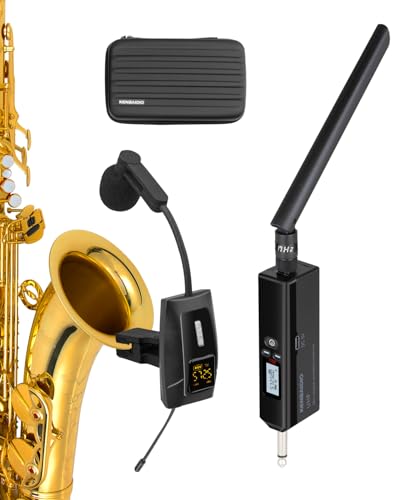
KENBAIDIO’s clip-on condenser mic system is designed for brass instruments, including trombone. It provides strong, cardioid pickup and a wide capture range for natural tone. The system supports significant broadcast and teaching contexts, featuring infrared pairing and robust signal stability. This option is best for educators and performers who require a dependable, hands-off clip mic for brass projection.
Best for: Teachers and performers who need reliable clip-on pickup with straightforward setup for brass instruments.
Limitations: Clip mic size and instrument fit may require careful positioning to avoid handling noise during movement.
TONOR TC-777 Podcast Microphone

TONOR TC-777 is a cardioid condenser microphone with a compact tripod stand and pop filtering setup. Its design emphasizes clear, direct vocal capture and is commonly used for podcasts and home studios. For trombone recording, use at a close distance to isolate the instrument’s fundamental frequencies while minimizing room reflections. Best for beginner studios and quick demos where a simple USB path is preferred.
Best for: Home studio users who want a simple, sturdy USB mic with easy setup for brass practice recordings.
Limitations: Condenser mics may pick up room ambiance; consider acoustic treatment for best trombone tone capture.
Buying Guide: Key Considerations For Trombone Recording
- Connection type: USB mics offer plug-and-play simplicity, while XLR mics paired with an interface can deliver higher fidelity and more routing options for serious trombone recording.
- Pickup pattern: Cardioid patterns perform well for close-miking brass because they focus on the instrument and reject side noise. Boundary mics or omnidirectional types capture more room tone but require more acoustic treatment.
- Positioning: For trombone, place the mic about 6–12 inches from the bell or bell-side mouth area at a slight angle to minimize air blasts. Adjust height to capture core tonal frequency Range (around 100 Hz to 2 kHz for brass warmth).
- Noise management: Use a pop filter or isolation shield when recording with a condenser mic to control plosives and room reflections. Dynamic mics are less sensitive to room noise, making them a good option in untreated spaces.
- Mobility vs. stability: Wireless options provide freedom for stage or classroom use but require battery management and potential interference checks. Wired mics reduce that risk and often deliver more consistent tone.
- System fit: If you already own a mixer or audio interface, prioritizing XLR mics like Lefiko orKENBAIDIO can yield better long-term expansion. For quick demos or streaming, USB mics like FIFINE AM8 or Dejasound provide fast setup.
Frequently Asked Questions
- What is the best mic for trombone recording at home? – A cardioid dynamic or condenser mic with good proximity control (e.g., FIFINE AM8) is suitable for close-miking trombone in a home studio.
- Do wireless mics work well for brass? – Yes, wireless systems like Lefiko or XIAOKOA can work well for stage and teaching environments, but ensure minimal RF interference.
- Should I use a pop filter for trombone recording? – For condenser mics, a pop filter or isolation shield helps reduce plosives and room reflections; dynamic mics may not require one.
- Is USB or XLR better for trombone recording? – USB mics offer convenience; XLR mics with an audio interface provide higher fidelity and more routing flexibility for serious projects.
- Can lapel mics capture trombone tone accurately? – Lapel mics are not ideal for close brass recording due to limited body and proximity; they’re better for speaking or video apps rather than dedicated instrument capture.
- What placement yields the best trombone tone? – Position the mic 6–12 inches from the bell, angled slightly toward the mouthpiece to emphasize core brass frequencies while avoiding direct air blasts.