Answering the need for quieter, more controlled ambient recordings, this guide highlights five mics and accessories designed to minimize reflections, reduce plosives, and improve overall sound clarity. Whether you’re podcasting, streaming, or recording in a small home studio, these picks help achieve cleaner audio with fewer post-production steps. The top picks cater to different buyers: casual creators seeking plug‑and‑play setups, podcasters needing compact isolation, and hobbyists who want improved room sound without a dedicated vocal booth.
Summary of selected products
| Product | Main Benefit | Best For | Isolation/Noise Reduction Level |
|---|---|---|---|
| MAONO USB Microphone AU-A04 | Professional USB condenser mic with 192kHz/24Bit chipset | Podcasters and streamers seeking plug‑and‑play clarity | High |
| Dejasound Studio Recording Microphone with Isolation Shield | USB condenser mic with built‑in isolation shield | Singers, voiceovers, home studios needing integrated shielding | High |
| TONOR Personal Vocal Booth | Framed acoustic foam vocal booth for general isolation | Small studios and hobbyists needing a portable booth | Very High |
| Ramzi Microphone Stand With Isolation Shield | Desktop stand with isolation shield and adjustable height | Podcasting, voice work, or streaming in compact spaces | High |
| GDPONRM Microphone Wind Shield Isolation Ball | Five-sided foam isolation with dual-layer pop filter | Any mic setup needing anti‑plosives and reduced reflections | Moderate–High |
MAONO USB Microphone AU-A04

Designed for easy plug‑and‑play use, the MAONO AU-A04 features a professional chipset with 192kHz/24Bit sampling and a cardioid pattern. Best for: podcasters and streamers who want high-quality sound without extra gear. Choose this for simple setups and consistent USB connectivity. Limitation: USB-only operation may limit resale versatility if you upgrade to XLR hardware.
Dejasound Upgraded Studio Recording Microphone

This USB condenser microphone includes an integrated isolation shield for sound isolation in small spaces. Best for: podcasters and home studio users who want a ready-to-record kit with built‑in shielding. It supports USB connection for straightforward recording. Limitation: USB dependency means you won’t be using traditional XLR interfaces without adapters.
Ramzi Microphone Stand With Isolation Shield

This foldable stand combines a desktop mic shield with a 72.8″ adjustable stand and a dual-layer foam shield. Best for: creators needing a compact, portable isolation setup on a desk. Limitation: The shield design favors close-range recording; larger studios might require broader room treatment for maximum effect.
ResponseBridge Bluetooth Microphone Wireless Voice Amplifier

Note: While this option combines a speaker and mic, its integrated design can simplify mobile or classroom setups. Best for: teachers or presenters who need a loud, clear mic signal in larger rooms. Caution: It is not a standalone USB mic and lacks the typical studio isolation of dedicated mics with shields.
Pyle Portable Bluetooth Live Broadcast Sound Card
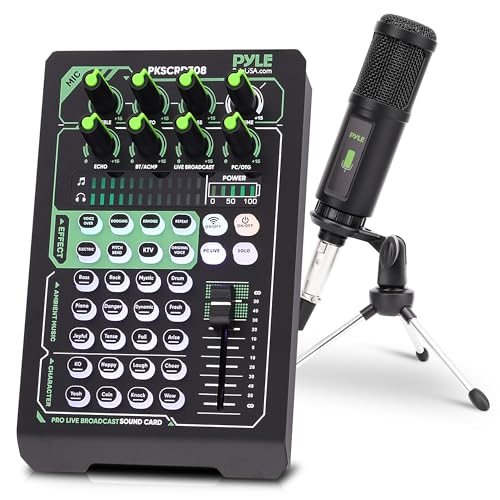
This bundle includes a sound card, condenser mic, and windscreen sponge, with DSP noise reduction for clear broadcasts. Best for: streamers and mobile setups needing a compact, all-in-one package. Limitation: Complex signal routing can be challenging for beginners; ensure compatibility with your software.
Buying Guide
What to consider when selecting mic gear for ambient sound
- Purpose and space: Are you recording in a closet, a small room, or a larger area? Different isolation methods suit different environments.
- Connection type: USB mics are easiest to use; XLR mics with audio interfaces offer more flexibility and upgrades.
- Isolation vs. portability: Integrated shields deliver quick setup; standalone shields or booths provide greater room treatment but add bulk.
- Noise sources: Consider plosives, sibilance, and room reflections. Filters, foam, and screen designs help mitigate these.
- Future-proofing: If you expect growth into higher-end gear, prefer mics with standard mounting and compatible interfaces (XLR, USB, etc.).
FAQ
- What is ambient sound, and why use these devices? Answer: Ambient sound includes room noise and reflections; specialized mics and shields reduce reflections and improve clarity for recordings and broadcasts.
- Should I pick USB or XLR for ambient recording? Answer: USB is easiest for quick setups; XLR offers higher quality and expandability with dedicated interfaces.
- Do isolation shields work in small rooms? Answer: Yes, they help by reducing reflections near the mic, though complete room treatment may still be needed for the quietest results.
- Can a pop filter replace a full vocal booth? Answer: Not entirely; pop filters help with plosives, while a booth or foam panels reduce overall room reverberation.
- Is a microphone stand with an isolation shield worth it? Answer: Yes for desk setups; it provides immediate isolation without needing a separate booth.
- What is the best setup for streaming and podcasting on a budget? Answer: A USB condenser mic with a built-in or lightweight isolation solution often balances cost and quality.