Finding the right microphone for a home studio can define the quality of your recordings. This guide highlights five versatile options suited for podcasters, singers, and content creators working from a bedroom or small workspace. Each choice balances ease of use, sound quality, and value. The top picks cover USB and XLR setups, compact USB kits with stands, and robust cardioid condensers for near-field capture. Read on to compare which mic best matches your voice, recording style, and equipment setup.
| Product | Best For | Connection | Notes |
|---|---|---|---|
| Dejasound Upgraded Studio Recording Microphone | Podcasters & Beginners | USB | Includes isolation shield and pop filter |
| Audio-Technica AT2020 Cardioid Condenser | Project/Home Studios | XLR | Widely trusted for versatility |
| FIFINE Studio Condenser USB Kit | Streaming & YouTube | USB | Includes boom arm and pop filter |
| Logitech Blue Yeti USB | Voiceovers & Gaming | USB | Multiple pickup patterns |
| Shure SM4 Studio Kit | Professional Home Studios | XLR | All-metal build with accessories |
Dejasound Upgraded Studio Recording Microphone

This USB condenser microphone is designed for plug-and-play use with a PC, smartphone, or laptop. It is ideal for podcasting, vocal recording, and music production. The built-in features streamline home studio workflows by eliminating extra hardware and drivers.
Best for creators who want a simple setup without an audio interface. The USB connection reduces latency and setup time, making it suitable for beginners and quick-turn projects. It also includes an isolation shield and pop filter to help control room ambience and plosive sounds.
Key specification highlights include a 16mm diaphragm, cardioid pickup pattern, and a 192 kHz/24-bit sampling rate with a 30 Hz–16 kHz frequency response. These choices provide a clear, front-focused sound with modest room noise, which is helpful for small home studios and streaming.
Best for: podcasters and singer-songwriters who value ease of use and integrated components. Why selected: it combines a compact USB mic with practical accessories that improve recording quality without adding complexity. Caution: USB mics can limit some advanced processing options compared to XLR setups, especially if you plan to expand to a full studio with an external audio interface.
Audio-Technica AT2020 Cardioid Condenser Studio Mic
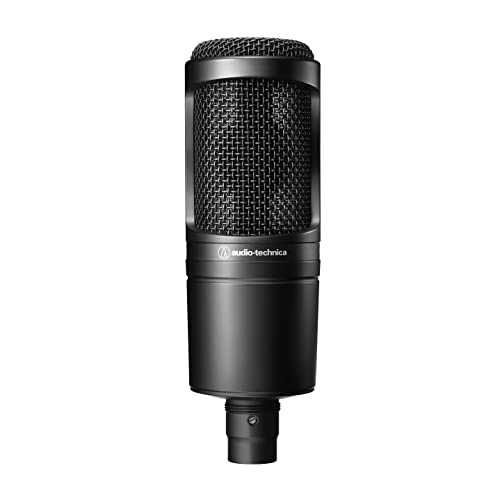
The AT2020 is a cardioid condenser microphone that shines in project and home studio environments. It uses an XLR connection, so you’ll likely pair it with an audio interface or mixer to access a full preamp and phantom power. Its performance stems from a proven capsule design that provides clean highs and controlled lows for vocals and instrument miking.
Best for: users building a dedicated vocal or instrument recording chain with an audio interface. Why selected: high SPL handling and a wide dynamic range make it versatile for a variety of recording tasks, from spoken word to acoustic guitar. Caution: requires phantom power and an audio interface, which adds cost and setup steps for beginners.
FIFINE Studio Condenser USB Kit (T669)

This USB mic kit provides an all-in-one recording solution with a desk stand boom arm, a shock mount, and a double pop filter. The USB connection ensures straightforward setup for PC or Mac, making it a practical choice for podcasters, vloggers, and streamers who want to minimize gear clutter.
Best for: creators who want an instantly usable USB setup with a solid microphone plus mounting accessories. Why selected: the included arm and dual pop filter help stabilize placement and reduce plosives, improving overall sound quality. Caution: not compatible with Xbox; ensure your recording environment has minimal foreground noise for best results.
Logitech Creators Blue Yeti USB Microphone

The Blue Yeti offers a versatile USB microphone with four pickup patterns, enabling cardioid, omni, bidirectional, and stereo configurations. This flexibility makes it suitable for a range of tasks, from solo voice work to multi-person interviews and instrument miking.
Best for: creators who need multi-pattern versatility and quick toggling between recording set-ups without extra gear. Why selected: four pickup patterns provide adaptability for various recording contexts. Caution: desktop footprint is relatively large, which may be a constraint in tight desks spaces.
Shure SM4 Studio Kit

The SM4 is a professional-grade home studio condenser microphone kit built with a brass 1-inch dual-diaphragm capsule for clean low-end and detailed highs. The uniform cardioid pattern helps with off-axis noise rejection, delivering dependable recordings for close-miked vocals and instruments.
Best for: more serious home studios that want premium audio quality and a durable, all-metal build. Why selected: the SM4’s design emphasizes smooth, natural reproduction and effective noise rejection. Caution: as an XLR microphone, it requires an audio interface and phantom power, which adds setup steps and equipment needs.
Ramzi Microphone Stand With Isolation Shield

This option focuses on control of room reflections with a foldable microphone isolation shield and a sturdy stand. The shield’s acoustic layers aim to reduce ambient noise and echo, which helps if you’re recording in a less-than-quiet space. It is suitable for both desk setups and mount-a-boom configurations.
Best for: creators who need an affordable isolation solution to improve clarity in untreated rooms. Why selected: the combination of shield and stand provides a practical upgrade for voice work and podcasts in small spaces. Caution: the shield is effective for close-mic scenarios; larger room reverberations may still affect sound if not positioned carefully.
TONOR TC20 XLR Condenser Microphone Kit

The TC20 kit provides a complete studio setup with an XLR condenser microphone, T20 boom arm, shock mount, and pop filter. It requires external power via phantom power, which fits users who already have or plan to invest in an audio interface or mixer. The cardioid capsule helps minimize off-axis noise and focus on the voice.
Best for: home recordists building a flexible, upgradeable setup with an XLR path. Why selected: the kit includes essential accessories for a ready-to-record workflow. Caution: requires phantom power; easier to set up if you already own an interface or mixer.
Buying Guide: What To Consider When Choosing A Home Studio Microphone
- Connection type: USB mics are simplest for beginners and quick projects, while XLR mics offer higher flexibility and potential for future upgrades with audio interfaces.
- Voice and room considerations: cardioid patterns help reject rear and side noise, which is beneficial in untreated rooms. If you record with multiple people, multi-pattern mics or an additional figure might be appropriate.
- Accessories: pop filters, shock mounts, booms, and isolation shields can meaningfully reduce plosives, vibrations, and reflections. Include these as needed for your recording style.
- Monitoring: consider whether you need a headphone jack or direct monitoring features to hear yourself in real time.
- Space and budget: compact USB sets are ideal for small desks or bedrooms. If space allows, investing in an XLR path with an interface can yield better long-term flexibility and sound quality.
FAQ
- What is the easiest microphone to start with for a home studio?
USB condensers with included stands and accessories are typically the easiest to set up and use, especially for beginners.
- Do I need phantom power for all microphones?
No. USB microphones do not require phantom power, but many XLR condensers do, so ensure your interface or mixer provides it.
- Which mic is best for a quiet home recording space?
Mics with cardioid patterns, along with a good isolation shield or treatment, help minimize room reflections and ambient noise.
- Should I buy a kit with accessories?
Yes if you want a ready-to-record setup. Kits with a boom arm, pop filter, or shock mount can save time and improve sound quality.
- Is a dynamic mic better than a condenser for home studios?
Condenser mics generally capture more detail and are better for vocals and acoustic instruments in controlled spaces, while dynamic mics can be more forgiving in untreated rooms.