When selecting a low profile heatsink, you want compact cooling that fits your setup without adding bulk. This guide compares five popular options across desktop, PS5, and laptop configurations, highlighting who each product is best for, potential limitations, and why it’s a solid purchase for thermally constrained M.2 SSDs. The top picks are ideal for gamers, compact PC builders, and laptop users who need efficient, space-saving cooling solutions.
Summary of Selected Products
| Product | Best For | Key Benefit | Limitations |
|---|---|---|---|
| GLOTRENDS M.2 Heatsink Kits | Desktop PC, PS5/PS5 Slim users | Two-pack aluminum body with broad 2280 compatibility | Not designed for laptops |
| Thermalright AXP90 X36 | Mini ITX builds, compact CPUs | Low 36mm height, robust metal build | CPU-focused, not SSD |
| ELUTENG M.2 Heatsink 4PCS | Multiple drives, PS5 | Double-sided cooling with clips and rubber bands | Requires proper mounting for best results |
| Thermalright AXP90 X47 Black | ITX builds needing higher cooling | 47mm height with solid metal platform | Higher profile than some peers |
| AERVEAL Copper Heat Sink | Very thin spaces, notebooks | Ultra-thin, copper for excellent conductance | Limited to slim spaces |
GLOTRENDS M.2 Heatsink Kits

The GLOTRENDS kit provides a 22x70x3mm aluminum body designed for 2280 M.2 SSDs, suitable for desktop PCs and PS5/PS5 Slim installations. It supports a wide range of NVMe drives and offers passive cooling that helps keep the main control chip within safe temperatures, potentially extending SSD life. Best for builders who want an affordable, two-pack solution for multiple drives.
Who it’s best for: desktop users needing extra cooling for M.2 drives or PS5 console builds that require compact, passive cooling. Better for those who want a cost-effective, easy-to-install solution without active fans. Caution: not intended for laptops or ultrabook configurations where space or mounting options differ.
Thermalright AXP90 X36 Low Profile ITX CPU Cooler

This compact heat sink stands at 36mm high and is designed for ITX builds. It offers a premium metal platform with back plate fasteners and a robust cooling profile suitable for CPUs in small form factor systems. It is best for users who need a minimal footprint CPU cooler with solid build quality and reliable thermal performance.
Who it’s best for: small ITX builds where CPU cooling is critical and space is at a premium. Choose this if you want a rugged, all-metal cooler with effective heat transfer. Limitation: primarily a CPU cooler, not an M.2 SSD solution, so pairing with SSD-specific needs may require additional components.
ELUTENG M.2 Heatsink 4PCS

ELUTENG offers a four-pack of 2280 SSD heatsinks with double-sided cooling, a groove design to expand the dissipation area, and 10°C–25°C cooling effects depending on environment. The aluminum alloy construction and anodic oxidation finish resist corrosion and wear, while metal clips and rubber bands provide dual installation methods. Best for users with multiple drives or PS5 installations.
Who it’s best for: users who want flexibility with multiple drives or a PS5-friendly solution. Better for those who favor a dual-install option. Caution: mounting mechanisms require proper attention to heat transfer and fitment to maximize cooling benefits.
Thermalright AXP90 X47 Black Low Profile CPU Cooler

The AXP90 X47 Black combines a 47mm height with a premium metal build and a slim 92mm PWM fan. It’s designed for ITX systems and supports a broad range of Intel and AMD sockets. Best for compact PCs that need stronger cooling than a basic low-profile heat sink can provide, while still fitting in tight spaces.
Who it’s best for: ITX builders who require higher cooling capacity without sacrificing space. Choose this for better thermal management in tight cases. Limitation: higher profile than some ultra-low-profile units, which may impact certain slim chassis clearance.
AERVEAL Copper Heat Sink

The AERVEAL copper heatsink is ultra-thin and designed for 2.5-inch drives in narrow spaces. Its copper construction offers superior thermal conductivity, and its compact size makes it easy to install in slim notebooks or other constrained environments. Best for users needing maximum heat transfer in very tight spaces.
Who it’s best for: users with limited clearance who still want effective cooling. Choose this if copper’s higher thermal conductivity is a priority. Caution: ultra-thin design may have compatibility limits in very crowded installations.
SGTKJSJS M.2 Heatsink For Laptop

This NVMe M.2 heatsink is copper-based and compatible with M.2 2280 SSDs, making it suitable for laptops and desktops. It features 10–20°C cooling effects and claims 100% copper construction with a high-performance thermal interface. Best for laptop users who need a compact copper solution to prevent throttling.
Who it’s best for: notebook users seeking copper-based cooling with simple installation. Better for performers prioritizing copper’s thermal conductivity. Limitation: large copper blocks may not fit every tight laptop bay; verify clearance before purchasing.
M.2 Heatsink Cooler 2280 Dual-Sided
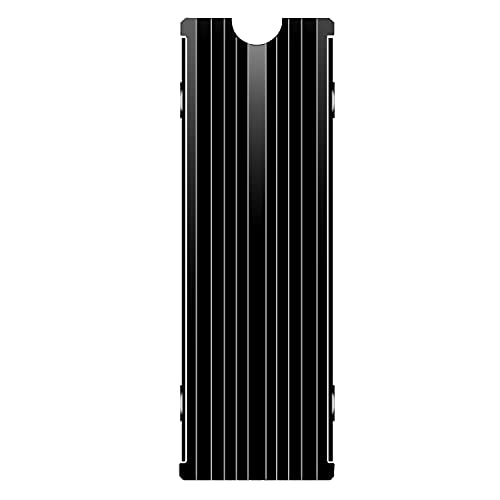
This dual-sided heatsink comes with thermal silicone pads and is designed for PS5 and PC PCIe NVMe M.2 SSDs. It uses an aluminum alloy body with silver plating and an anodic oxidation finish to reduce static buildup and ensure durable performance. Best for single-sided Type M.2 SSD installations in desktop or PS5 contexts.
Who it’s best for: users needing a versatile, single- or dual-sided cooling solution. Avoid this if your space is extremely restricted or if your SSD sits in a non-standard mounting area.
Buying Guide: Key Considerations For Low Profile M.2 Heatsinks
- Compatibility: Confirm drive length (2280 is standard) and interface. Some heatsinks are tailored for PS5 or desktop M.2 slots; verify fitment with your device.
- Height and form factor: Low-profile designs range from about 36mm to 47mm in total height. Choose based on chassis clearance and adjacent components.
- Material and thermal performance: Copper offers higher thermal conductivity than aluminum, but it can be heavier and more expensive. Aluminum is lighter and corrosion-resistant for most setups.
- Installation method: Some kits include clips, rubber bands, or back plates. Consider ease of installation and long-term reliability in high-temperature environments.
- Number of drives: Kits with multiple heatsinks are convenient for systems with several M.2 drives or for PS5 users expanding storage.
- Thermal interface materials: Look for included thermal pads with suitable thickness and thermal conductivity to maximize heat transfer.
- Environment and usage: Gaming consoles and laptops may experience different thermal loads. Select a solution designed for the expected operating temperatures.
FAQ
- What is a low profile heatsink and why do I need one? — It is a compact device designed to dissipate heat from M.2 SSDs or CPUs in tight spaces, reducing throttling and extending component life in compact builds.
- Do all M.2 heatsinks fit PS5? — Not all do. Check the product’s stated compatibility for PS5 or desktop usage to ensure proper mounting.
- Is copper better than aluminum for heatsinks? — Copper generally provides higher thermal conductivity, which can improve cooling but adds weight and cost. Aluminum is lighter and corrosion-resistant.
- Can I install multiple heatsinks on a single motherboard? — Yes, if there is enough space and the drives’ positions allow proper airflow and mounting.
- What should I consider before buying for a laptop? — Confirm the notebook space, clearance under the keyboard, and any clearance with RAM or cooling modules before choosing a heatsink.
- Are these passive heatsinks sufficient for high-performance NVMe drives? — Passive cooling works well for many drives, but high-power SSDs or sustained-heavy workloads may benefit from additional cooling measures or active cooling options.