Answering the search for affordable condenser mics, this guide spotlights five budget-friendly options that deliver solid vocal and instrument capture for home studios, podcasts, streaming, and online meetings. These picks suit beginners seeking easy USB plug-and-play setup, hobbyists building a small recording workspace, and content creators who need reliable sound without a big price tag. The top selections balance sound quality, build durability, and practicality for various setups.
| Product | Best For | Why It Stands Out |
|---|---|---|
| FIFINE K669B USB Microphone | Podcasters and streamers | Metal body, easy USB setup, convenient volume knob |
| Mackie EM-91C | Home studios on a budget | Large-diaphragm with professional feel |
| FIFINE T669 Studio Kit | Voiceovers and YouTube creators | Includes boom arm and pop filter for versatile setups |
| Amazon Basics USB Condenser Microphone | Beginners and multi-purpose use | Simple, reliable cardioid USB mic with adjustable stand |
| TONOR TC-777 | Streaming and conferencing on a budget | Cardioid pattern with tripod stand and accessories |
FIFINE USB Microphone, K669B

The FIFINE K669B is a compact USB condenser mic designed for easy plug-and-play use with PCs and laptops. Its durable metal body supports stable placement during voice work, streaming, podcasts, and YouTube videos. The built-in volume control allows quick adjustment without interrupting the session. Best for solo vocal recording, gaming narration, and small podcast setups where a simple, reliable USB option is prioritized. A potential limitation is non-compatibility with Xbox and phones, which can affect cross-device workflows.
Mackie EM-Series EM-91C

The Mackie EM-91C offers an affordable large-diaphragm condenser design for home studios. Its rugged construction supports consistent performance in recording vocals or acoustic instruments. This mic is best for aspiring musicians and podcasters who want a studio-like sound without stepping up to higher-cost gear. The main caveat is that it may require careful placement and acoustic treatment to maximize its cardioid capture, especially in untreated rooms.
FIFINE Studio Condenser Kit, T669
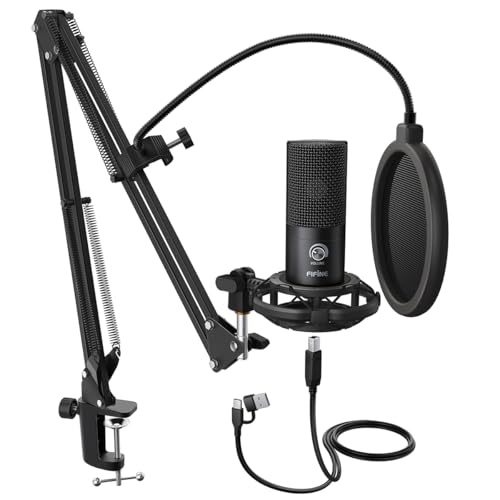
This studio kit from FIFINE delivers a complete package for voice work and streaming. The kit includes an adjustable boom arm, shock mount, and a pop filter, making it a solid choice for voiceovers, podcasts, and YouTube content. It uses USB for simple setup and has a cardioid capsule to focus on the sound source while minimizing room noise. The included accessories help reduce handling and plosive noises, but the overall footprint is larger than a single USB mic, which may matter on tight desks.
Amazon Basics USB Condenser Microphone

The Amazon Basics USB Condenser Microphone emphasizes ease of use with a cardioid pickup pattern and adjustable stand. It suits beginners looking for a straightforward, reliable entry into streaming, podcasting, or remote work. It is best for simple setups and quick start scenarios, though it may not offer the premium detail and build features of higher-priced competitors. Users should expect solid general performance with minimal setup.
TONOR TC-777 Podcast Microphone

The TONOR TC-777 is a compact USB cardioid microphone with a tripod stand and pop filter, designed for podcasting and streaming. This setup is especially suitable for users who want a single-unit package with a quiet desk footprint and easy setup. The key advantage is its broad compatibility with Windows, macOS, PS4/5, and common video conferencing apps. A limitation is that it’s not compatible with Xbox, which could affect some multi-device users.
Buying Guide
- What is your primary use? Choose a mic tuned for voice clarity and low noise for podcasts and streaming, or a more robust studio mic for music recording.
- USB vs XLR: USB mics are simplest for beginners and on-the-go use; XLR mics require an audio interface but can offer higher sound quality and flexibility.
- Voice vs instrument: Large-diaphragm condensers shine on vocals and acoustic instruments; some compact USB mics perform well for voice without extra gear.
- Noise handling: Cardioid patterns help reject room noise. Consider pop filters and boom arms for better vocal recordings.
- Setup and space: If desk space is limited, a compact mic with minimal accessories may be preferable; if you have room, a kit with a boom arm and shock mount reduces handling noise.
FAQ
- What is a condenser microphone best used for at home?
Condenser mics are well-suited for vocals, podcasts, streaming, and acoustic instruments due to their sensitivity and wide frequency response.
- Do USB condensers require an audio interface?
No. USB condensers connect directly to a computer, simplifying setup for beginners and hobbyists.
- Is a larger diaphragm always better?
A larger diaphragm often yields richer low-end and smoother high-frequency response, but the best choice depends on voice and room characteristics.
- What’s the benefit of a microphone kit with accessories?
Includes a boom arm, shock mount, and pop filter that improve sound quality and reduce noise from handling and plosives.
- Can these mics be used for gaming or meetings?
Yes. With USB connection, most listed models work well for voice chat, video conferences, and streaming, though some setups may require basic noise handling adjustments.
- Which mic should I pick if I’m on a tight budget?
Consider the Amazon Basics USB Condenser Microphone or the TONOR TC-777 for affordable all-in-one packages with reliable performance.