Choosing a loop station pedal comes down to how you plan to use it. This guide highlights five versatile options that suit beginners, performers, and experimenters alike. Each product section explains who it’s best for, why it stands out, and a practical caveat to consider before you buy. Use the buying guide and FAQ to compare features such as recording time, multi-track capabilities, and real-time control.
| Product | Best For | Key Benefit |
|---|---|---|
| BOSS RC-1 Loop Station | Beginners and casual players | Simple, reliable looping with clear indicators |
| BOSS RC-5 Loop Station | performers needing longer loops | Longer recording time and expandable controls |
| LEKATO Looper Pedal (3 Loops) | Budget-conscious players | Decent features with 3 loops and tuner |
| Sondery Looper Pedal Triple Loop | Multi-track creators | Three tracks with USB import/export |
| BOSS RC-600 Floor-Based Loop Station | Advanced live performers | Massive onboard features and real-time control |
BOSS RC-1 Loop Station Pedal

The RC-1 is a straightforward looping pedal designed for guitar, bass, keyboards, and more. Its compact design, a single stomp switch, and a 24-segment LED indicator make it easy to learn and operate. Best for solo performers, buskers, or anyone who wants reliable looping without a steep learning curve. It offers basic record, playback, overdub, and undo/redo functions with stereo in/out for integrating with other gear.
Why it’s selected: Dependable, simple workflow. The RC-1 excels for players who want quick setup and predictable looping behavior in fast-paced gigs or practice sessions. Caution: It has a simple feature set; if you need advanced rhythm patterns or multi-track options, this may feel limiting.
Boss RC-1 Loop Station Bundle

This bundle adds Gearlux accessories and cables for ready-to-perform setups. It’s ideal for players who want a complete, plug-and-play looping solution for stage or studio. The 24-segment LED status ring on the RC-1 helps quickly identify Rec/Overdub/Play modes, while the 12-minute stereo recording time supports extended performances. It runs on 9V power or an optional adapter.
Best for: Beginners and intermediate players seeking a value-packed starter kit that reduces setup friction. Limitation: The bundled accessories are practical, but the core pedal remains a basic looping engine with limited rhythm features.
Boss RC-5 Loop Station Bundle

The RC-5 expands the looping toolkit with a higher-capacity engine and more flexible controls. It supports stereo recording, up to 13 hours of recording time, and a multi-color LCD that shows loop status and parameter editing. The pedal is designed to be compatible with external footswitches, expression pedals, and MIDI control, making it a strong choice for live performers who want deeper control and expandability. A caution: longer loops and extra features demand more upfront learning and a bigger footprint on stage.
Best for: Musicians who want richer loop options, more complex live setups, and external control compatibility. Limitation: Advanced features may require more time to master than a basic pedal.
LEKATO Looper Pedal (Three Loops)

LEKATO’s three-loop looper emphasizes accessible features with a clear visual time indicator, 48K/24-bit audio resolution, and an analog-dry-through design that preserves pure tone. The built-in tuner helps keep performance in tune, and the three loops offer a practical balance between functionality and budget. Best for: Players who want a compact, audio-quality-focused looper with basic overdubs and a tuner. Caution: Power supply requirements are specific, and the package may omit the power adapter.
Sondery Looper Pedal Triple Loop

The Sondery triple-loop pedal provides 3 saving slots with up to 30 minutes per track. It uses color-coded LEDs to indicate loop modes and supports USB upload/download of WAV files, enabling easy editing and sharing of loops. Best for: Home studio creators and performers who want multi-track projects and easy file transfer. Limitation: USB transfer adds an additional step to workflow and might require a computer for full file management.
LEKATO Looper Pedal with Sync & Tuner
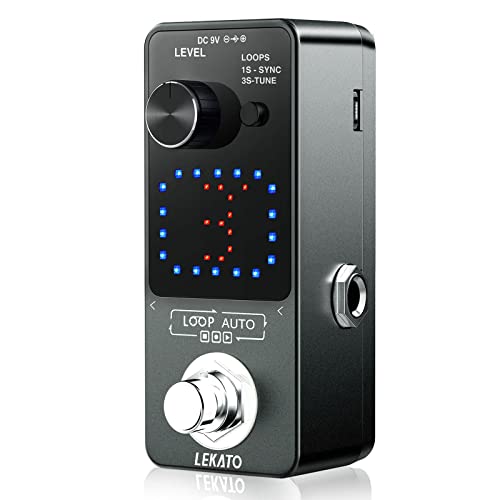
This LEKATO model emphasizes synchronized recording with a built-in tuner and three loops. It offers 18 minutes total recording time, a visual progress indicator, and an analog-dry-through design for clean guitar tones. Best for: Players who want synchronized looping and tuning on one pedal, with a compact form factor. Caution: Power supply details are specific, and ensure the 9V center-negative adapter is used.
Boss RC-5 Loop Station Pedal
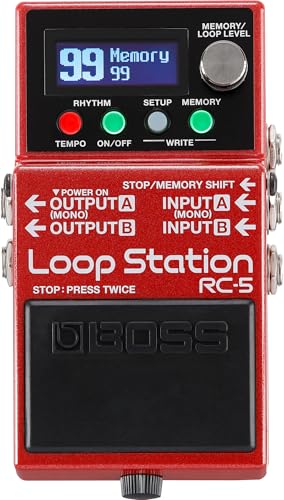
The RC-5 is a dependable mid-range looper with memory controls and rhythm features, suitable for performers who want a loop-based arrangement with adjustable levels. It provides a balance of capabilities and ease of use—better for live use than a basic practice pedal, yet not as deep as higher-end units. Caution: The feature set is strong but not as expansive as premium floor units for heavy studio work.
BOSS RC-600 Floor-Based Loop Station
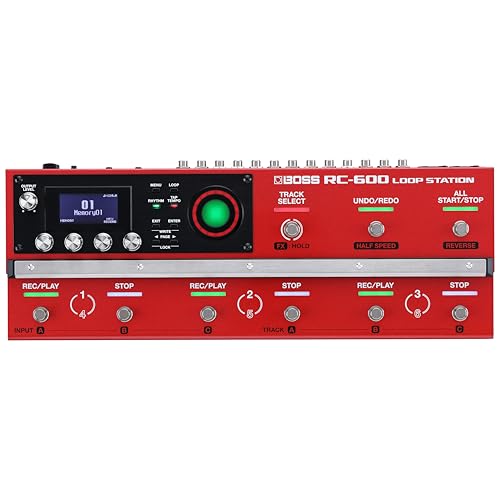
The RC-600 is a feature-forward, floor-based looper designed for serious live performance and complex looping. It supports recording and editing up to six loops in real time and offers advanced features and customizable functions. Best for: Professional players and seasoned performers who need robust live-looping capabilities and deep control over sound design. Limitation: Higher complexity may require more learning time and a larger pedalboard footprint.
Buying Guide
- Recording time: If you plan long performances, prioritize pedals with extended recording time or multi-track capabilities (RC-5, RC-600).
- Control and expandability: For live setups, consider MIDI, expression pedal compatibility, and external footswitch support (RC-5, RC-600).
- Number of loops: A single-loop pedal is simple, while three-loop or six-loop units facilitate layered performances (LEKATO three loops, Sondery three tracks, RC-600 six loops).
- Audio quality and processing: Look for high-resolution AD/DA and features like analog-dry-through to preserve your guitar tone (LEKATO models, RC-5’s processing).
- Portability vs. studio use: Floor-based units offer extensive features for performance spaces, while compact pedals suit practice rooms or busking scenarios (RC-600 vs RC-1).
FAQ
- What is a loop station pedal?
A loop station pedal records and plays back musical phrases, allowing you to layer tracks in real time or over time. - What should I consider before buying a looper pedal?
Consider recording time, number of loops, external control options, and whether you need stereo inputs/outputs. - Is a floor-based looper better than a compact pedal?
Floor-based units often offer more features and real-time control, suitable for live performances; compact pedals are great for beginners and practice. - Can loopers work with non-guitar instruments?
Yes. Many loopers support keyboards, bass, and other instruments through stereo input/output. - Do loopers require special power supplies?
Many do; verify the required voltage and polarity and whether the unit includes power options in the bundle. - Are USB-enabled loopers worth it?
USB-enabled loopers enable saving, exporting, or importing WAV files, which helps with arranging and sharing ideas.