For long-distance viewing, wildlife observation, birding, or precision shooting, a high-quality spotting scope enhances light transmission, detail, and comfort. This article highlights top options designed for clarity at extended ranges, including models with durable builds, weather resistance, and convenient digiscoping capabilities. Explore five standout choices and a practical buying guide to help you compare features like magnification range, objective size, waterproofing, and portability.
style=”display:none;”>Summary Table of Chosen Products
| Product | Brand | Magnification | Objective (mm) | Notes |
|---|---|---|---|---|
| SVBONY SV28 100mm Angled Spotting Scope | SVBONY | 25-75x | 100 | Bright, long-range viewing; FMC optics; included phone adapter |
| Emarth 20-60×60 Angled Spotting Scope | Emarth | 20-60x | 60 | Lightweight; table-top tripod; carry bag |
| SVBONY SV28 20-60×80 New Version | SVBONY | 20-60x | 80 | Wide field; digiscoping capable |
| SVBONY SV28 Plus 25-75×70 | SVBONY | 25-75x | 70 | IP65 waterproof; fog-proof |
| TOCHUNG 20-60×80 HD | tochung | 20-60x | 80 | Waterproof, fogproof; versatile for several activities |
Choosing the right long-distance spotting scope involves balancing magnification, light gathering, weather resistance, and ease of use. The following five products are selected for strong optical performance, practical features for America-based outdoor use, and reliable build quality.
SVBONY SV28 100mm Angled Spotting Scope

The SV28 100mm angled spotting scope emphasizes brightness and detail with a 100mm objective. Its fully multi-coated FMC optics maximize light transmission, producing clearer images in lower light. The 25-75x magnification range allows you to scan distant subjects and then zoom in for fine detail, making it suitable for long-range shooting, wildlife viewing, and hunting. An angled eyepiece provides comfortable viewing angles over extended sessions, while the included soft carrying case and phone adapter support transport and digiscoping capabilities.
Emarth 20-60×60 Angled Spotting Scope
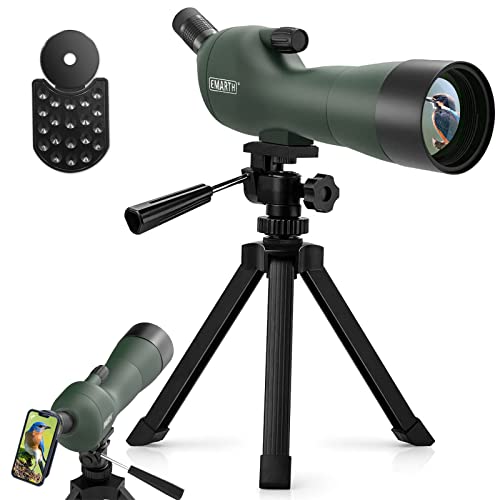
Emarth’s 20-60×60 model focuses on portability without sacrificing range. With a large 60mm objective lens, it delivers enhanced light transmission for bright, high-contrast views. The BAK4 prisms and fully multi-coated lenses support sharp imagery across the zoom, while a light build (~1.31 pounds) and included soft case make it easy to travel with. The 14″ tabletop tripod enables stable viewing in field or table setups, ideal for outdoor observers who prioritize quick setup and mobility.
SVBONY SV28 20-60×80 New Version

This version pairs a wide 80mm objective with a 20-60x zoom eyepiece, providing generous light transmission and a broad field of view. It’s well-suited for long-range observation, birding, and wildlife viewing where illumination can be variable. The fully multi-coated optics (FMC) help minimize light loss, delivering brighter, crisper images. The model commonly supports digiscoping with an optional phone adapter, enabling easy sharing of distant detail.
SVBONY SV28 Plus 25-75×70 With Tripod

The SV28 Plus emphasizes versatility for target shooting, birding, and wildlife watching with a 25-75x70mm zoom range and a 64-43 ft/1000yds field of view. The IP65 waterproof and fog-proof design offers reliability in varied weather, while the ergonomic 45-degree angled eyepiece reduces neck strain during long sessions. A sturdy rubber armor provides grip and protection against bumps in rugged environments.
SVBONY SV28 100mm Angled With SA411 Remote Shutter

This variant mirrors the 100mm aperture design with a 25-75x range and adds a SA411 remote shutter for easier digiscoping and moment capture at distance. The FMC optics deliver bright, crisp imagery, and the angled eyepiece supports comfortable viewing over extended periods. The included soft carrying case and phone adapter increase transportability and flexibility for field use and field-to-photo sharing sessions.
Buying Guide: Key Purchase Considerations
- Magnification range: Look for a versatile zoom (e.g., 20-60x or 25-75x) to balance broad scanning with distant detail. Consider the quality of the eyepiece for smooth zooming and eye relief, especially if you wear glasses.
- Objective size: Larger objectives (70–100 mm) gather more light for brighter images in dawn or dusk conditions but add weight. Smaller objectives offer portability but less light transmission.
- Optical coatings: Fully multi-coated (FMC) and high-quality prisms (e.g., BAK4) improve light transmission and contrast, reducing flare and improving color fidelity.
- Weather sealing: IP65 waterproofing and fog-proof nitrogen purge protect optics from rain, humidity, and temperature swings—crucial for outdoor use.
- Durability and grip: Rubber armor and rugged build help withstand field use, with grip features that prevent slipping during travel or setup on uneven terrain.
- Digiscoping readiness: If capturing distant subjects is a goal, ensure compatibility with phone adapters or digiscoping mounts, and consider remote shutter options for stable remote capture.
- Weight and portability: Balance whether you need a compact, lightweight model for hiking or a heavier, more capable scope for vehicle-based setups in the field.
- Tripod compatibility: A stable tripod or table-top stand is essential for steady viewing at higher magnifications; verify compatibility with your choice of tripod.
Overall, the best long-distance spotting scope blends bright optics, durable construction, and flexible magnification with practical accessories like a digiscoping adapter and a reliable carrying solution. When evaluating options, consider how you plan to use the scope—whether for birding, target shooting, wildlife observation, or astronomy—and compare models that align with those priorities.