Finding a reliable HDMI KVM switch that lets you control two computers from a single keyboard, mouse, and monitor can streamline workspaces, reduce desk clutter, and boost productivity. The following picks are optimized for American users seeking 4K at 60Hz performance, USB peripheral sharing, and easy switching. Each option supports multiple operating systems and common devices, making it easier to pair with laptops, desktops, consoles, or office gear. Read on to compare top models and learn how to choose the right one for your setup.
Summary of Chosen Products
- Hearvo USB 3.0 HDMI KVM Switch 1 Monitor, 2 Computers, 4K@60Hz, with EDID Adaptive
- GREATHTEK USB3.0 KVM Switch HDMI 4 Port, 4 Computers, 4K@60Hz
- UGREEN HDMI KVM Switch 1 Monitor, 2 Computers, 4 USB Ports, 4K@60Hz
- Jancane 4K KVM Switch HDMI 2 Ports, 2 Computers, USB Cables Included
- Anker HDMI Switch, 4K@60Hz, 2 In 1 Out, HDR Support
Note: Each product listed below includes a direct link to Amazon for quick access and verification of specifications. This article presents objective information to help you compare features, compatibility, and performance considerations.
Hearvo 4K HDMI KVM Switch (2 Computers, 1 Monitor)

This Hearvo KVM switch provides control over two computers using a single HDMI monitor, keyboard, and mouse. It combines USB and HDMI switching into one convenient device and supports devices like PCs, laptops, and game consoles. Operating system compatibility spans Windows, Linux, and Mac, making it suitable for mixed environments. Three USB 3.0 ports enable fast sharing of printers, external drives, and other USB peripherals between systems, reducing desk clutter and improving workflow efficiency. The device emphasizes simple plug-and-play setup with automatic USB device detection across both computers.
Key considerations: 4K@60Hz support ensures high-quality visuals, and HDCP 2.2 compatibility helps with protected content. The EDID adaptation helps maintain display compatibility across different monitors and graphics sources. If your setup includes external drives or printers shared across machines, this model simplifies peripheral management while keeping the host systems in sync.
GREATHTEK 4-Port HDMI KVM Switch

This 4-port HDMI KVM switch lets four computers share a single monitor and input devices, controlled by one keyboard and mouse. The max resolution is 4K@60Hz, with support for lower refresh rates as needed. An adaptive EDID feature helps the switch detect and configure compatible display settings when multiple devices are connected, improving plug-and-play reliability. Three USB 3.0 ports facilitate fast sharing of USB peripherals, including printers, USB drives, and cameras. The device is designed to streamline office workflows by reducing desk equipment and enabling quick, button-driven switching between hosts.
Key considerations: When planning to share USB devices across multiple machines, ensure peripheral compatibility with USB 3.0 speeds. Also verify that your monitors and cables support the selected resolution (4K@60Hz). The EDID adaptation is helpful if you frequently swap between devices with different display capabilities, but note that hotkey switching is not mentioned, so plan on using the included switch or desk controller for desktop use.
UGREEN HDMI KVM Switch (1 Monitor, 2 Computers)

UGREEN’s KVM solution supports two computers sharing one HDMI monitor with four USB ports for keyboard, mouse, and peripheral devices. It features two switching modes: a desktop controller and a dedicated button, offering flexible placement options. UHD 4K at 60Hz is supported, with compatibility for 4K@30Hz and other lower resolutions. HDMI 2.0, HDCP 2.2/1.4, and HDR support help deliver vivid images. A note stresses the need for consistent input/output resolution and proper USB A to B cabling for reliable power and data transfer.
Key considerations: Ensure both computers and the monitor can support the same 4K/60Hz configuration, and confirm that proper USB power and data cables are employed. If EDID emulation is not available, you may experience occasional resolution negotiation differences; plan for occasional manual adjustments if needed. Desktop controller access makes swapping hosts convenient in a fixed workstation.
Jancane 4K HDMI KVM Switch (2 Ports, 2 Computers)

Jancane offers a two-port KVM switch with USB cables included for a streamlined home or office setup. The switch supports 4K at 60Hz and lower resolutions, including 4K@30Hz and 1080p, to accommodate a range of displays. It also lists 4K@60Hz as the primary target and supports multiple devices via HDMI. The unit emphasizes broad device compatibility, including gaming consoles and PCs, which makes it versatile for entertainment rooms, classrooms, or small meeting spaces.
Key considerations: Verify cable length and HDMI quality to sustain 4K60, as performance can degrade with long or low-quality cables. If you rely on hotkey switching, confirm whether this model supports such features, since the description highlights button and wired switching without hotkeys. The included USB cables simplify initial setup.
Anker HDMI Switch (4K@60Hz, 2 In 1 Out)

Anker’s HDMI switch focuses on simplified, one-button transitions between media sources, enabling quick access to preferred inputs without cable disruptions. It supports 4K at 60Hz, HDR, and 3D, expanding compatibility with a broad range of devices from laptops to game consoles. The model is designed to be user-friendly and compact, fitting easily on a desktop while delivering reliable performance. It notes that CEC is not supported, which can matter for integrated TV/AV setups that rely on CEC control between devices.
Key considerations: For gaming or cinema experiences, ensure both input and output cables meet length and quality recommendations to sustain 4K60. The lack of CEC support means you may need to control connected devices separately rather than via a single system remote. This unit is ideal for users prioritizing a simple, space-saving HDMI switch rather than a full KVM with peripheral sharing.
GREATHTEK USB3.0 KVM Switch 2 Port HDMI
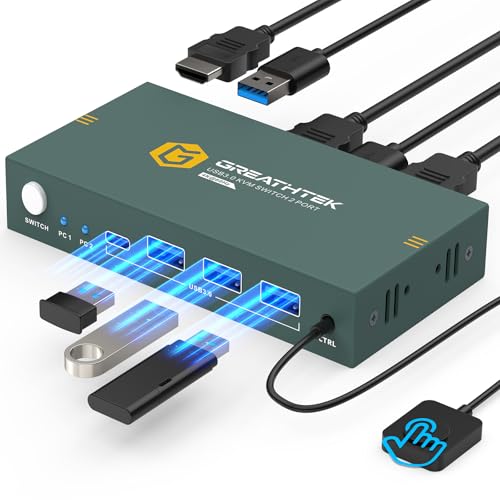
This 2-port HDMI KVM switch enables two computers to share one monitor and one USB set (keyboard/mouse), with three USB 3.0 ports to expand peripheral sharing. It supports resolutions up to 4K@60Hz and offers two switching methods: a wired remote and a button on the device. Note that hotkey switching is not supported. The unit is designed to work with common operating systems and a variety of devices, including PCs, laptops, and game consoles, making it a versatile option for mixed environments.
Key considerations: Check that your USB peripherals are compatible with USB 3.0 speeds and that you have the correct USB A to B cables for power and data transfer. When using EDID, verify that the connected monitor resolution aligns with the device’s supported modes to avoid display flicker or mismatch. The dual-switching options can help in arranging a clean workspace.
Hearvo 8K HDMI KVM Switch (2 Computers, 1 Monitor)

This Hearvo model emphasizes future-ready performance with 8K capability at 60Hz, offering enhanced HDMI switching alongside USB sharing for two computers. It supports 4K@240Hz in certain configurations, and includes EDID adaptive features to optimize display compatibility across devices. The device is designed for demanding multimedia workflows that may require ultra-high resolution and secure content transfer via HDCP 2.3. The setup remains compatible with Windows, Linux, and Mac systems.
Key considerations: Ensure your display and cables truly support 8K at the intended refresh rate; otherwise, you may be limited to 4K or 2K modes. The EDID adaptability helps with multi-monitor setups, but verify whether your content requires HDCP compliance across multiple sources. This option targets power users needing exceptionally high visual fidelity and robust compatibility.
Buying Guide: Key Considerations For Choosing A KVM Switch With HDMI
- Number of ports and computers: Decide whether you need 2-port or 4-port switching, and confirm the number of computers (or devices) you want to connect now and in the future.
- Display resolution and refresh rate: If you work with high-resolution content or gaming, prioritize 4K@60Hz support (or higher where available) and verify HDMI spec (HDMI 2.0/2.1) for compatibility.
- USB peripheral sharing: Check how many USB ports are available for keyboards, mice, printers, drives, and other devices. Ensure compatibility with USB 3.0 if you rely on high-speed peripherals.
- EDID and HDCP handling: EDID adaptation helps with display compatibility across devices; HDCP support ensures protected content works smoothly on your setup.
- Switching method: Consider whether you prefer a front-panel button, a desktop controller, hotkeys, or a centralized software control. Some models include both physical and remote switching.
- Power and cabling: Ensure you have the correct USB power cables where required, and verify cable quality and length to avoid signal degradation, especially at 4K60 or 8K modes.
- Device compatibility: Confirm device support for your computers and consoles (Windows, macOS, Linux, PS/Xbox, etc.). Some switches explicitly state non-support for features like CEC or hotkey switching; plan accordingly.
- Physical footprint and desk aesthetics: If you want a clean desk, choose compact switches with a remote/controller option to reduce cable clutter.
- Future-proofing considerations: For teams or homes that may upgrade monitors or PCs, select a model with higher bandwidth capabilities and EDID adaptability to minimize future reconfiguration.
- Warranty and support: Look for brands offering clear warranties and accessible customer support to resolve compatibility issues or hardware faults quickly.