Musical composition benefits from a keyboard that blends realistic playing feel with versatile sound options and easy connectivity. The following selection focuses on keyboards and MIDI controllers that are well-suited for beginners through pros, helping you compose, layer sounds, and arrange tracks at home. Each option emphasizes playability, expandability, and useful features like built-in sounds, arpeggiators, and teaching aids.
| Product | Brand | Keys | Highlights |
|---|---|---|---|
| 88 Key Piano Keyboard Bundle | Crrtvt | 88 Semi-Weighted | Beginner bundle with stand, pedal, Bluetooth, MIDI, and lessons-ready features |
| LPK25 USB MIDI Keyboard Controller | Akai Professional | 25 Mini Keys | Compact MIDI controller with arpeggiator and software, ideal for portable setups |
| Melody 61 MK4 Keyboard | Alesis | 61 Keys | Large sound library, lesson-ready, sheet/music stand included |
| MPK Mini MK3 Keyboard Controller | Akai Professional | 25 Keys | Arpeggiator, 8 pads, 8 knobs, NKS integration |
| 61 Key Portable Keyboard with Learning Tools | JIKADA | 61 Keys | Built-in teaching modes, LCD display, lighted keys, included stand/mic |
88-Key Piano Keyboard Bundle With Stand And Accessories

The 88-Key Piano Keyboard from Crrtvt offers a semi-weighted keyboard that mirrors the feel of a traditional piano, supporting authentic expression for composing and practicing. The bundle includes a sustain pedal, power supply, stand, carrying case, and headphones, creating a complete setup for both home practice and small stage performances. With a diverse sound palette comprising 128 instrument voices and rhythms, users can layer textures and explore musical ideas across genres. The included 80 demo songs provide practice material and inspiration, while the standard touch-sensitive keys support expressive dynamics for various playing styles. This configuration is especially suitable for beginners seeking a turnkey solution with room to grow into more complex compositions.
LPK25 USB MIDI Keyboard Controller

The Akai Professional LPK25 provides a compact, portable solution for music production and live performance. Its 25-key velocity-sensitive mini keys enable expressive melodies, bass lines, and chord progressions. A dedicated octave shift button simplifies navigating software instruments, while the sustain feature enhances dynamic phrasing. The built-in arpeggiator and clock expand creative control, enabling players to craft rhythmic patterns and evolving textures within their digital audio workstation. This controller pairs well with laptops or desktop setups where desk space is at a premium and is ideal for bedroom studios or on-the-go music production.
Melody 61 MK4 Keyboard Piano for Beginners
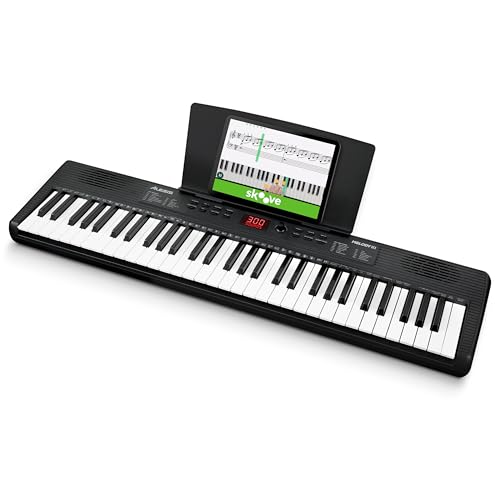
The Alesis Melody 61 MK4 is designed for beginner players who want a feature-rich yet approachable instrument. With 61 keys, it provides a solid stepping stone toward more advanced keyboard work. A large sound library—300 built-in sounds—gives musicians broad tonal options for composing across styles, including layering and split capabilities. The device also offers 300 accompaniment rhythms, auto-chord functions, and 30 demo songs, supporting practice and immediate experimentation. A bundled back sheet music/tablet stand, power adapter, and access to online lessons from Skoove and Melodics make this an all-in-one platform for starting and advancing a home studio workflow.
MPK Mini MK3 25-Key USB MIDI Controller

The Akai MPK Mini MK3 packs a wide feature set into a compact form. Its 25 velocity-sensitive keys support expressive melodic writing and bass lines, while the 4-way thumbstick enables on-the-fly pitch and modulation control. The built-in arpeggiator, flexible clock settings, and multiple transport controls empower users to experiment with complex patterns directly from the controller. Native Instruments NKS integration expands compatibility with a broad library of instrument sounds and plugins, enabling seamless Kontrol from the MPK device. This makes it a strong choice for producers who value portability without sacrificing creative depth.
MPK Mini MK3 Black Version
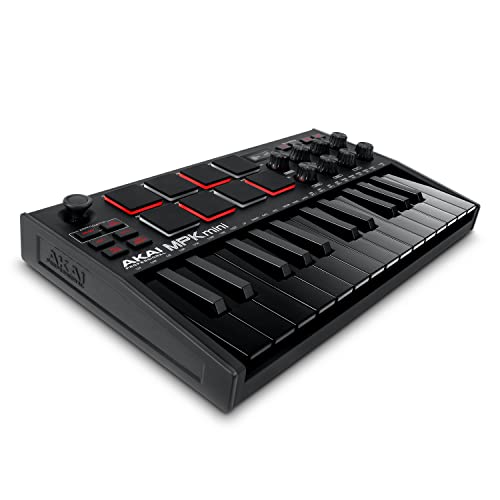
The black variant of the MPK Mini MK3 shares the same core features, including 25 velocity-sensitive keys, a 4-way thumbstick, built-in arpeggiator, and 8 knobs/pads setup. It emphasizes portability and versatility for studio work, beat making, and on-the-go music creation. NKS integration remains a cornerstone, ensuring compatibility with a wide range of software and sound libraries. For composers who travel or maintain a compact studio, this model offers a reliable command center for sketching ideas, sequencing, and shaping sounds during the composing process.
61 Key Portable Keyboard With Learning Tools

The JIKADA 61-key model emphasizes learning tools and practical design for beginners and hobbyists. It features true full-size keys and an LCD display to clearly indicate function status, making it easy to navigate while composing. Built-in stereo speakers, audio input/output, microphone jack, and a UDISK port support singing and voice-friendly practice sessions without disturbing others. The device offers 255 tones and rhythms, 50 demo songs, and keyboard percussion types, plus three teaching modes and note stickers to reinforce music theory and key positions. This makes it suitable for students or casual composers who want clear feedback and guided practice while developing their craft.
Buying Guide: Key Purchase Considerations
- Key count and action: For authentic piano-feel and broad range in composing, 61–88 keys with weighted or semi-weighted action offers the best expressiveness. For portability, 25-key MIDI controllers are ideal but focus on synth-like playability rather than piano realism.
- Connectivity and compatibility: USB MIDI support, software integration (NKS or other DAW compatibility), and Bluetooth or audio outputs determine how smoothly you can move from playing ideas to production.
- Sound library and features: Built-in sounds, rhythms, arpeggiators, transposition controls, and lesson modes help with inspiration and practice, but consider whether you’ll rely on external plugins for sound design.
- Included accessories: Stands, pedals, headphones, and learning resources add value, especially for beginners building a home studio. A sturdy stand and a sustain pedal can significantly affect playability and realism.
- Portability vs. studio setup: If you travel or have limited space, compact MIDI controllers excel. If you’re building a dedicated home studio, a full-size keyboard with robust features may be preferable.
- Learning and practice support: Built-in demo songs, sheet music stands, and access to online lessons can accelerate skill development and keep you engaged in composing.
- Budget and future-proofing: Consider future needs like additional sound banks, software bundles, and the ability to expand with external controllers or keyboards.