Upgrade timelines, performance gains, and reliability all hinge on choosing the right internal SSD. This guide highlights five solid SATA-based options that balance speed, endurance, and value for everyday users, professionals, and creators alike. Each product is evaluated on capacity, speed, and reliability to help you pick a drive that fits your system and workload.
| Product | Brand | Capacity | Key Speed | Link |
|---|---|---|---|---|
| Samsung 870 EVO 1TB | Samsung | 1 TB | up to 560 MB/s read, ~530 MB/s write | Product Page |
| Crucial BX500 1TB | Crucial | 1 TB | up to 540 MB/s read | Product Page |
| Western Digital WD Blue SA510 1TB | Western Digital | 1 TB | up to 560 MB/s read | Product Page |
| Samsung 870 EVO 500GB | Samsung | 500 GB | up to 560 MB/s read, ~530 MB/s write | Product Page |
| PNY CS900 1TB | PNY | 1 TB | up to 535 MB/s read, 515 MB/s write | Product Page |
Note: All drives use a 2.5-inch SATA form factor and are suitable for upgrading both desktops and laptops that support SATA storage. Endurance and warranty vary by model; consult product pages for specifics.
Samsung 870 EVO 1TB
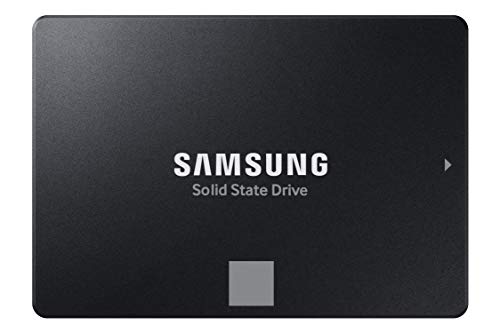
The Samsung 870 EVO 1TB harnesses Samsung’s proven V-NAND architecture and an advanced controller to deliver consistent, reliable performance across everyday tasks, heavy workloads, and content creation. It features S.M.A.R.T. support, a large buffer, and reliability suitable for workstations and NAS environments, with up to 600 TBW under a five-year warranty. Its SATA interface pushes near the limits of the protocol, making it a solid upgrade for speed-sensitive systems that still rely on SATA.
Crucial BX500 1TB

The Crucial BX500 1TB focuses on boot time reduction and responsive performance for everyday use. It is significantly more energy-efficient than traditional hard drives, contributing to longer laptop battery life. While it topples HDDs in sequential speeds, it is best suited for mainstream systems, delivering a practical balance of cost and speed for OS drives and general app loading.
Western Digital WD Blue SA510 1TB

WD Blue SA510 1TB is designed for mainstream computing with reliable 6 Gb/s SATA performance. It’s a capable option for upgrading older laptops or desktops that need a balance of solid speeds, simple installation, and dependable performance for everyday tasks, photo libraries, and operating system drives.
Samsung 870 EVO 500GB
The 500GB variant of the 870 EVO offers the same renowned reliability and sustained performance in a smaller capacity. It’s well-suited for boot drives and primary applications on budget-friendly builds or systems with modest storage needs, while delivering long-term consistency and a robust five-year warranty with Samsung’s TBW guarantees.
PNY CS900 1TB

The PNY CS900 1TB emphasizes OS boot speed and fast file access, offering solid sequential read and write speeds that outperform traditional HDDs by a wide margin. It’s a practical upgrade for users seeking noticeable system responsiveness and efficient power usage in everyday computing tasks and light workloads.
Buying Guide
- Interface and form factor: All listed drives are 2.5-inch SATA SSDs. Ensure your device has a compatible SATA interface and a 7mm or thinner drive bay.
- Capacity vs. budget: Choose capacity based on your primary use—OS drive, applications, or media libraries. Higher capacities deliver more endurance and longer life under heavy workloads.
- Endurance and TBW: Drives like the Samsung 870 EVO line emphasize high TBW ratings, important for heavy writing tasks such as video editing or large-scale data processing.
- Sequential vs. random performance: For boot times and large file transfers, seek high sequential speeds. For multitasking and application loading, overall IOPS and random performance matter.
- Warranty and reliability: Most consumer SATA SSDs provide a 3–5 year warranty and solid long-term reliability. Consider brand reputation and warranty terms when upgrading critical systems.
- Compatibility: If upgrading older hardware, confirm BIOS/UEFI support for SATA SSDs and ensure your system’s storage controller is enabled to maximize performance.
- Power consumption: SSDs generally consume less power than HDDs, improving battery life in laptops. For desktops, this translates to cooler operation and slightly lower energy use over time.
- Security features: Some drives offer enhanced data protection features and SMART monitoring. Enable SMART in your system to monitor health over time.
- Upgrade scenario: For OS-centric upgrades, prioritize drives with strong write endurance and reliable firmware. For media workstations, seek higher capacity and sustained performance.