Answering the search query, these wireless instrument systems deliver clear guitar and bass signals with low latency, strong range, and reliable compatibility. They’re suitable for live performances, rehearsal spaces, and studio setups. The top picks cover 5.8 GHz systems for low interference, plus professional UHF options for larger venues. This guide highlights who each product is best for and why, with practical caveats to help you choose.
| Product | Best For | Key Benefit |
|---|---|---|
| JOYO JW-06 | A versatile gigging guitarist | Long battery life in compact charging box |
| LEKATO 5.8G | Live performers needing high stability | Strong anti-interference and 24-bit/48kHz audio |
| JOYO JW-02S | Budget-conscious players | 4-channel, solid 65 ft range |
| Xvive A58 | Active and passive pickups users | True diversity with versatile mode options |
| Shure BLX14 | Professional on-stage use | Pro-grade range and all-in-one kit |
JOYO Wireless System JW-06 for Guitars and Basses

The 5.8GHz wireless guitar system delivers clean, stable original guitar sound with low noise and minimal latency. A portable charging box powers the transmitter/receiver up to 6 hours after full charge, and the design is compatible with most 6.35mm mono jacks and instruments with vibrato systems or pedal chains. Best for gigging guitarists needing quick setup and dependable performance. Caution: battery life may vary with heavy effects use and signal load.
LEKATO 5.8G Wireless Guitar System
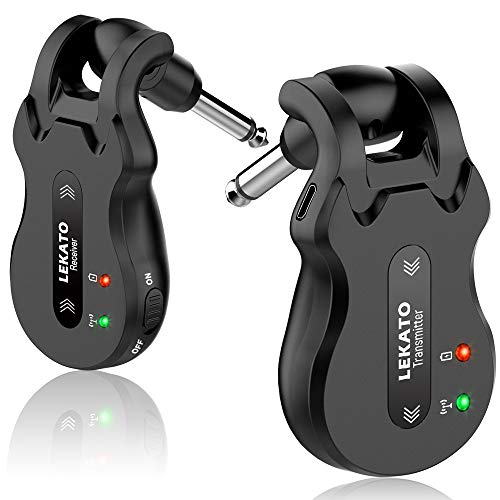
LEKATO’s 5.8GHz system emphasizes strong anti-interference and high-quality 24-bit/48kHz audio with latency under 6ms. Its operational range reaches about 100 feet, making it suitable for small to mid-size venues. The built-in rechargeable battery and dual USB charging add convenience for frequent performers. Best for players who value stability and clear tone in dynamic stage environments. Limitation: performance may vary in RF-dense spaces; consider a backup channel in crowded RF settings.
JOYO 5.8GHz Wireless Guitar System JW-02S

This 5.8GHz system emphasizes clear, stable guitar tone with low latency and a practical 65-foot signal range. The 1/4-inch jack includes a 220-degree rotatable connector, making it versatile for various guitars, basses, and other instruments. Best for players who need a balance of price, range, and solid audio quality. Choose this if you want a straightforward, dependable setup and a simple channel management.
Xvive A58 Wireless Guitar System
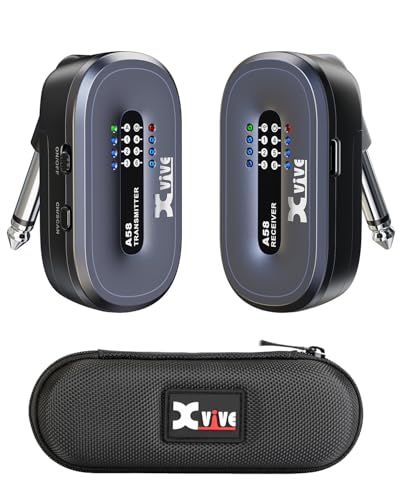
Xvive A58 uses 5.8GHz true diversity for reliable, low-latency performance with 24-bit/48kHz audio. It supports both active and passive pickups, and works well for guitarists who switch between active and passive setups. Range exceeds typical club stages and houses of worship environments. Best for players who need mode flexibility across different guitars. Limitation: some active pickups may require switching modes to optimize signal levels.
Shure BLX14 Wireless Instrument System

The Shure BLX14 uses the H11 UHF band (572–596 MHz) with a professional-grade range of about 300 feet line-of-sight. The kit includes a single-channel receiver, a BLX1 bodypack transmitter, and an instrument cable. It’s built for all-day performances and large venues. Best for professional performers who need dependable range and a complete kit. Caution: frequency availability varies by region; verify compliance before ordering.
Buying Guide
What should you evaluating when shopping for a wireless instrument system?
- Frequency band: 5.8GHz systems reduce interference on busy stages, but ensure the band is legal and available in your area.
- Range and latency: Look for sub-6ms latency for real-time playing and a range that fits your typical stage or rehearsal room size.
- Audio quality: Aim for 24-bit/48kHz or higher; this preserves dynamic range and subtle nuances of your instrument.
- Compatibility: Check if the system works with passive and active pickups, and ensure the 1/4″ jack and rotation features fit your instrument’s jack configuration.
- Power and charging: Consider battery life and charging options, especially for extended tours or long gigs.
- Build and reliability: A robust chassis and well-sealed connectors reduce failure risks during performances.
Frequently Asked Questions
- What is the main difference between 5.8GHz and UHF wireless systems?
5.8GHz systems focus on reduced interference and easier license-free operation in many areas, while UHF systems (like Shure BLX14) emphasize professional-grade range and reliability for larger venues.
- Do these systems support both active and passive pickups?
Many do. Models like Xvive A58 specify support for both modes, but check the product’s notes for each unit.
- Is latency a concern for live playing?
Yes. Look for latency under 6 ms to minimize timing discrepancies during performance.
- Can I use more than one wireless system on the same stage?
Yes, but ensure each system uses a different channel or frequency to avoid interference.
- What should I consider about battery life?
Battery life matters for gigs; choose units with longer run times or easy recharging options, especially if you perform multiple sets.