Looking for the best instrument cable for bass? This guide highlights five reliable options that balance signal quality, durability, and value. Whether you’re shopping for a studio setup, live performance, or home practice, these cables are well-suited for bass players who demand clean tone and solid reliability. The buyers below are grouped by use case: stage performers may favor low-noise, rugged builds; home studio users often prioritize flexibility and shielding; and beginners benefit from durable jackets and easy handling.
Summary table of selected products:
| Product | Best For | Key Benefit | Notable Limitation |
|---|---|---|---|
| New Bee Guitar Cable 10ft | Live stages, versatile use | Low noise, dual shield | Right-angle and straight options may be bulky on tight pedalboards |
| JSAUX Guitar Cable 10 ft | Studio and rehearsal | Thick insulation, durable nylon braid | Heavier feel due to extra shielding |
| Fender Professional 10 ft | Stage and studio | Anti-kinking design, high shielding | Premium build may cost more |
| GLS Audio 20 ft | Long cable runs | Rigid construction with braided jacket | Long length may be less portable |
| AA AUDIO ACCESSORY Pro 10 ft | Professional gigs | Gold-plated connectors, Kevlar reinforcement | Higher price relative to basics |
New Bee Guitar Cable 10ft Electric Instrument Bass AMP Cord

Best for: Performers on stage who need reliable signal transfer with noise rejection. The New Bee cable uses 22 AWG oxygen-free copper conductors and a high-density shield to reduce noise. It ships with both right-angle and straight connectors for versatile placement near amps and pedals, making it a strong choice for crowd-facing stages or practice rooms where space is a premium.
Why it was selected: The dual-shield design and low-noise construction help preserve bass tone with minimal hum. The metal connectors provide durability in transit and repeated plugging. The included L-shaped connector helps keep cables tidy around a pedalboard and on stage.
Caution: The right-angle connector may be less comfortable in tight input bays with thick pedal stacks. If space is very limited, consider a straight-to-straight option or a shorter run to reduce strain on the plug.
JSAUX Guitar Cable 10 ft, Amp Cord for Electric Guitar/Mandolin/Bass

Best for: Musicians seeking extra durability and isolation from noise. JSAUX emphasizes thicker insulation and multiple shields to minimize static and crackle, which is beneficial for bass lines with dynamic pickups or stage electronics. The nylon braid adds tangle resistance for easy gigs and long practice sessions.
Why it was selected: The combination of oxygen-free copper conductors, thicker insulation, and a robust outer jacket makes this cable a solid choice for busy rehearsal rooms or on-the-road setups where cables are frequently connected and unplugged.
Caution: The extra shielding and bulk may add some weight and stiffness. For players prioritizing ultra-flexibility in small spaces, a lighter option could be preferable.
Fender Professional Series Instrument Cable 10 ft
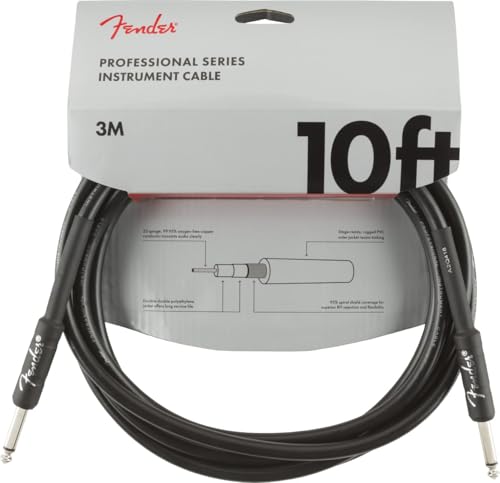
Best for: Players seeking a stage-ready cable with reliable shielding and a low-noise profile. Fender’s cable uses a resilient 95% oxygen-free spiral shield to reduce handling noise, plus a durable PVC jacket and nickel-plated connectors for consistent performance across gigs.
Why it was selected: The anti-kinking design helps prevent tangles and kinks during performances. The combination of flexible shielding and sturdy construction supports long practice sessions and frequent transportation between venues.
Caution: Fender cables can be priced higher than entry-level options. If budget is the primary constraint, consider mid-range alternatives with similar shielding metrics.
GLS Audio Instrument Cable – 20 ft
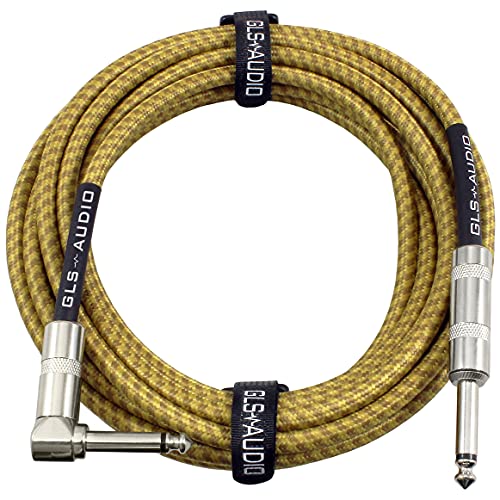
Best for: Bassists and guitarists who need longer runs without losing signal integrity. GLS Audio offers a durable, brown/yellow braided jacket that can withstand routing across stages or long studio rooms while maintaining a solid, low-noise signal path.
Why it was selected: The 1/4″ straight-to-right-angle configuration provides flexibility for different input layouts and pedalboards. The cable’s materials emphasize durability for frequent transport and extended cables runs.
Caution: The longer length may increase handling noise slightly if shielding isn’t perfectly aligned with the signal source. Ensure proper winding and storage to minimize microphonic effects.
AA AUDIO ACCESSORY Pro Series Guitar Cable 10 ft

Best for: Professional players who want durability and tone stability over long-term use. The Pro Series uses gold-plated Neutrik REAN connectors and 18 AWG 99.99% OFC conductors, offering lower resistance and capacitance for clearer bass tones. Kevlar reinforcement adds strength for rugged touring.
Why it was selected: The high-quality connectors and low-capacitance copper contribute to consistent signal transfer with reduced high-frequency loss, which is desirable for bass lines carrying dynamics and power. The Kevlar reinforcement helps prevent failures after repeated setup and teardown.
Caution: This option may be more expensive than basic straight cables. For casual home use, a lower-cost shielded model could be adequate.
Buying Guide: Key Purchase Considerations
What length should I choose for bass?
For practice and small gigs, 10 ft is common. For stage use across larger rooms, 20 ft can be beneficial. Longer cables may introduce more capacitance, so shielding quality matters more.
Why is shielding important?
Shielding reduces electromagnetic interference and handling noise. For bass, where low-end clarity matters, a cable with multiple shields or braided shielding helps preserve tone.
What connector configuration matters?
Straight vs. right-angle connectors affect pedalboard layout and input access. Right-angle plugs can save space on crowded boards; straight plugs can avoid bending stress in difficult spaces.
Should I prioritize durability or flexibility?
Durable jackets (nylon braids, Kevlar reinforcement) are ideal for gigging and travel. Flexible cables are easier to coil and store but may wear faster if the shielding is light.
Do connectors affect tone?
High-quality connectors (gold-plated, nickel-plated) reduce contact resistance and corrosion, contributing to more reliable signal transfer over time.
FAQ
- Can I use guitar cables for bass?
- Yes, most 1/4″ guitar cables work with bass, but bass often benefits from thicker conductors and better shielding to preserve low-end clarity.
- Is longer cable always better for bass?
- No. Longer cables can introduce extra capacitance. Choose length that fits your space and use higher-quality shielding for longer runs.
- What is the impact of gold-plated connectors?
- Gold plating improves corrosion resistance and consistency in contact over time, contributing to stable tone during long sessions.
- Should I avoid right-angle plugs for bass?
- Right-angle plugs are convenient on crowded boards, but ensure they don’t press against the jack or cabinet edge in your setup.
- What material improves durability the most?
- Kevlar reinforcement, heavy-duty jackets, and oxygen-free copper conductors are common durability features that help cables last longer under stage use.