Answering the common buyer intent: these in-wall and in-ceiling speakers deliver strong, balanced sound without occupying floor or shelf space. They’re ideal for room-by-room whole-house audio, home theaters, or bathrooms and kitchens where a discreet setup matters. The top options below are suited to different needs—from rugged damp-indoor use to high-fidelity theater sound. The following table highlights the five selected models and how they compare at a glance.
| Product | Brand | Best For | Notes |
|---|---|---|---|
| Polk Audio RC80i | Polk Audio | Balanced, all-purpose sound in damp spaces | 8″ woofer, 1″ aimable tweeter |
| Micca M-8C | Micca | Elegant, paintable finish for seamless decor | 8″ woofer, 1″ tweeter, modern grill |
| Klipsch CDT-5800-C II | Klipsch | Premium high-frequency clarity | 1″ titanium tweeter, cerametallic woofer |
| VEVOR 4-Pack 8″ In-Ceiling Speakers | VEVOR | Budget-friendly multi-room setups | 4 x 8″ woofer, 1″ tweeter per speaker |
| Klipsch R-5502-W II (Three-Pack) | Klipsch | Surround or LCR setups | Tri-pack with high-efficiency drivers |
Polk Audio RC80i 2-Way In-Ceiling Speakers
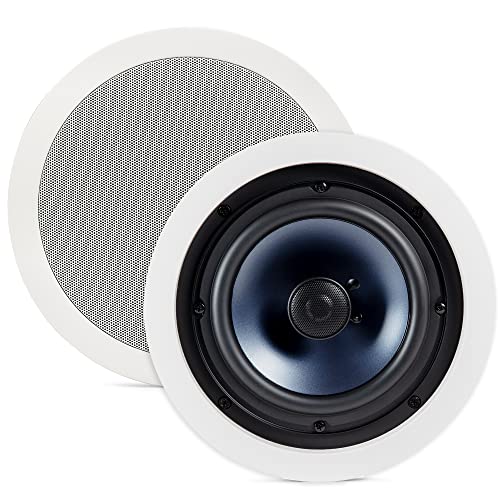
Best for: damp or humid indoor/outdoor spaces where moisture resistance matters. The RC80i uses an 8″ Dynamic Balance woofer and a 1″ aimable tweeter to deliver fuller, more natural sound with damping optimized for bathrooms, kitchens, or covered porches. A rubber seal helps prevent moisture intrusion while preserving audio response. Select this when you want a discreet speaker that still delivers solid depth and detail for music or movies. Limitation: performance can be influenced by ceiling construction; optimal results come from proper mounting and sealing.
Micca M-8C 2-Way In-Ceiling Speakers
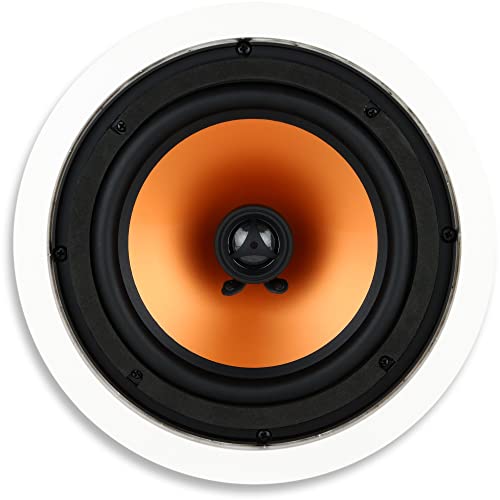
Best for: clean, paintable installations that blend into decor while delivering high-quality sound for whole-house audio or home theater. Micca emphasizes a smooth, natural sound with robust bass, and a rimed grill design that remains unobtrusive when painted to match walls. Easy to install with built-in mounting tabs. Caution: while versatile, performance is best when mounted in solid ceilings; partial drywall gaps can affect tightness of seal and imaging.
Klipsch CDT-5800-C II In-Ceiling Speaker

Best for: premium ceiling installations where high-frequency clarity matters. The CDT-5800-C II pairs a 1″ titanium tweeter with an 8″ pivoting cerametallic woofer and horn-loaded Tractrix design to deliver precise imaging and dynamic range. Choose this if you want theater-like sound with minimal speaker footprint. Limitation: higher price point and installation may require precise cavity drilling and mounting.
VEVOR 4-Pack 8-Inch In-Ceiling Speakers

Best for: multi-room or home theater setups on a budget. Each speaker includes an 8″ woofer and a 1″ tweeter delivering a broad frequency response. The rubber sealing strip and durable housing help minimize leakage and keep sound consistent across rooms. A caution: actual sound staging can vary with ceiling material and installation depth, so plan for a uniform mounting depth across units.
Klipsch R-5502-W II In-Wall Left, Center or Right

Best for: a complete LCR or surround setup with coherent voice and music channels. This three-pack features dual 5.25″ cerametallic woofers and a 1″ titanium driver with Tractrix horn for efficient, high-output performance. Choose this if you need multiple in-wall channels with uniform sonic texture. Limitation: three-pack primarily suits fixed installations; expanding to additional channels may require matching components for balance.
Pyle PDIC1651RD 5.25” In-Wall Speaker

Best for: simple, low-profile upgrades to existing home theater systems. The Pyle PDIC1651RD offers a 2-way design with quick connections and a compact 5.25″ driver, suitable for rooms where space is at a premium. A caution: lower price often correlates with general-performance trade-offs; may not satisfy demanding audio enthusiasts compared with larger, higher-fidelity models.
Buying Guide: In-Wall And In-Ceiling Speaker Considerations
- Installation location and ceiling type: Drywall, plaster, or concrete require different mounting methods and acoustical considerations. Ensure depth, cutout size, and mounting hardware are compatible with your ceilings.
- Speaker size and power handling: 8″ drivers deliver strong mid-bass and room-filling sound, but larger rooms or outdoor-adjacent spaces may benefit from higher power handling or multiple speakers.
- Water resistance and damp environments: If placing in bathrooms, kitchens, or porches, moisture sealing and gasket integrity matter for longevity and performance.
- Finish and aesthetics: Paintable grilles or rims help the units blend with decor. Consider rim design and grill visibility when choosing color and texture.
- Sound goals: For home theaters, prioritize clear dialogue and dynamic range with horn-loaded or large-diameter woofers. For music-centric rooms, focus on balanced tonal response and wide dispersion.
- System compatibility: Consider whether you’re adding to an existing amp, receiver, or multi-room controller. Some kits include amplifiers or paging features; others require external gear.
- Expansion plans: If you anticipate adding more zones, choose speakers with consistent impedance and sensitivity to maintain even sound across rooms.
Frequently Asked Questions
- What is the main difference between in-wall and in-ceiling speakers?
In-wall speakers sit flush with the wall, often delivering a tighter footprint. In-ceiling speakers extend into the ceiling cavity, which can affect imaging and bass response depending on mounting depth. - Are in-wall speakers suitable for bathrooms or outdoors?
Some models are designed for damp or covered outdoor spaces; check moisture resistance and IP ratings if exposure is possible. - Do I need an external amplifier for these speakers?
Many in-wall/ceiling speakers require a receiver or amplifier unless they include an integrated amp. Verify your setup’s power and impedance requirements. - Which brand offers the best balance of price and performance?
Premium brands like Klipsch and Polk typically provide strong imaging and detailed sound, while budget options from VEVO R or Pyle can suit casual listening or large room installations with cost considerations. - How many speakers should I install for a cohesive soundstage?
For a simple stereo setup, two speakers may suffice. For rooms with surround or multi-room audio, consider a minimum of three to five channels to achieve even coverage. - Can I paint the speaker grilles to match my walls?
Many modern in-ceiling and in-wall speakers have paintable grilles or frames to blend with décor, improving aesthetics without sacrificing sound.