For professional mixing, precision monitoring matters. This guide highlights five in-ear monitors and audio devices that deliver neutral, detailed sound ideal for critical listening, vocal clarity, and instrument separation. Each pick is evaluated for sound accuracy, comfort, build quality, and compatibility with studio workflows. Whether you’re in a home studio or a professional setup, these selections help you make informed decisions about IEMs and mixers that support precise mixing, mastering, and streaming tasks.
| Product | Brand | Notes |
|---|---|---|
| Astral Blue (Linsoul Kiwi Ears Astral) | Linsoul | Hybrid 1DD+6BA for neutral mids & accurate bass |
| Astral Green (Linsoul Kiwi Ears Astral) | Linsoul | Hybrid 1DD+6BA with pinna compensation design |
| Essonio ES-C19 | essoniox | 5-BA driver, balanced cable, studio-oriented clarity |
| BOMGE Mixing Console | BOMGE | 4-channel USB/Bluetooth mixer for recording and streaming |
| Phenyx Pro PTL-600 | Phenyx Pro | 6-channel mixer with DSP effects and flexible routing |
Astral Blue — Linsoul Kiwi Ears Astral IEM

The Astral IEM from Kiwi Ears is designed for professional audio engineers seeking precise tonal balance and exceptional resolution. Its hybrid architecture combines a 10 mm dynamic driver with dual midrange balanced armatures to deliver tight bass, controlled low-end extension, and a faithful midrange suitable for critical monitoring. The low-frequency response is tuned to integrate smoothly with the midrange without overpowering vocals or instruments, making it suitable for studio mixing and detailed listening. The pinna compensation curve at 2.8 kHz helps align the listening experience with natural hearing, supporting accurate instrument and vocal placement during a mix.
Key features include a robust, studio-focused driver lineup and a construction aimed at neutral reproduction rather than a colored sound. The Astral is positioned for professional use, with attention to bass control, transient response, and overall tonal balance. If you need IEMs for reference-style monitoring, the Astral’s design prioritizes transparency and fidelity over boosted highs. This makes it a strong choice for engineers seeking reliable cues for mixing decisions in mobile or compact studio environments.
Astral Green — Linsoul Kiwi Ears Astral IEM
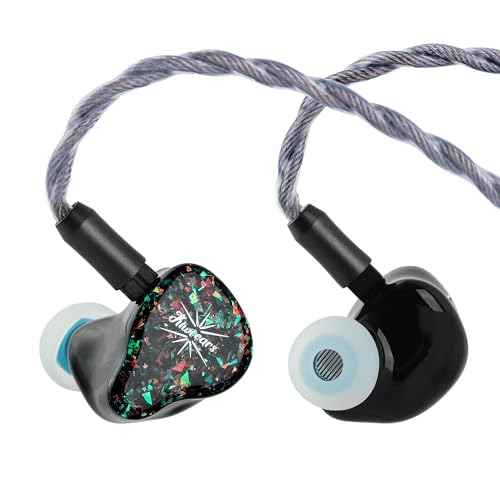
The Green variant shares the same professional-grade design and sonic philosophy as the Blue Astral. With the same 1DD+6BA hybrid approach, it emphasizes a transparent midrange and accurate vocal timbre. This model maintains a measured bass response and a smooth transition into the mids, preserving clarity for guitar, piano, and vocal tracks during mixing sessions. The design also supports long listening sessions with comfort-focused housings and a cable that favors signal integrity for critical listening tasks in studio contexts.
For engineers evaluating different tonal cues, the Green Astral provides a comparable reference experience to the Blue variant. It helps you verify mix consistency across sources and ensures that midrange textures remain articulate in dense arrangements. The IEM’s sonic architecture is built to minimize fatigue while revealing subtle harmonic details that matter when aligning elements in a complex mix.
Essonio ES-C19 — 5 Knowles BA Drivers

The Essonio ES-C19 features a five-BA driver configuration built for audiophile-grade clarity and studio performance. With three Knowles and two custom balanced arms, the IEM aims to deliver precise highs, defined textures, and a transparent overall balance, beneficial for critical mixing decisions and vocal clarity. A high-quality 4.4 mm balanced cable reduces signal loss and improves channel separation, which enhances imaging and soundstage perception during mixing and mastering tasks. This model is well-suited for engineers who require detailed high-frequency reproduction and an articulate midrange without excessive brightness.
Comfort and isolation are supported by multiple silicone and memory-foam tip options, allowing engineers to adapt to different environments. The combination of universal driver technology and premium cabling makes the ES-C19 a practical reference IEM for studio use, stage monitoring, and portable mixing setups where detailed frequency cues are essential.
BOMGE Mini Mixing Console

The BOMGE Professional Audio Mixer is a compact, multi-input interface designed for entry-level to mid-range studio setups. It provides 2 XLR inputs for mics or instruments, multiple line inputs, and a USB-B interface for direct computer recording. The USB recording capability simplifies capture of live performances or voiceovers, while the USB-A port supports playback from USB drives. Although Bluetooth is not available for output, the console offers essential routing and monitoring controls suitable for small studios, podcasters, and streaming workflows. The device supports active speakers via main outputs and includes phantom power for condenser mics, expanding its versatility for tracking and mixing sessions.
In a mixing context, you can route different sources, exercise pre/post-fader sends, and manage basic effects via external processors. While it is compact, the BOMGE mixer provides enough connectivity to support a focused mixing workflow, making it a practical addition for mobile studios or desk-top setups where space is at a premium.
Phenyx Pro PTL-600 — 6-Channel Mixer

The Phenyx Pro PTL-600 is a feature-rich 6-channel mixer designed for stage and home studios. It includes 16 DSP effects, Bluetooth streaming, and USB-B PC recording. With a flexible AUX, SUB routing, and multiple main outputs, it supports complex monitoring and mixing scenarios, including matting signals to subwoofers or isolating a separate feed for streaming. The preamps and 3-band EQ on channels help shape vocal and instrument tones, while Send/Return paths enable external processors to be integrated smoothly. This mixer is suitable for small live setups, podcasting, and compact studio configurations where versatile routing and processing are required.
Engineers can leverage PTL-600 to test how a track translates through different monitoring chains, whether you are streaming to audiences or recording multi-track sessions. While it is not a high-end studio console, its balance of features, affordability, and practical routing makes it a valuable tool for mixing and monitoring in constrained spaces.
Buying Guide: Key Purchase Considerations For IEMs And Mixers
- Sound neutrality vs. coloration: For mixing, prioritize neutral or near-reference monitoring to avoid biased decisions. IEMs with accurate bass extension and a clear midrange help you hear true instrument and vocal cues.
- Driver configuration: Hybrid designs (dynamic plus balanced armature) can provide extended bass with detailed highs. Check driver count and bandwidth (e.g., 1DD+6BA) to ensure you get the resolution you need for critical listening.
- Pinna compensation: Designs with pinna compensation help align perceived loudness with natural hearing, improving mix translation across systems.
- Cable quality: A high-purity balanced cable (e.g., 4.4 mm) reduces signal loss and improves channel separation, which is valuable for accurate panning and imaging.
- Comfort and isolation: Long mixing sessions benefit from ergonomic shells and a variety of tip options to maintain consistent isolation and comfort.
- Output and routing options: For mixers, consider the number of inputs, phantom power, send/return routes, and support for external processors. USB-B enables easy recording to a computer, while Bluetooth may be useful for casual monitoring but is less common in studio-critical setups.
- Environment compatibility: If you work in mobile or on-the-go setups, compact IEMs and small mixers reduce desk space while still delivering critical monitoring cues.
- Durability and build quality: Studio-grade monitors and mixers should withstand daily use and offer reliable connectors, secure housings, and sturdy controls to support long projects.
- Price-to-performance balance: If you’re building a budget-conscious studio, prioritize gear with transparent sound and solid build rather than flashy features that don’t improve monitoring accuracy.
Overall, the combination of high-fidelity IEMs for detailed mixing cues and compact, flexible mixers for routing and recording creates a versatile setup. This approach supports accurate translation, reliable repeatability across listening environments, and streamlined workflows for recording, mixing, and streaming tasks.