For households seeking reliable security without relying on WiFi, there are viable options that operate via cellular networks, wired solutions, or standalone local storage. This guide highlights five Amazon-listed products that address no-WiFi setups, including cellular and standalone systems. Each section covers core features, installation notes, and how the device can fit a wifi-free security strategy. A concise buying guide at the end helps compare performance, connectivity options, storage, and expansion potential, so you can choose a system that matches your property and privacy needs.
| Product | Storage | Key Benefit | |
|---|---|---|---|
| Tefrio 4G LTE Cellular Security Camera | 4G LTE (No WiFi) | Local/Cloud options | Fully cellular with remote access |
| Defender PHOENIXM2 Non-WiFi Cameras | No WiFi required | Local LCD display supported | Plug-in, standalone monitoring |
| Banivigx Home Alarm System (with Camera) | 2.4G WiFi + GSM Dual Network | Local storage options | Multi-channel alarm with camera |
| Toliviviov WiFi Door Alarm Kit | WiFi only (2.4 GHz) | Expansion capable | Affordable door/window security |
| PGST WiFi Home Alarm Security System | WiFi 2.4 GHz + optional GSM | App-based storage | Flexible network options |
Tefrio 4G LTE Cellular Security Camera

The Tefrio 4G LTE Cellular Security Camera operates without WiFi by using a pre-installed SIM and cellular data. It features a 360° rotating lens (355° Pan, 100° Tilt) and remote live viewing via a dedicated app. A built-in solar panel and battery provide off-grid capability, making it suitable for remote sites, barns, or properties without reliable power. Installation centers on mounting and pairing with the SIM-enabled network. The camera supports live 2K HD streaming and remote access, enabling property monitoring from anywhere with cellular coverage. Optional SIM data plans are available through the UBox app for ongoing monitoring.
Key considerations: cellular reliability depends on strong carrier signal at the installation site; solar function reduces power concerns but may require sun exposure. Storage options include cloud or local SD storage, depending on plan and access. This device stands out for no-WiFi operation, portability, and suitability for off-grid surveillance, but may incur ongoing data costs and needs periodic maintenance of solar components.
Defender PHOENIXM2 Non-WiFi Security Cameras

Defender PhoenixM2 delivers a plug-in, non-WiFi security camera system designed for environments where internet access is limited or undesirable. It emphasizes professional-quality video with night vision and infrared capabilities for reliable nighttime monitoring. A distinctive feature is the 7-inch LCD display option that can show up to four cameras at once, allowing local, offline monitoring without a steady internet connection. With flexibly wired power, these cameras can function in a standalone grid, making them suitable for homes or small businesses that want a simple, private surveillance setup without cloud dependence.
Considerations include installation ease, local viewing on the LCD monitor, and potential expansion within a wired or local-network configuration. While not relying on WiFi, users should plan for sufficient power sources and consider evolving needs for additional cameras or integration with any available smart hubs that support non-WiFi setups.
Banivigx Home Alarm System With Camera
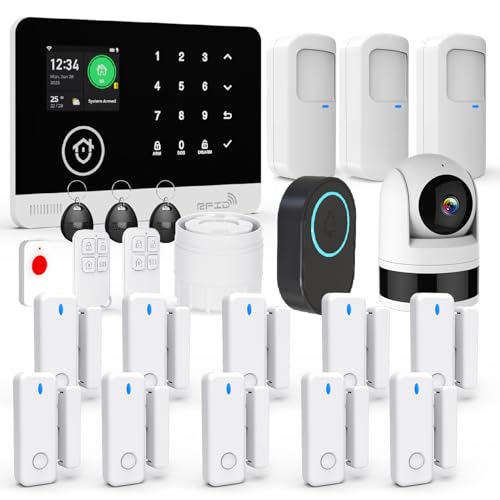
The Banivigx 23-piece wireless alarm kit combines 2.4 GHz WiFi with GSM dual-network support. It includes a color touchscreen interface, camera for security visuals, and remote app-based control with Alexa/Google Home compatibility. While it uses WiFi for some functions, the inclusion of GSM as a backup network provides continued operation where WiFi is unstable or unavailable. The expansion capacity—up to 100 wireless zones, 10 remote controls, and 10 RF cards—makes this system scalable for larger residences or small offices. Installation emphasizes DIY mounting with screws included and an emphasis on user-friendly setup.
Key points to weigh are the dual-network flexibility, available expansion, and whether you require a fully wifi-free posture or a mixed setup. If you anticipate long outages or remote locations, ensure GSM coverage and power reliability are solid at the installation site.
PGST WiFi Home Alarm Security System

The PGST kit is a 24-piece wireless alarm system designed for villa or apartment protection with 2.4 GHz WiFi and optional GSM. While primarily WiFi-driven, it offers GSM compatibility to extend connectivity beyond traditional home networks, enabling notifications and remote control when WiFi isn’t available. The system emphasizes app-based control, smart device integration, and an inclusive wireless sensor layout. It aims to marry ease of installation with scalable monitoring across multiple zones, arming modes, and an SOS option for emergencies. Consider whether you want a strictly no-WiFi device or a flexible system with GSM backup.
In practice, this option can support a no-WiFi approach if you prioritize GSM fallback and local alerting, but you should review whether essential features rely on WiFi or cloud connectivity before finalizing the purchase.
Buying Guide: Key Purchase Considerations And Comparisons
- Connectivity model: Define whether you strictly need no WiFi, or if a system with GSM backup or optional WiFi fits your property. Cellular-only designs (like the Tefrio) are ideal where network access is unreliable, while non-WiFi cameras (like Defender PhoenixM2) suit privacy-focused setups.
- Power and sourcing: Check power requirements. Solar-powered or battery-backed devices reduce running costs and outages but may require sun exposure or battery maintenance. Wired power offers stability but limits placement flexibility.
- Storage options: Local storage (SD cards, LCD displays) minimizes cloud reliance, while cloud storage adds accessibility but depends on internet access and subscription terms. Consider data privacy and retention length when selecting a storage method.
- Expansion capabilities: If you want flexibility, assess how many sensors, cameras, or remotes the system supports, and whether expansion is practical for larger homes or multi-room setups.
- Security features: Look for motion detection, tamper alerts, two-way audio, and alarm sirens. For no-WiFi configurations, ensure robust local monitoring and reliable alerts through SMS, phone calls, or dedicated LCD displays where applicable.
- Ease of installation: DIY-friendly kits save installation time but vary in complexity. Verify mounting hardware, cabling needs, and whether professional installation is recommended for optimal performance.
- Privacy and data management: If cloud storage is used, review data retention policies and encryption. Cellular-based cameras may require ongoing data plans, so factor recurring costs into your long-term budget.
- Interoperability: Consider compatibility with existing smart home ecosystems. If you prefer a strict no-WiFi setup, prioritize devices that work standalone or with non-internet-based hubs.
Choosing a no-WiFi security approach involves balancing independence from internet access with practical considerations like ongoing cellular data costs, storage, and ease of use. The options above show how cellular, standalone, and mixed-network systems can cover homes of various sizes, while also offering pathways for future expansion or privacy-focused configurations. Always evaluate signal strength at installation, power reliability, and your privacy expectations before committing to a specific setup.