Preserving old photos, negatives, and slides at home has never been easier thanks to compact film scanners. This guide reviews five reliable models designed for everyday use, easy loading, and clear results on a 5-inch LCD. Whether you’re converting 35mm slides, 135/110/126 negatives, or even 8mm and Super 8 formats, these scanners offer fast, stand-alone operation and simple editing options. Read on to compare features, image quality, and usability to determine which unit best fits your home workflow.
Summary of chosen products:
- KODAK Slide N SCAN Film & Slide Scanner (KODAK)
- Film and Slide Scanner – Convert 35mm, 126, 110 Film Negatives & Slides (DigitPro)
- Film & Photo Scanner with 5″ LCD Screen (DigitPro)
- HP FilmScan Touch Screen Film & Slide Scanner (HP)
- BEONEGLOBAL ClearScan S5 Film Scanner (BEONE GLOBAL)
KODAK Slide N SCAN Film & Slide Scanner
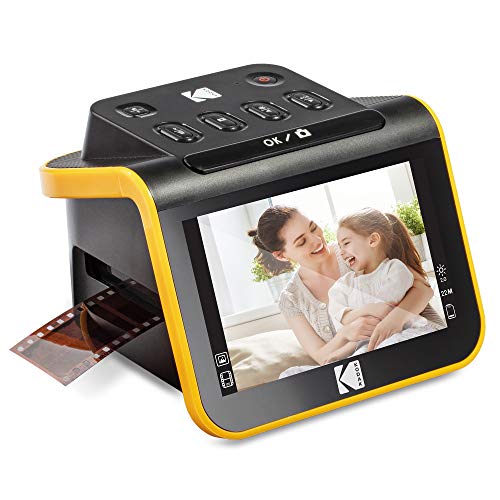
The KODAK Slide N SCAN is designed to digitize a range of film formats, including 135, 110, and 126 slides and negatives. It supports direct saving to an SD card (card not included) and features a 5-inch LCD display for immediate preview and edits. The device emphasizes quick loading with a dedicated loading tray and includes adapters for multiple film sizes, a slide holder, cleaning brush, and necessary cables for USB and HDMI connections. It is positioned as a convenient home solution for family memories and small archival projects.
DigitPro Film and Slide Scanner (35mm, 126, 110)

This DigitPro model is a versatile, all-in-one scanner that supports color and black-and-white 35mm/135, 110, 126 negatives, 50mm slides, and even Super 8 film. It stores scans on its built-in memory or on an external SD card up to 64GB. A 5-inch LCD provides real-time preview and playback, with a simple one-touch scan workflow that makes digitizing memories quick and accessible. The package also emphasizes easy editing on the display and straightforward transfer to other devices or displays, making it suitable for casual historians and scrapbookers alike.
DigitPro 4-in-1 Photo & Film Scanner

DigitPro’s 4-in-1 model expands functionality beyond film to include printed photos and business cards, making it a compact workstation for organizing memories. It supports 3R to 5R photo sizes in addition to 35mm negatives and slides, and a 5-inch LCD screen allows on-device viewing and light editing. With 128MB internal memory plus an 8GB SD card, it is designed for standalone operation without a computer. This makes it an approachable entry point for households looking to archive generations of photos and documents in one device.
HP FilmScan Touch Screen Film & Slide Scanner
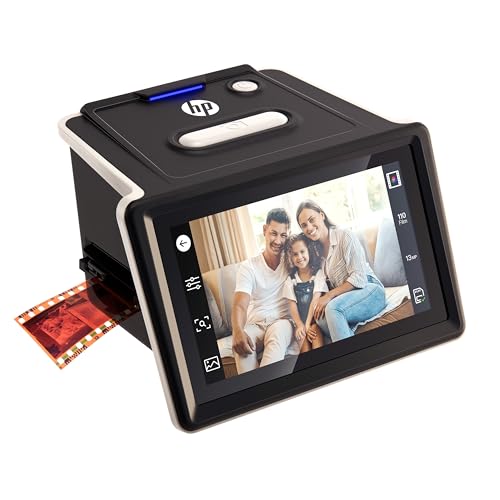
The HP FilmScan emphasizes an easy touch-screen workflow with a built-in 5-inch LCD for previewing, editing, and saving to an SD card or computer. It supports 135, 126, and 110 formats and includes a quick-load tray for efficient scanning of reels and slides. The model highlights gallery-style viewing and the option to serve as a digital picture frame, which can be useful for family gatherings and home décor. It is aimed at users who want a straightforward, no-fuss scanning experience.
KLIM K2 Mobile Photo Digitizer

The KLIM K2 is a compact, foldable scanner designed for mobile digitization of 35mm film and slides. It emphasizes portability and a companion app for easy transfer to smartphones. The kit comes with batteries and a cleaning cloth, plus a magnetic plate for larger devices. It is pitched as a budget-friendly, at-home development option with an emphasis on quick conversions to digital formats for viewing on mobile devices, sharing online, or storage backups. This model is suitable for travelers or small spaces where a larger scanner isn’t practical.
KLIM K2 Mobile Film Scanner (Second Listing)

The second KLIM listing reinforces the foldable, smartphone-friendly scanning approach, reinforcing the concept that modern home digitization can be done with minimal equipment. This model highlights compatibility with 35mm color and black-and-white film, slides, and a simple setup. The accompanying free apps and no-subscription approach are presented as compelling for users seeking a low-friction path to digitize aging media at home.
DigitPro Photo and Slide Scanner with 2.4″ LCD

This DigitPro model provides a compact 2.4-inch LCD for quick previews and basic edits, with a focus on standalone operation. It supports 35mm slides, 135 negatives, and photos up to 5×7 inches, along with a 4GB SD card for immediate storage. The device emphasizes a straightforward workflow: load, scan, view, and save. It is designed for consumers who value speed and a simple, PC-free experience, making it suitable for families and hobbyists who want to quickly preserve memories.
Buying Guide: Key Considerations For Choosing A Home Negative Scanner
- Media compatibility: Check which formats are supported (35mm slides, 135/110/126 negatives, Super 8, and printed photos). Some models handle multiple formats, reducing the need for extra devices.
- Display and editing features: A built-in LCD helps preview scans and perform basic edits before saving. Larger screens (5 inches) provide easier viewing, especially for color adjustments and framing.
- Storage options: Look for internal memory plus the ability to add SD cards. Consider how you will organize and back up digital files (JPEG, TIFF, or RAW options vary by model).
- One-touch operation vs. PC dependency: Standalone scanners are convenient for quick digitization, while some models rely on computer software for processing or advanced editing.
- Loading efficiency: Quick-feed or continuous loading trays reduce handling time when digitizing large batches of slides or negatives.
- Image quality and resolution: Many models output up to 22MP JPEGs. Consider sensor quality, color accuracy, and how well metal or resin slides reproduce detail.
- Connectivity and compatibility: USB and HDMI outputs enable easy transfer to TV screens or external drives. Some units also work with basic photo editing software on Windows or Mac.
- Portability and space: Foldable or compact devices save space and are ideal for small homes or apartments. Battery-powered options add flexibility for on-site digitization.
- Maintenance needs: Cleaning tools, anti-static features, and durable trays help sustain performance over time, especially with dusty old slides.
- Budget and value: Consider how many formats you need to scan and how often you will use the device. A multi-format scanner is often worth the investment for ongoing archiving projects.