Looking to eliminate dead zones and buffering across a large home? This guide compares top home mesh routers that replace traditional routers and extenders, delivering seamless roaming, easy setup, and strong device support. Each option listed supports multiple devices, simple management, and reliable backhaul options to keep every corner of your house connected.
Selected Products Overview
| Product | Brand | Coverage | Pack | Backhaul |
|---|---|---|---|---|
| TP-Link Deco XE75 | TP-Link | Up to 7,200 sq. ft. | 3-pack | WiFi backhaul (6 GHz/2.4/5 GHz) |
| TP-Link Deco X55 AX3000 | TP-Link | Up to 6,500 sq. ft. | 3-pack | Ethernet backhaul capable |
| TP-Link Deco S4 | TP-Link | Up to 5,500 sq. ft. | 3-pack | Ethernet backhaul supported |
| TP-Link Deco S4 | TP-Link | Up to 3,800 sq. ft. | 2-pack | Typical Ethernet backhaul |
| NETGEAR Orbi 370 Series (RBE373) | NETGEAR | Up to 6,000 sq. ft. | Router + 2 extenders kit | WiFi 7 with fast backhaul options |
TP-Link Deco XE75 AXE5400 Mesh System

TP-Link’s Deco XE75 is a tri-band mesh system designed to deliver robust WiFi 6E performance across large homes. The 6 GHz band provides a dedicated backhaul path that helps minimize interference, while the 2.4 GHz and 5 GHz bands serve devices simultaneously. The system supports up to 7,200 square feet of coverage with three nodes and aims to reduce dead zones and buffering. Ideal for households with many smart devices and 4K/8K streaming needs. Setup is centralized through the Deco app, enabling easy parent controls and device management.
TP-Link Deco X55 AX3000 3-Pack

The Deco X55 AX3000 system uses Wi-Fi 6 and 3-pack mesh nodes to blanket homes up to 6,500 square feet with high-performance wireless coverage. It supports Ethernet backhaul for stable inter-node communication and can handle many devices with improved efficiency. This model aims to outperform traditional wireless extenders by providing seamless roaming with a single network name. It’s suitable for households with multiple streaming devices, gaming consoles, and smart gadgets requiring low-latency connections.
TP-Link Deco S4 Mesh AC1900 System
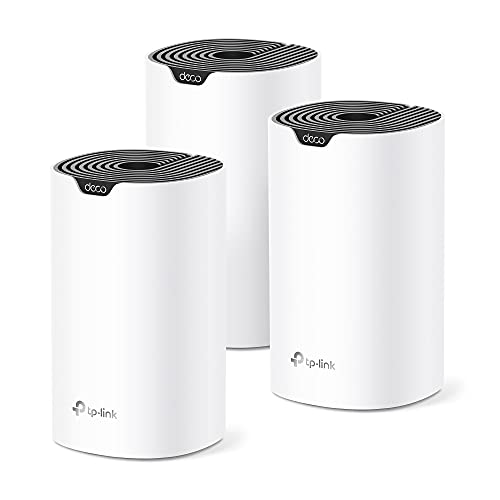
Deco S4 delivers a cost-effective mesh solution with AC1900 performance designed to cover up to 5,500 square feet using three nodes. It emphasizes seamless roaming with a single network name and password, reducing confusion when moving through rooms. The system supports easy parental controls and can replace separate routers and extenders. While not the newest hardware, it remains a solid choice for mid-sized homes seeking reliable coverage and straightforward setup.
TP-Link Deco S4 2-Pack

This Deco S4 2-pack provides a scalable mesh option for smaller homes or if you want to start with a base coverage and expand later. It shares the same foundational benefits of Deco mesh technology, including a single WiFi network name, simple setup, and parental controls. The two-node setup covers up to 3,800 square feet, suitable for medium apartments or smaller single-family homes seeking dependable wireless coverage.
NETGEAR Orbi 370 Series (RBE373)

The Orbi 370 Series combines a high-performance router with two extenders, forming a robust home mesh network. It emphasizes WiFi 7-capable speeds, multi-device efficiency, and built-in security with automatic firmware updates. This system aims to optimize performance across large homes with many connected devices, delivering strong signal strength in multiple rooms and floors. Backhaul options and a focus on security make it suitable for households prioritizing speed and device protection.
Buying Guide: Key Purchase Considerations
When selecting a home mesh router system, consider the following factors to align with your household needs:
- Coverage Area: Match the system’s square footage with your home size. Step up to larger packs or add-on nodes for multi-story homes.
- Backhaul Type: Ethernet backhaul provides the most stable inter-node communication, but wireless backhaul is simpler and often sufficient for typical homes.
- WiFi Standard: WiFi 6 and WiFi 6E offer better efficiency and speeds, especially in networks with many connected devices. Note that 6E devices require the 6 GHz band.
- Device Capacity: Check the number of supported devices per network; some systems claim up to 150+ connections, which is helpful for smart homes with numerous gadgets.
- Ease of Setup and App Control: A user-friendly app with parental controls, device prioritization, and guest networks can simplify daily use.
- Security and Updates: Look for systems with automatic firmware updates and built-in security features to keep networks protected.
- Aesthetics and Placement: Consider node design and placement flexibility to fit your home’s layout and décor.
- Compatibility: Ensure compatibility with existing modems and ISP services, and check for voice assistant integration if you rely on Alexa or similar platforms.
Bottom line: For larger homes with many devices, tri-band or WiFi 6E mesh systems with Ethernet backhaul tend to offer the strongest performance. For smaller homes or budget-conscious buyers, two- or three-pack Deco S4 setups remain reliable, easy to install, and scalable.