Looking to centralize photos, videos, and documents at home with a private, always-accessible storage hub? This guide compares five popular home NAS options designed for easy setup, local control, and cross-device access. Each pick targets different user needs—from beginners seeking simple backups to enthusiasts chasing high performance and expandability. The buyer’s guide below highlights who each device is best for, plus practical trade-offs to consider before you buy.
Product Comparison Table
| Product | Best For | |
|---|---|---|
| UGREEN NAS DH2300 | Beginners seeking simple, private storage | Diskless 2‑bay with HDMI; no Docker/VM |
| Synology 2‑Bay DiskStation DS223j | Private cloud with strong data protection | Diskless; strong cross‑platform access |
| UGREEN DXP2800 | Enthusiasts needing high capacity and 2.5GbE | 8GB DDR5, 2x NVMe, 80TB capacity |
| BUFFALO LinkStation 210 4TB | Budget-friendly, simple home cloud | One‑bay, included HDD option |
| Synology DS225+ | Multipurpose NAS with strong data protection | Diskless 2‑bay, good for backups and sharing |
UGREEN NAS DH2300 2-Bay Desktop NASync

Best for beginners seeking a simple, private storage hub. The DH2300 is designed for easy setup and basic backup tasks across Windows, iOS, Android, and macOS. It’s a modern, diskless 2‑bay solution with 64TB expandability, ideal for households moving away from scattered data across devices. It emphasizes intuitive use and automatic backups over a cloud subscription model. A key trade-off for this entry-level device is the lack of Docker or virtualization support, which is acceptable for standard media storage and backups but limiting for power users who need apps inside the NAS. The device ships with 4GB RAM on board and basic 1GbE networking.
Best for: home users and families wanting a straightforward personal storage server with reliable cross-device backups and media access.
Why selected: It prioritizes ease of use, private storage, and long-term cost savings over ongoing cloud fees. The 64TB capacity makes it scalable for growing photo libraries and video collections across devices.
Limitation: No Docker/VM support, which reduces flexibility for running apps inside the NAS.
Synology 2-Bay DiskStation DS223j (Diskless)
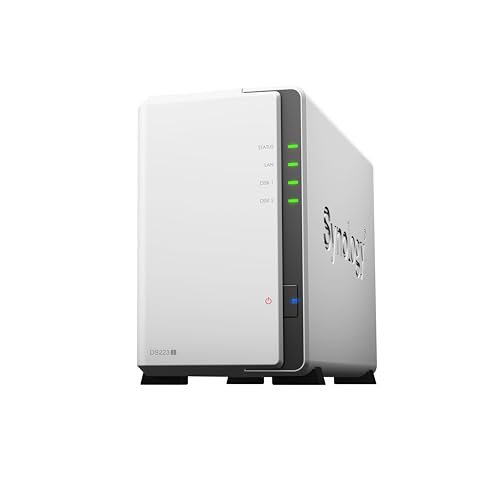
Best for private cloud with strong data protection. The DS223j emphasizes 100% data ownership with cross‑platform access and straightforward sharing. It’s well-suited for users who want reliable file access from anywhere and simple backup capabilities to diverse destinations. While the DS223j focuses on security and ease of sharing, it may not include the latest high-end features found in higher‑tier Synology models. This makes it a solid choice for households prioritizing privacy, dependable backups, and straightforward media access.
Best for: users who want robust private cloud features with easy sharing and reliable data protection.
Why selected: It offers a balanced feature set, privacy, and accessible cross‑device collaboration without unnecessary complexity.
Limitation: As a diskless model, users must supply drives; no built-in advanced virtualization features.
UGREEN DXP2800 2-Bay DeskTop NAS

Best for content creators and enthusiasts who want higher performance and capacity. The DXP2800 features an Intel N100 quad-core CPU, 8GB DDR5 RAM, and 2.5GbE connectivity, plus two M.2 NVMe slots and HDMI. It supports automatic photo albums and local media management, making it a strong choice for households with large media libraries and collaboration needs across teams. It’s scalable to 80TB storage and is positioned as a higher‑end all‑round NAS that can handle more demanding tasks than entry-level units. A caution is that this model is diskless and requires investment in drives, which adds to up-front costs.
Best for: power users, creators, and small teams needing strong processing, fast network speeds, and media management features.
Why selected: Combines performance, capacity, and professional features in a user-friendly package for local storage and media sharing.
Limitation: Higher upfront cost due to no drives included; complexity may be overkill for casual users.
BUFFALO LinkStation 210 2TB 1-Bay NAS
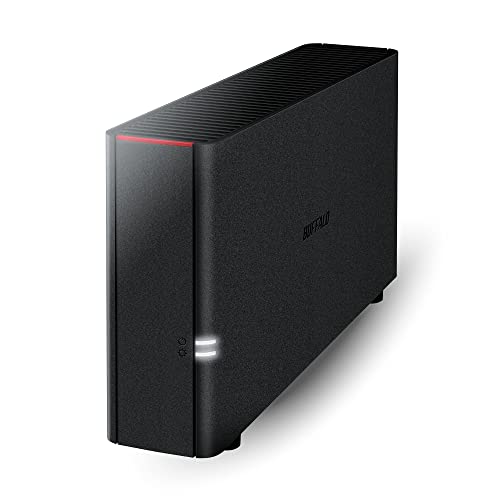
Best for budget-conscious households seeking a straightforward home cloud. The LinkStation 210 2TB offers a simple, plug‑and‑play NAS experience with RAID options for centralized storage and backups across devices. It’s compatible with Windows and macOS, and Buffalo provides US-based support. A practical caveat: this is a single‑bay NAS with limited expansion and feature breadth compared to multi‑bay or higher‑end models. It’s a viable starting point for basic file sharing and backups without extra costs for subscriptions.
Best for: buyers wanting a basic, dependable home cloud with minimal setup.
Why selected: It delivers essential NAS functionality at an accessible price point and is suitable for households that don’t require complex configurations.
Limitation: Limited scalability and fewer advanced features compared to dual‑bay or higher‑end systems.
Synology 2-Bay DiskStation DS225+ (Diskless)

Best for versatile backup and file management with strong data protection. The DS225+ provides centralized data storage with 100% ownership and multi‑platform access, along with built‑in options for file sharing, syncing, and protecting media libraries and documents. It’s a reliable pick for small to mid‑sized home or office environments that require consistent data protection and easy collaboration. As a diskless model, you’ll need to supply drives, and while it supports growth, you’ll want to review supported drive lists for compatibility.
Best for: users needing reliable data protection with simple sharing and syncing.
Why selected: It emphasizes dependable data management and cross‑platform access in a compact package.
Limitation: Requires selecting and installing drives; may lack some newer, higher‑end features found in newer Synology models.
Buying Guide
What to consider when choosing a home NAS:
- Capacity needs: Estimate current storage and future growth. Look for bays and scalability (2-bay vs 4-bay, total TB support).
- Performance: CPU, RAM, and network interface affect streaming, backups, and media indexing. Higher specs benefit 4K transcoding and multi‑user access.
- Ease of use: For beginners, prioritize models with intuitive apps, automatic backups, and straightforward media sharing.
- App ecosystem: Some NAS units support Docker/VMs for running apps; others focus on core storage and media features.
- Data protection: Consider built‑in backups, RAID options, and cross‑platform access to protect against data loss.
- Connectivity: 1GbE suffices for most homes; 2.5GbE or 10GbE benefits faster transfers and larger backups in busy networks.
- Drive inclusion: Some models are diskless; others include drives. Plan your initial cost accordingly.
- Noise and power: Consider drive noise, fan behavior, and energy use in a living space.
Common Scenarios
- Small household with photo and video backups: prefer 2‑bay NAS with simple backup apps and good cross‑device access.
- Home office with media sharing and collaboration: look for multi‑bay units with robust sharing, backups, and security features.
- Content creators with large libraries: prioritize high CPU/RAM and fast networking (2.5GbE or faster), plus NVMe cache or M.2 expansion.
FAQ
- Do I need a NAS if I already use cloud storage?
- What’s the difference between a diskless NAS and a preconfigured one?
- Can a NAS replace a traditional external hard drive for backups?
- Is 1GbE enough for streaming media to multiple devices?
- How much data protection should I expect from a budget NAS?
- Do NAS devices support Docker or virtual machines?
By weighing capacity, performance, and ease of use, you can select a home NAS that aligns with your storage needs and budget. The five options highlighted here cover a spectrum from beginner-friendly to power-user capable, with distinct strengths and trade-offs to help you make an informed decision.