When you’re choosing high wattage tanks, you want reliability, durability, and compatibility with your system. This guide targets buyers looking for high-capacity water storage, thermal expansion control, and robust construction. It highlights practical options for residential and commercial use, with clear notes on who each product is best for and potential limits. The top picks include expansion tanks for thermal growth, a high-capacity reverse osmosis storage tank, and a high-watt density heater element as part of a complete system. Use the buying table below to compare core specs at a glance.
| Product | Type | Capacity | Best For |
|---|---|---|---|
| Watts GIDDS-1030402 Potable Water Expansion Tank | Expansion Tank | 4.5 Gallon | Residential/commercial hot-water systems needing safe pressure control |
| Watts PLT-5 Potable Water Expansion Tank | Expansion Tank | 2.1 Gallon | Compact closed-loop systems with space constraints |
| Watts PLT-35 Potable Water Expansion Tank | Expansion Tank | 14 Gallon | Large-volume storage and elevated pressure control |
| iSpring 40 Gallon RO Tank | Storage Tank | 40 Gallon | Reverse osmosis systems needing substantial storage |
| Eastman High Watt Density Water Heater Element | Water Heater Element | 240V x 3000W | High-demand water heating replacement for standard tanks |
Watts GIDDS-1030402 Potable Water Expansion Tank
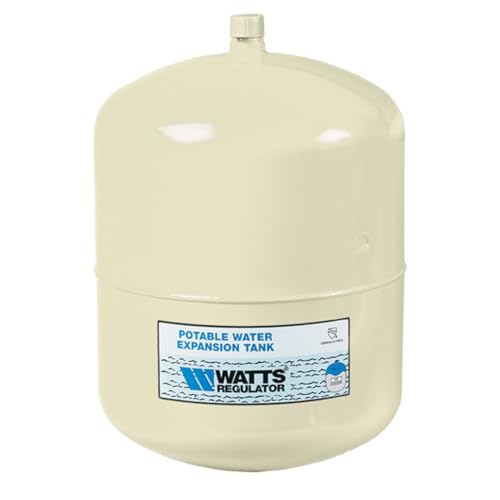
The Watts GIDDS-1030402 is a 4.5-gallon potable water expansion tank designed to absorb thermal expansion in hot-water systems. It’s best for mid to large residential or light commercial setups that require reliable pressure management and a durable membrane. The tank mounts directly to supply piping and uses a 3/4-inch male connection with a stainless steel inlet for corrosion resistance. The epoxy-coated carbon steel body provides long-term robustness, while the expansion membrane minimizes air-charge loss.
Best for: Households with moderate to high hot-water demand or small commercial spaces needing steady pressure control. Limitation: 4.5 gallons may be insufficient for very large hot-water systems without additional expansion capacity.
Watts PLT-5 Potable Water Expansion Tank

The Watts PLT-5 is a compact 2.1-gallon potable expansion tank suited for smaller closed-loop hydronic systems. It features a 3/4″ MNPT inlet and a carbon steel body with an epoxy finish, offering solid durability for space-constrained installations. The membrane helps maintain consistent air charge and pressure control while minimizing leaks over time.
Best for: Small apartments, condo boiler rooms, or retrofit projects where space is at a premium. Caution: The smaller volume may require more frequent monitoring in high-usage scenarios.
Watts PLT-35 Potable Water Expansion Tank

The Watts PLT-35 is a larger 14-gallon potable water expansion tank designed for residential and light commercial applications that experience notable thermal expansion. It is field-adjustable and pre-charged at 20 psi, with 3/4 inch male inlet and a maximum rating of 150 psi. The construction uses copper-lined steel and a Butyl rubber diaphragm, with an FDA-approved liner to help prevent air-water contact.
Best for: Systems with higher hot-water flow or where large expansion volumes must be controlled in a single tank. Limitation: Heavier and larger footprint requires appropriate mounting space and structural support.
iSpring 40 Gallon RO Tank

The iSpring 40 Gallon RO Tank is a high-capacity storage tank for reverse osmosis systems. It includes a shut-off valve, tank connector, and tank stand for straightforward installation and stable positioning. The tank is compatible with vertical or horizontal orientations, making it adaptable to various under-sink setups. It’s designed to meet standard NSF/ANSI expectations for safe water storage and holds a substantial volume for peak filtration performance.
Best for: Homes or offices using RO filtration with intermittent high water demand, or setups needing a back-up reservoir to reduce frequent refill cycles. Caution: Storage capacity alone doesn’t guarantee water quality; ensure filter maintenance remains on schedule.
Eastman High Watt Density Water Heater Element
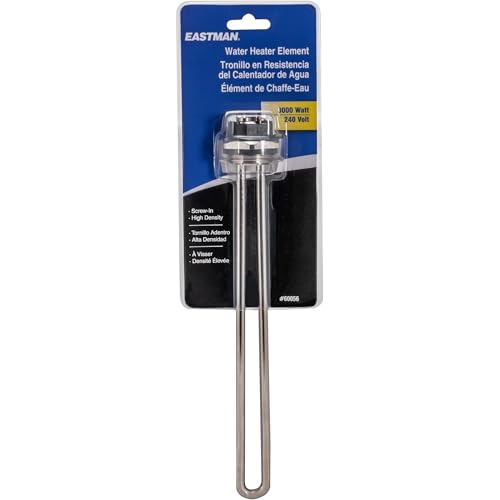
The Eastman High Watt Density Water Heater Element is a replacement element designed for compatibility with most standard water heaters. It features a wattage of 3000 watts at 240 volts and requires a minimum tank diameter of 14 inches. The universal fold-back design supports versatile replacement scenarios, making it a practical option for restoring hot-water performance in high-demand systems.
Best for: Homeowners replacing a failed high-wattage element in common tank-style heaters. Limitation: This is an element, not a tank; it complements expansion or storage tanks rather than acting as a standalone storage solution.
Buying Guide: Key Considerations For High Wattage Tanks
What capacity do I need?
- Choose based on peak hot-water demand and system size. Larger homes or commercial spaces benefit from bigger expansion or storage tanks to handle thermal expansion and pressure fluctuations.
What type of tank fits my system?
- Expansion tanks (like Watts PLT and GIDDS series) protect against pressure surges in closed hot-water systems. Storage tanks (like iSpring RO tanks) store water for filtration or use. Elements (like Eastman) support heating efficiency but are not storage devices.
Materials and durability matter.
- Look for epoxy-coated carbon steel for corrosion resistance in expansion tanks. FDA-approved liners and copper-lined steel in larger tanks improve longevity in potable systems.
Mounting and space considerations.
- Compact tanks (2.1 gal PLT-5) suit tight spaces; larger tanks (14 gal PLT-35) require more mounting and clearance. Verify connection sizes (usually 3/4″ MNPT) and mounting orientation recommendations.
Compatibility with your current plumbing.
- Confirm inlet/outlet sizes, pressure ratings (PSI), and whether pre-charge pressures match your system needs. Some tanks are field-adjustable to customize performance.
Maintenance and monitoring.
- Expansion tanks require occasional air-charge checks, while RO storage tanks need attention to filter life and system sanitization for safe drinking water.
Frequently Asked Questions
- What is the main purpose of an expansion tank?
- How do I determine the right tank size?
- Can a storage tank substitute for an expansion tank?
- Are there safety standards to consider?
- Do I need professional installation?
- What maintenance should I perform regularly?
To absorb thermal expansion in closed hot-water systems and maintain stable pressure, protecting valves and heaters from pressure spikes.
Base the size on system volume, boiler or heater output, and expected demand. Larger households or high-flow systems usually need bigger tanks.
No. Storage tanks store water, while expansion tanks manage pressure changes due to heating. They serve complementary roles in many setups.
Yes. Look for corrosion-resistant materials, FDA-approved liners for potable use, and compatibility with your local codes and installation guidelines.
It’s recommended for expanding or replacing critical components in hot-water or professional-grade filtration systems to ensure proper sizing and safety.
For expansion tanks, check the air charge and inspect for leaks. For RO storage tanks, verify seals, sanitize as needed, and replace filters on schedule.
In summary, the best choice depends on your system size, space, and whether you need thermal expansion control or dependable water storage. The Watts GIDDS-1030402, PLT-5, and PLT-35 provide scalable expansion options for different installations, while the iSpring RO tank adds substantial storage for filtration setups. The Eastman high-watt density element complements these options by supporting efficient heating where needed.