For premium PC audio, the best high end sound cards deliver immersive surround sound, pristine DAC quality, and robust driver support. This guide highlights five top options suited for audiophiles, gamers, and content creators who demand clarity, low latency, and strong headphone amplification. Each entry explains who it’s best for, why it stands out, and a practical caveat to consider before buying. The selection covers PCIe internal options, PCIe upgrades, and external USB solutions to fit different PC setups and budgets.
| Product | Best For | Key Benefit |
|---|---|---|
| Creative SB0880 X-Fi Titanium | Desktops needing cinematic decoding and precise 3D audio | Low-latency ASIO and DTS/Dolby Digital-EX decoding |
| Creative Audigy Fx Pro PCIe | Home studios and multi-channel PC speaker setups | Hi-res 32-bit/384 kHz, 7.1 discrete output |
| VENTION USB Sound Card | Travelers and multi-device users | Plug-and-play USB with built-in volume control |
| StarTech ICUSBAUDIO7D | Laptops and desktops needing 7.1 USB upgrade | 7.1 channel USB with SPDIF and multiple inputs |
| Cubilux 7.1 USB Surround | Hi-res music lovers on USB peripherals | 7.1 surround with up to 384 kHz/24-bit |
Creative SB0880 Titanium Sound Card

Best for: Desktop users who want cinema-grade decoding and precise 3D positional audio for games and movies. The SB0880 Titanium delivers DTS and Dolby Digital-EX decoding via PowerDVD, plus low-latency ASIO drivers for recording and a precise 3D sound field for locating in-game enemies by audio cues. This card suits enthusiasts seeking top-tier surround processing in a PCIe format.
Why selected: It combines robust decoding with strong input options and a mature driver profile, enabling high fidelity playback and reliable performance in demanding scenarios.
Caution: Complex setups may require careful driver and software configuration to fully leverage the ASIO and surround features.
Creative Audigy Fx Pro Hi-Res PCIe Sound Card

Best for: PC users seeking ultra-clear playback and multi-channel support with flexible connectivity. The Audigy Fx Pro provides 32-bit/384 kHz audio, up to 120 dB SNR, and discrete 7.1-channel output, plus multiple input/output options for PCs and multi-channel speaker systems.
Why selected: Its high-resolution capability and versatile connections make it a strong all-rounder for music, films, and gaming on a desktop PC.
Caution: Some users may notice marginal gains if their current system already has high-quality onboard audio; benefits are most noticeable with high-impedance headphones or dedicated speakers.
VENTION USB Sound Card

Best for: Gamers and daily users needing a compact, portable USB audio solution with simple volume control. This external USB sound card is plug-and-play, supports standard stereo and headset use without drivers, and is compatible with Windows, Mac, and laptops.
Why selected: Its portability and ease of use make it ideal for travel, classrooms, or mixed-device setups where minimal setup is preferred.
Caution: It lacks extensive high-end features like 7.1 surround or expert-grade DACs, so audio enthusiasts seeking cinematic sound may prefer a higher-end USB or PCIe option.
StarTech ICUSBAUDIO7D 7.1 USB Sound Card
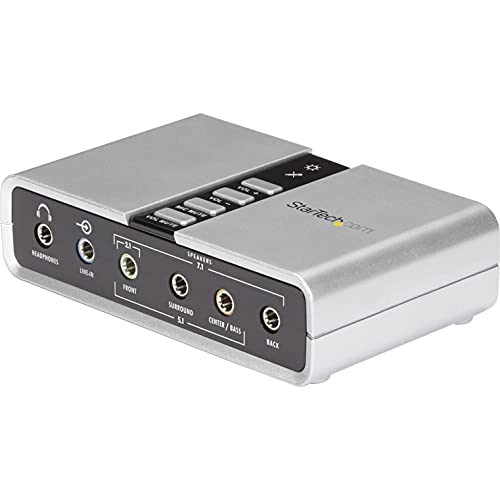
Best for: Laptops and desktops needing a reliable 7.1 USB upgrade with digital output options. The ICUSBAUDIO7D provides 7.1 channel analog output via 3.5mm jacks, plus SPDIF digital output passthrough for compatible systems.
Why selected: It offers solid multi-channel capability in a compact USB form factor, making it a convenient upgrade for systems without PCIe slots.
Caution: SPDIF passthrough is limited to 48 kHz in this model, which may matter for some high-resolution setups.
Cubilux 7.1 USB Surround Sound Card

Best for: Hi-res audio lovers who want flexible sampling rates on USB and strong 7.1 surround support. It supports 7.1/5.1 and 2-channel output, with headroom up to 384 kHz/24-bit for compatible listening experiences.
Why selected: The aluminum housing helps isolate noise and minimize interference, which benefits critical listening and gaming clarity.
Caution: The benefits of the 384 kHz/24-bit path are most evident with high-resolution tracks and capable headphones or speakers; typical casual listening may yield subtler gains.
Creative Sound BlasterX AE-5 Plus
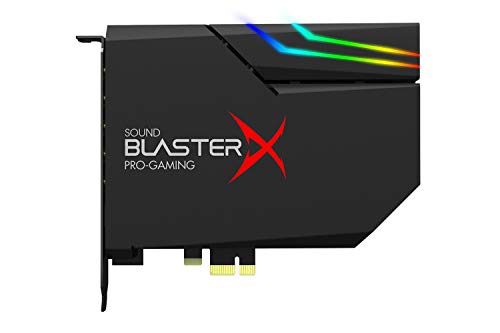
Best for: Audiophiles and gamers who want top-tier DAC performance and a powerful discrete headphone amp. The AE-5 Plus features Dolby Digital and DTS support, an advanced 32-bit/384 kHz DAC, and dedicated Xamp bi-amped headphone functionality for demanding headphones up to 600Ω.
Why selected: It combines high-resolution audio with a robust amp and a user-friendly control module, making it suitable for immersive gaming and precise music listening.
Caution: The full benefit is realized with high-quality headphones and a capable speaker setup; entry-level setups may not reveal the complete advantages without matching gear.
Creative Sound Blaster AE-7 Hi-Res Internal PCIe
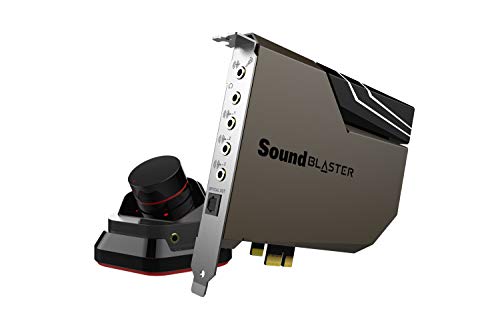
Best for: Serious audiophiles who demand pristine audio fidelity and powerful headphone output in a PCIe format. The AE-7 uses ESS SABRE-class DAC with 127 dB DNR, Xamp discrete bi-amp, and supports discrete 5.1 and virtual 7.1 with Dolby/DTS encoding.
Why selected: Its flagship-grade DAC and robust headphone amp deliver top-tier clarity, detail, and dynamic range for critical listening and gaming alike.
Caution: A higher price point and larger card footprint; ensure your motherboard and case have adequate space and cooling for sustained performance.
Buying Guide: Key Considerations For High End Sound Cards
- Interface and form factor: Choose PCIe internal cards for desktop desktops seeking maximum performance, or USB external adapters for portability and easy upgrades on laptops.
- DAC quality and SNR: Look for 32-bit/384 kHz capable DACs and high SNR (signal-to-noise ratio) figures to ensure clean, accurate sound across genres.
- Headphone amp capacity: If you plan to drive high-impedance headphones, prefer models with dedicated or discrete headphone amplifiers and low output impedance.
- Surround and encoding options: Dolby Digital Live and DTS Encoding expand compatibility with games and media, while true 7.1 discrete outputs suit multi-channel speaker setups.
- Connectivity: Assess available outputs (analog, SPDIF, mic/line-in) and how they align with your speakers, receivers, or recording gear.
- Driver and software: Stable drivers and intuitive control software help maintain low latency and consistent performance across applications.
- Use case and environment: Consider gaming, music production, movie watching, or general multimedia when selecting features like ASIO support or virtual surround.
FAQ
- Do high end sound cards improve gaming audio a lot?
Yes, many models offer low-latency drivers, precise positioning, and surround encoding that can enhance in-game audio cues and overall immersion.
- Is an external USB sound card as good as an internal PCIe card?
External USB devices can provide excellent sound with portability, but internal PCIe cards often deliver lower latency and higher power for advanced headphone amps.
- Is Dolby Digital Live/DTS Connect important?
These encodings broaden compatibility with consoles and media players, enabling multi-channel output even from non-encoded sources.
- Will I benefit from 7.1 if I only have stereo speakers?
7.1 capable cards can still improve virtual surround effects and multi-channel options, but the biggest gains require compatible speakers or headphones.
- Do I need high-end DACs for casual listening?
For casual listening, mid-range DACs are often sufficient. The biggest benefits appear with high-resolution files and demanding headsets.