Looking for a hi-fi stereo amplifier that delivers clean power to passive speakers without breaking the bank? This guide focuses on five reliable options that suit different setups—from compact living spaces to home theaters. Each pick is best for a specific buyer: a compact, budget-friendly setup; a mid-sized living room; a multi-speaker arrangement; DIY enthusiasts; or a traditional stereo receiver upgrade. Below is a quick buying table to compare core details at a glance.
| Product | Best For | Channels | Power (approx.) |
|---|---|---|---|
| Daakro AK45 | Compact karaoke or small room audio | 2 | 300W peak / 40W x 2 |
| Hosyond AK35 | Home theater or TV audio | 2 | 200W peak / 30W x 2 |
| Fosi TB10D | Versatile mini amp for shelves or desks | 2 | 600W total / 300W per channel (TPA3255) |
| Romicta 4-Channel | Small-party or multi-room with mic input | 4 | Up to 1200W peak |
| Yamaha R-S202BL | Traditional stereo with Bluetooth streaming | 2 | Integrated receiver with multiple outputs |
Daakro AK45 Stereo Audio Amplifier

The Daakro AK45 is a 2-channel amplifier rated with 300W peak power and 40W per channel, designed for 4–16 inch passive speakers. It targets small apartments, bedrooms, offices, and spaces like basements or garages where space is limited but sound quality matters. It includes Bluetooth 5.0 for wireless playback and USB/SD inputs for digital files, which makes it suitable for mini karaoke setups or compact home theaters. Best for: users needing a compact, plug-and-play hi-fi amp with wired and wireless options. A limitation: Bluetooth range and interference can vary by environment; keep devices within line-of-sight when possible.
Hosyond AK35 Bluetooth 5.0 Amplifier
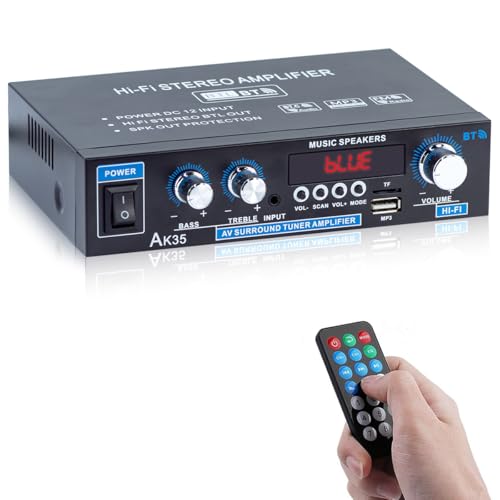
The AK35 from Hosyond offers 200W peak output with 30W per channel, plus Bass and Treble controls and a remote for convenient room listening. It supports Bluetooth 5.0, AUX, USB, SD card, and RCA inputs, making it a flexible choice for home theaters, bedrooms, and small offices. Best for: listeners who want hands-on tone shaping and multiple input options without a large footprint. Caution: as a compact two-channel unit, it may not deliver the scale of larger floor-standing systems in bigger rooms.
Fosi Audio TB10D 2-Channel Amplifier

The TB10D uses a high-performance Class D design with 600W total power (30W x 2 channels after amplification) and a bass/treble control. Its compact desktop form makes it well-suited for bookshelves, desks, or small entertainment centers where room is a premium. Best for: users needing a compact, flexible amp that can fit into an existing audio ecosystem, including phono upgrades or bass shakers. Limitation: power output per channel is lower than larger hi-fi amps, which may limit scale in bigger rooms.
ARRAROWN ZK-1002T Bluetooth 5.0 Amplifier Board

The ARRAROWN ZK-1002T is a DIY-friendly 2.0 channel amplifier board rated at 200W for two channels, featuring Bluetooth 5.0, USB, and AUX inputs with treble and bass adjustments. It is ideal for DIY speaker builds, sub-woofer integration, or custom enclosures. Best for: builders seeking a versatile board to customize a hi-fi stereo setup. Caution: uses a board-based design; soldering and electrical knowledge may be required for best results.
YAMAHA R-S202BL Stereo Receiver
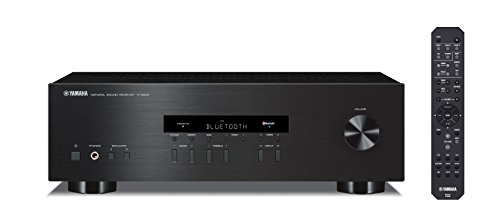
The Yamaha R-S202BL is a traditional stereo receiver with Bluetooth streaming, two speaker channels, and several inputs. It provides automatic standby features and a speaker selector for two systems, making it a straightforward upgrade for an existing two-speaker setup. Best for: buyers seeking a reliable, all-in-one receiver with Bluetooth and multiple input options without adding a separate DAC or preamp. Limitation: lacks some modern streaming ecosystem features found in standalone amplifiers or smart hubs.
Buying Guide: Key Purchase Considerations
- Speaker compatibility: Check impedance (ohms) and compatible power ranges. Larger rooms typically benefit from higher wattage amplifiers, while smaller spaces favor compact models.
- Inputs and connectivity: Ensure the amp has the right inputs for your gear (Bluetooth, USB, AUX, RCA, SD, phono, etc.).
- Tone controls: Bass and treble adjustments help tailor sound to room acoustics and personal taste.
- Form factor: Desk, shelf, or cabinet placement influences the choice between compact mini amps and full-size receivers.
- Reliability and upgrades: For DIY projects, select boards with clear documentation and community support; for ready-to-use systems, prioritize build quality and warranty considerations.
- Multi-speaker setups: If you plan to drive more than two speakers, consider a 4-channel or 2.1-channel option with additional outputs or a separate subwoofer.
Frequently Asked Questions
- What is the difference between a stereo amplifier and a stereo receiver?
– A stereo amplifier powers speakers and requires external sources, while a receiver includes an amplifier plus built-in tuner, and often a preamp stage and additional features like streaming and multiple inputs. - Do I need a high-widelity cartridge or DAC to pair with these amps?
– For basic listening, an integrated DAC inside a source device or the amp’s own DAC is usually sufficient. High-end setups may benefit from a dedicated DAC for audio purity. - Is Bluetooth audio quality as good as wired?
– Bluetooth offers convenience, but wired connections (RCA, USB) typically preserve more of the original signal quality and reduce latency. - Can these amps drive large bookshelf or floor-standing speakers?
– Yes, but match the amplifier’s power rating to the speakers’ sensitivity and impedance. Very large rooms may require more capable amplifiers. - How important are tone controls for a home setup?
– Tone controls help tailor sound to room acoustics and personal preference, especially in rooms with uneven reflections or cabling constraints.