If you’re shopping for a headphone amp kit, you want clarity, minimal noise, and the right power for your headphones. This guide highlights five solid options suited for different needs—from DIY tube-based warmth to compact digital preamps. Whether you’re a hobbyist building a starter project or a seasoned tinkerer seeking clean, driver-friendly amplification, these kits offer practical paths to better sound. Below is a quick summary table to compare who each product is best for and why it was selected.
| Product | Best For | |
|---|---|---|
| Musical Fidelity Tube Amplifier & Preamp Board – 6J1 | Tube enthusiasts; DIY tube enthusiasts | Filtration with eight 470uF caps; DC 12V filament for low noise |
| PCB Board DIY Kit Vacuum Tube Amplifier – EK style | Beginner tube builders; budget explores | Simple vacuum tube pre-amp integration; clear filter path |
| Nobsound P32 Tube Headphone Amplifier | Headphone lovers wanting tube warmth | High power with tube/preamp flexibility for speakers or amps |
| HiLetgo MAX4410 Headphone Amplifier Board | Compact, versatile preamp and amp | Dual-use as amp and preamplifier; small footprint |
| Taidacent LM4881 Headphone Amplifier Board | 3.6V–12V powered projects; versatile preamp | Impedance-ready outputs; adjustable gain; flexible voltage range |
Musical Fidelity Tube Amplifier & Preamp Board

This kit centers on a vacuum-tube pathway using a 6J1 pre-amp tube between the source and the amplifier. It emphasizes reducing digital flavor and providing a warm, musical voice. It uses eight 470uF capacitors for cleaner power and a DC 12V filament supply, wired in series to minimize noise. Best for audiophiles who value tube warmth without a heavy power draw. A potential limitation is the complexity of tube-related components for first-time builders.
PCB Board DIY Kit Vacuum Tube Amplifier – EK Style
This DIY kit provides a tube-based pre-amp path with an emphasis on clean power delivery thanks to similar eight 470uF capacitor filtering. It’s suitable for builders who want a straightforward, upgrade-friendly tube amplifier that filters digital artifacts. Best used by hobbyists comfortable with assembling and aligning a tube-based signal chain. Note that tube-related alignment and bias checks may be needed for optimal operation.
Velleman Super Stereo Ear MiniKit MK136

This is a DIY kit focused on true stereo amplification for new builders. It creates a practical, usable device with two microphone inputs to form a stereo signal, outputting through a standard 3.5mm jack. It includes on/off control and a potentiometer for volume. It’s best for makers who want a complete, functional project with a clear educational path. A limitation is that it is a beginner kit and may not match high-end audio expectations.
HiLetgo MAX4410 Headphone Amplifier Board

The MAX4410 board functions as both a headphone amplifier and a preamplifier, offering compact design with straightforward use. It’s suitable for users who want a flexible board to pair with portable devices or integrated audio setups. Caution: the board may require careful impedance matching and power considerations for high-impedance headphones.
Nobsound P32 Tube Headphone Amplifier
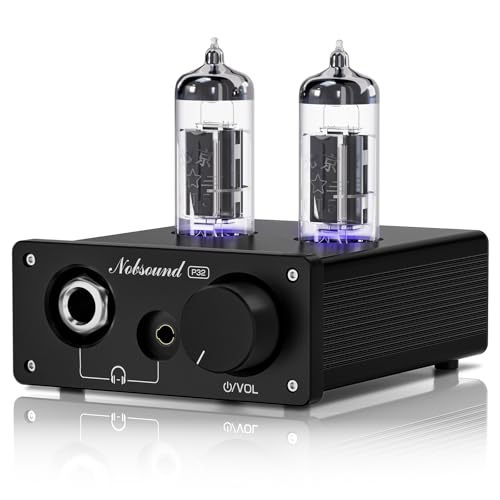
Powered by a tube-based design, the P32 combines robust 1000mW output with a versatile tube preamp path. It can drive headphones across a 24–600Ω range, delivering warm, rich tube character and clear highs. Best for users seeking significant power and tube flavor in a compact desktop form. Limitation: higher impedance headphones may benefit from external matching for optimum volume and tonal balance.
Taidacent LM4881 Headphone Amplifier Board

This board uses the LM4881 chip and supports a DC voltage range of 3.6V–12V, with output suitable for 3.5mm jacks and a 2.54mm header for optional connections. It provides volume control and power switch functionality, making it flexible for various configurations. Best for projects needing a compact, low-voltage amp with straightforward gain control. Consider power supply compatibility if pairing with higher-impedance loads.
Buying Guide: Key Considerations for Headphone Amp Kits
- Purpose and sound preference: Are you chasing tube warmth or clean solid-state clarity? Tube designs typically add warmth and harmonic richness; solid-state often yields cleaner bass and lower noise.
- Headphone compatibility: Check impedance and sensitivity of your headphones. Some kits excel with 32–600Ω models, others are tuned for low-impedance IEMs.
- Power and dynamics: Look for output power specs and the ability to drive your typical headphones to satisfactory levels without distortion.
- Complexity and skill level: Beginner kits provide guided assembly but may yield less customization; advanced kits offer more tuning opportunities but require more soldering and testing.
- Noise and filtering: Capacitor choices (like multiple 470uF filters) impact hum reduction and overall clarity. Ensure the filament supply is designed to minimize noise.
- Power supply compatibility: Some boards require specific DC voltages (e.g., 12V) or dual rails; verify your available supply.
- Module versatility: Some boards double as preamplifiers or integrate into speaker systems; consider whether you want a single-purpose amp or a multi-use module.
Frequently Asked Questions
- What is a headphone amp kit?
It’s a modular assembly that provides amplification for headphones, often including a preamp stage, power supply requirements, and space for tube or solid-state components.
- Do tube-based amp kits require special maintenance?
Tube-based kits may require occasional tube replacement and bias checks, but many kits are designed for straightforward operation with standard tubes.
- Can I mix and match components from different kits?
Mixing can be risky due to impedance, power, and signal matching; verify compatibility before combining boards.
- What headphone impedance should I target?
Many kits are designed for a range; if your headphones are high-impedance (above 300Ω), ensure the amp can deliver sufficient voltage without strain.
- Is a higher power output always better?
Not necessarily. Output power should match your headphones and listening level needs; excess power may cause distortion at high volume.
- Do these kits require advanced soldering skills?
Some kits are beginner-friendly with simple assembly; others demand more precise wiring and component handling for optimal results.