Head-tracking technology can transform PC gaming by translating natural head movements into in-game camera control. This article highlights top head-tracking options for PC, covering optical and eye-tracking solutions that work across flight sims, racing, and immersive shooters. Each product section explains what to expect, supported games, and key strengths to help you compare options.
| Product | Brand | Core Advantage | Typical Use |
|---|---|---|---|
| TrackIR 5 Head Tracking System | Natural Point | 6DOF motion tracking with low-latency USB sensor | Flight, racing, combat sims |
| TrackIR 5 Head Tracking System with TrackClip PRO | NaturalPoint | Precision tracking with Clip PRO for hats/visors | Flight, racing, combat sims |
| Tobii Eye Tracker 5 | Tobii | Head and eye tracking for immersive experiences | Broad gaming catalog, 170+ games |
| JBL Quantum 910 Headset | JBL | Head-tracking enabled audio with QuantumSPATIAL 360 | Competitive gaming, PC and console (wireless) |
| JBL Quantum One Headset | JBL | Head-tracking enhanced 360 audio with advanced ANC | PC gaming with precise audio positioning |
TrackIR 5 Head Tracking System

The TrackIR 5 system uses a high-precision USB optical sensor to capture subtle head movements across yaw, pitch, roll, and X, Y, and Z axes. It enhances realism by translating natural head motions into in-game camera control, improving immersion in simulations and certain PC games that support 6DOF motion capture. Note that the TrackClip PRO is not included with this version, so you may need an additional clip accessory for mounting.
TrackIR 5 Head Tracking System with TrackClip PRO

This bundle adds the TrackClip PRO for versatile mounting on hats or visors, enabling precise infrared signal reflection for accurate tracking. It supports True 6DOF motion capture—yaw, pitch, roll, and movement along the X, Y, and Z axes—delivering low-latency camera control in supported games. Ideal for users who want robust tracking in a wide range of flight, racing, and combat simulators.
Tobii Eye Tracker 5
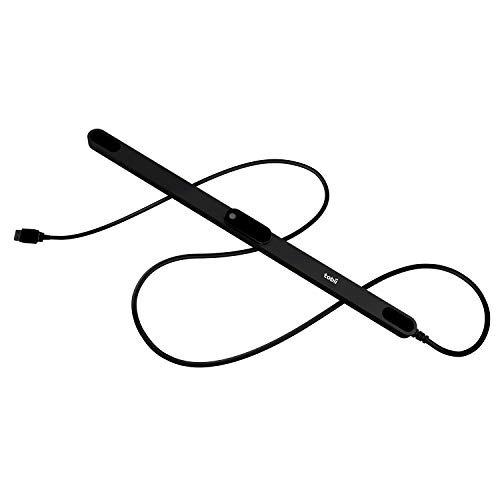
The Tobii Eye Tracker 5 combines head and eye tracking for a highly immersive experience. It works across all lighting conditions and enhances in-game realism by incorporating both head movements and gaze direction. With support for 170+ games, Tobii is a strong option for players seeking combined head-eye tracking to unlock new control schemes and interaction methods.
JBL Quantum 910 Headset

The JBL Quantum 910 headset uses head-tracking-enhanced audio with JBL QuantumSPATIAL 360 and a low-latency wireless system. While primarily an audio headset, the integrated head-tracking capabilities provide precise directional audio cues that complement head movement, improving situational awareness in competitive PC gaming. The QuantumENGINE platform enables custom calibration for accurate 3D audio positioning.
JBL Quantum One Headset

The JBL Quantum One headset features QuantumSPHERE 360 head-tracking with JBL QuantumENGINE integration for precise audio positioning on PC. It includes active noise cancellation (ANC) and Hi-Res certified sound for an accurate and immersive audio experience. The head-tracking system complements visual tracking solutions by aligning audio cues with camera movement, aiding overall situational awareness during gameplay.
Buying Guide: Key Considerations for Choosing a Head Tracker
Choosing the right head-tracking solution depends on your gaming preferences, hardware, and intended use. Consider the following factors to compare options effectively.
- Tracking Type: Optical (TrackIR) vs. Eye Tracking (Tobii) vs. Audio-Enhanced Head Tracking (JBL headsets). Optical systems rely on external sensors and reflectors, while eye-tracking solutions measure gaze direction in addition to head pose for richer control schemes.
- Tracking Range and Precision: Look for 6DOF (yaw, pitch, roll, X, Y, Z) support and low latency. Higher precision benefits flight and racing sims with nuanced camera control.
- Mounting and Comfort: Clip-based clips (TrackClip PRO) or internal sensors affect wearability. Ensure comfortable mounting for long sessions and compatibility with your headgear.
- Lighting Conditions: Some optical trackers perform well in varied lighting, while others may require controlled lighting. Eye trackers generally adapt well to different environments.
- Software and Game Compatibility: Verify game support and whether the device uses vendor software (e.g., QuantumENGINE, Tobii software). Check for active development and game catalog.
- Audio Integration (for headsets): Some headsets pair head tracking with advanced spatial audio. If you value immersion, consider how audio positioning complements visual tracking.
- Price and Accessory Availability: Factor in bundles vs. standalone trackers, and whether additional clips or mounting accessories are needed.
- Platform and Connectivity: USB-based sensors offer broad compatibility with PC. Wireless headsets may introduce latency; ensure your setup aligns with your performance expectations.
- Use Case Diversity: If you play flight sims, racing sims, and shooters, prioritize 6DOF precision and low-latency tracking. If you primarily stream or socialize, eye tracking and streaming features may be appealing.
- Future-Proofing: Consider devices with ongoing software updates and active support to maximize compatibility with new games and features.