Looking for an effective way to improve over-the-air TV reception? A quality HDTV antenna booster can reduce pixelation, strengthen weak signals, and help you access more local channels without monthly fees. This guide highlights five top boosters that suit different living situations, from compact indoor setups to versatile dual-output amps for multiple TVs. It explains who each product is best for and why, plus practical buying tips and a concise FAQ.
| Product | Best For | Key Benefit |
|---|---|---|
| GE Indoor HD Digital TV Antenna Amplifier (42178) | Boraders in small apartments | Low-noise amplification with LTE filtering |
| DAANT TV Antenna Indoor Long Range | Large rooms with mid-range distances | 4K/1080p support and long coax |
| ANTOP HD Smart Boost Antenna Amplifier (SBS-602B) | Two TVs or devices | Dual outputs with adjustable gain |
| AtomDream Tech TV Antenna Amplifier | USB-powered flexibility | USB-powered, universal compatibility |
| SHERRIVA Digital TV Antenna | Moderate to long-range suburban/rural areas | 55-mile range with robust signal processing |
GE Indoor HD Digital TV Antenna Amplifier
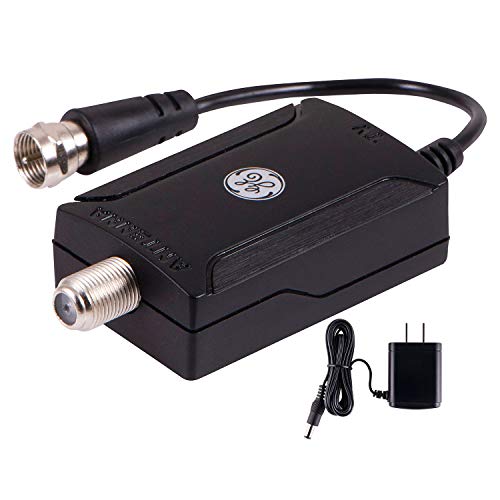
Best for: viewers with a single TV in a small-to-medium room who want clearer reception on local channels without a complicated setup. This amplifier is designed for universal compatibility, supports 1080p and 4K Ultra HD, and includes a built-in 4G/5G LTE filter to minimize interference and reduce pixelation. Use it when your signal is available but weak, and you need a cleaner picture.
Why selected: The GE model combines low-noise amplification with PureAmp technology to block cellular interference, which is a common cause of channel dropouts. It strengthens the signal your antenna already receives, helping you pull in more reliable HD channels without rearranging your living space.
Best for buyer considerations:
- Best for single-TV setups where interference from mobile networks is a concern.
- Choose this if you want a straightforward, plug-and-play amp with broad compatibility.
Limitation: The number of channels and reception quality still depend on distance to towers and physical obstacles such as buildings and trees.
DAANT TV Antenna Indoor Long Range

Best for: homes needing stronger reception across multiple channels in mid-size rooms, with the option to run a longer coax to a distant TV. This amp supports 4K/1080p broadcasts and ships with a 16-foot coax to minimize signal loss from the antenna to the TV.
Why selected: The upgraded IC chip and LTE filtering help maintain a crisp signal even when local towers are at a distance. It’s a practical choice for cord-cutters who want a reliable indoor setup that still handles high-resolution broadcasts.
Best use tip: Place the antenna near a window or elevated location to maximize line-of-sight to broadcast towers.
Limitation: Indoor placement can still be limited by nearby tall structures or heavy urban interference; in those cases, consider mounting near a window or upgrading to a larger directional model.
ANTOP HD Smart Boost Antenna Amplifier (SBS-602B)

Best for: households with two TVs or a second device like a streaming box that wants synchronized, improved reception. The Smart Boost system offers an adjustable dial to balance reception power and signal strength based on location.
Why selected: It’s designed to work with any non-amplified antenna and provides dual outputs, enabling simultaneous connections. The built-in 4G LTE filter helps minimize noise, promoting clearer HDTV reception.
Best-use guidance: Use the dial to tailor gain to your distance from towers and local obstructions. Avoid over-amplifying in strong-signal locales, which can cause signal overload and distortion.
Limitation: The effectiveness depends on antenna compatibility and the presence of a second device that can utilize the extra output.
AtomDream Tech TV Antenna Amplifier
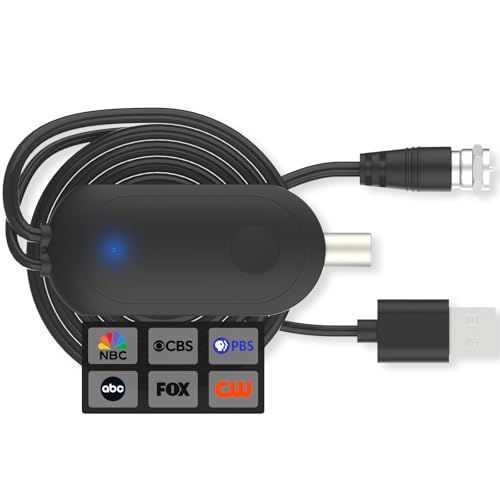
Best for: users who prefer USB-powered flexibility and want compatibility across a wide range of TVs and streaming devices. The unit ships with a 1-meter USB power cable for convenient placement and power options.
Why selected: It emphasizes USB power for flexible installation, making it suitable for setups where traditional AC adapters are inconvenient. The amp is designed to work with any digital or Smart TV, enhancing reception for OTA broadcasts.
Recommendation: Choose this if you need a simple power solution and broad compatibility for multiple viewing locations.
Caution: USB-powered amps may require proximity to a USB power source; consider where your TV or streaming device will be placed to ensure a stable power connection.
SHERRIVA Digital TV Antenna for Indoor & Outdoor Use

Best for: cord-cutters in suburban or rural areas seeking a robust 55-mile range with an integrated signal booster. It supports 8K/4K and 1080p, enhancing reception for local channels with reliable performance.
Why selected: The included IC chip and noise-reduction filter are designed to reduce interference and improve signal stability, making it a solid option for areas with variable reception.
Guidance: Position the antenna for optimal line-of-sight, preferably high and away from metal obstructions. The IPX5 waterproof design allows indoor or outdoor installation depending on weather and space.
Limitation: Performance may vary by terrain and tower distance; strong local signals may require less amplification to avoid over-saturation.
Buying Guide: How to Choose the Right HDTV Antenna Booster
- Signal strength and distance: Determine how far you are from broadcast towers. If you’re in a fringe area, a higher-gain booster with LTE filtering can help. In strong-signal zones, a lower gain can prevent over-amplification.
- Power source and placement: USB-powered amps offer flexible placement but require a nearby USB port. AC-powered amps are usually more stable for room-scale layouts. Consider whether you plan to mount the antenna indoors near a window or outdoors for best line-of-sight.
- One TV or multiple devices: If you need to feed more than one TV or device, look for dual-output boosters. These let you distribute the signal to multiple displays without sacrificing performance.
- Interference mitigation: LTE/5G filtering reduces interference from nearby cellular networks. This is particularly useful in dense urban areas where RF traffic is higher.
- Compatibility: Most boosters claim broad compatibility with 1080p and 4K broadcasts. Verify that the amplifier matches your antenna type (directional vs. multi-directional) and your TV’s input requirements.
- Placement tips: Elevate the antenna, angle toward known towers, and experiment with window-facing placements. Use a signal-strength map or app to gauge optimal locations.
- Warranty and support: While not all products list warranties, some brands offer limited guarantees. Consider the return policy if the performance doesn’t meet expectations in your area.
Frequently Asked Questions
- Do HDTV antenna amplifiers really boost local channels?
Yes, amplifiers can strengthen weak signals and reduce pixelation, especially when the antenna is already positioned to receive available channels. - Can I use a booster with any antenna?
In most cases, boosters are compatible with non-amplified antennas, but performance varies. Check the product’s compatibility notes. - Is dual-output necessary for multiple TVs?
Dual-output amps are convenient for feeding more than one TV or device without extra splitters, but they are not required if you only have a single TV. - Should I choose indoor or outdoor antennas with boosters?
Indoor antennas with boosters are quick to install, while outdoor antennas generally offer stronger reception and benefit more from amplifiers in fringe areas. - How do I know if I’m in a good reception area?
Use a local signal map or check nearby towers’ distance and direction. If your area has many local channels but you still see pixelation, a booster with LTE filtering may help.