Looking for a guitar harmonizer pedal that can create rich, polyphonic harmonies or precise pitch shifts? This guide highlights five top choices that balance ease of use, tonal variety, and reliable performance. Each option is suited to a different player profile—from beginners building chord textures to seasoned players seeking studio-grade vocal-like harmonies. Below is a quick buying snapshot to help you compare at a glance.
| Product | Best For | Key Benefit |
|---|---|---|
| Rowin Harmonizer-Pitch | Beginners and compact rigs | Three dynamic modes with polyphonic tracking |
| Mooer Drop Pitch Harmonizer | Versatile tone sculpting | Three modes with precise polyphonic pitch |
| LEKATO Mini Pitch Shifter | Small boards, big tone | Three effects with 16 parameters |
| MOOER Harmonizer | Studio-like vocal harmony | Up to 12 pitches with multiple modes |
| BOSS PS-6 Harmonist | Advanced two- to three-voice harmonies | Four modes with key/voicing control |
Rowin Harmonizer-Pitch: Compact, Polyphonic Harmony On Tap
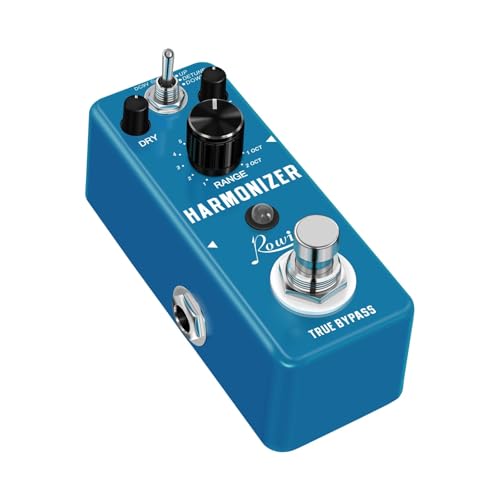
The Rowin Harmonizer-Pitch offers three primary modes aimed at a broad range of players: Harmony blends pitch-rich layers, Pitch Shift provides precise polyphonic octave adjustments (±2 octaves with 16 parameters), and Detune adds subtle chorus-like shimmer for spacey textures. This pedal prioritizes polyphonic precision, helping chords retain clarity as voices are shifted. The compact, all-metal shell makes it ideal for tight pedalboards and gigging players who need a durable, portable option. Best for beginners who want immediate, musical harmonies without complex setup, as well as players who value a simple, robust workflow.
Best for: Beginners building harmonic textures or players with small boards who want a sturdy, all-purpose harmonizer. Choose this if you need a straightforward, polyphonic solid-state solution that travels well.
Caution: While versatile, extremely busy chords with high sensitivity may require careful tuning of the harmony settings to avoid phase issues in some rigs.
Mooer Drop Pitch Harmonizer: Three Modes, Precise Shifting
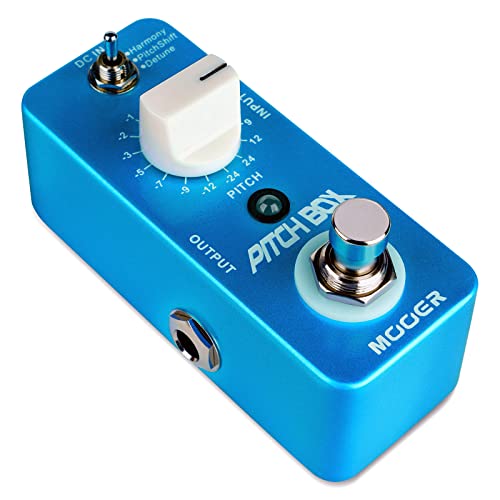
The MOOER Drop Pitch Harmonizer delivers three core modes—Harmony, Pitch Shift, and Detune—with a clear emphasis on precise polyphonic pitch conversion. It outputs a full, wet pitch-shifted signal that’s well-suited for quick tunings or crafting layered textures. Its ±2 octave range and 16 parameters enable fine-tuning to your preferred sound, making it attractive for players who want a flexible, affordable option with a compact footprint. Best for players who need a dynamic, on-the-fly harmonizer for live or studio use.
Best for: Players who value tight, precise pitch control and a straightforward sonic path. Choose this if you want a dependable, feature-rich pedal without steep learning curves.
Caution: The detune and pitch-shift interactions can be sensitive in complex rigs; it may require careful EQ and level matching when used with other effects or amp chains.
LEKATO Mini Pitch Shifter: Small but Serious Harmonics
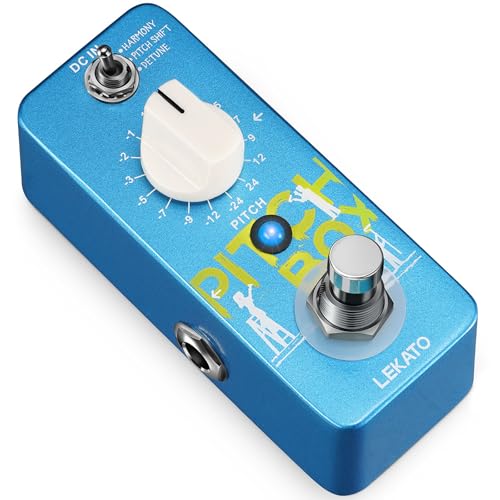
The LEKATO Mini Pitch Shifter provides three core effects—Harmony, Pitch Shift, and Detune—within a compact form factor. It emphasizes precise polyphonic pitch shifting with up to two octaves range and 16 customizable parameters. The small size makes it appealing for pedalboard-conscious players who still want studio-like capabilities. Best for players who want a compact, easy-to-use harmonizer with a strong set of customization options.
Best for: Small-footprint rigs or beginners who need a versatile pedal that doesn’t overwhelm with controls. Choose this if space on your board is at a premium but you still want rich harmonizing options.
Caution: The compact layout can be less forgiving for those who prefer large knob markets; navigation may require some initial tweaking to find your preferred settings.
MOOER Harmonizer: Up To 12 Pitches, Studio-Grade Flexibility

The MOOER Harmonizer stands out for its broad pitch palette, offering up to 12 pitches across multiple harmony modes. Each pitch carries its own set of 11 harmony options, and the pedal provides independent dry/wet mix controls. This design supports complex, chorused textures and rich vocal-like harmonies, making it ideal for players who demand a high degree of tonal control in both live and studio contexts. Best for players who want expansive harmony possibilities with precise routing options.
Best for: Musicians seeking a wide, studio-style harmony palette and detailed independent control. Choose this if you want multi-pitch flexibility and high-fidelity tracking.
Caution: The richer feature set may require more time to dial in the ideal harmony voice assignments for complex chord progressions.
BOSS PS-6 Harmonist: Four Modes For Pro-Level Harmony

The BOSS PS-6 Harmonist consolidates four modes—Harmony, Pitch Shifter, Detune, and S-BEND—into a single, robust pedal. It supports two- or three-voice harmonies with selectable key and voicing, and it can deliver up to four octaves of pitch bending with Super Bend. An expression pedal can control pitch for real-time performance, expanding live-use possibilities. Best for players who need high-quality pitch shifting, advanced harmony options, and external control integration.
Best for: Players pursuing pro-grade harmony with expressive control. Choose this if you perform complex harmonies and want versatile live manipulation via external pedals or expressions.
Caution: The PS-6 offers deep functionality; beginners may benefit from starting with simpler modes to avoid confusion during performances.
Buying Guide: Key Considerations For Selecting A Harmonizer Pedal
- Polyphony And Pitch Range: Decide how many voices you want to simultaneously hear and whether you need up to two octaves or more. For complex chords, polyphonic precision is essential.
- Modes And Flexibility: Harmony, Pitch Shift, and Detune are common; some pedals also include S-BEND or additional voices. Consider which modes align with your style (rhythmic chording, lead melodies, or vocal-like harmonies).
- Tracking Accuracy: A key factor for clean polyphonic output. Pedals vary in tracking speed and how well they handle complex chord shapes.
- Pedalboard Footprint: If space is limited, look for compact models with durable enclosures and minimal knob counts that still offer essential controls.
- Live vs Studio Use: For stage performance, consider output quality, dry/wet mix options, and possible external control via expression pedals or MIDI if supported.
- Ease of Use: Beginners should favor pedals with intuitive controls and clear presets; advanced players may prefer deeper parameter customization and routing options.
- Durability and Build: Metal chassis and reliable true bypass can affect longevity on the road and the pedalboard’s resilience.
Frequently Asked Questions
- What’s the difference between harmony and pitch shift on a harmonizer pedal? Harmony creates additional pitched voices that blend with the dry signal, while pitch shift transposes the overall signal to a new pitch or interval.
- Can harmonizer pedals work with bass guitars? Some pedals advertise compatibility with bass, but check your model’s bandwidth and tracking to ensure reliable performance with lower frequencies.
- Do I need a separate power supply for each pedal? Many pedals can share a daisy-chain power supply, but ensure the supply provides adequate current (mA) and proper voltage for all units on the board.
- Is a stereo output necessary for harmonizers? Stereo outputs can enhance wet/dry imaging and create a wider stage sound, but mono can be sufficient for many setups.
- Which pedal is best for a beginner? A compact, simple-harmonics pedal with clear presets and polyphonic tracking is ideal for newcomers aiming to learn chord-based harmonies.
- Can these pedals track complex chords accurately? Tracking accuracy depends on the pedal’s DSP engine and the guitarist’s finger accuracy; slower chord changes can improve response on many units.