Choosing the right guitar-to-amp cable matters for tone, noise rejection, and reliability on stage or at home. This guide highlights five top options that balance durability, shielding, and compatibility for electric guitars, basses, mandolins, and other instruments. The best pick depends on your setup: stage players may value durability and low noise, home studio players may prioritize flexibility and shielding, and beginners benefit from reliable, user-friendly designs.
Overview of the highlighted products:
| Product | Brand | Length | Key Strengths | Best For |
|---|---|---|---|---|
| New Bee Guitar Cable 10ft (Right Angle to Straight) | New Bee | 10 ft | Low noise, oxygen-free copper, dual shielding, right angle/straight connectors | On-stage players needing a secure fit and reduced noise |
| Fender Professional Series 10 ft Instrument Cable | Fender | 10 ft | Anti-kinking design, 95% OFC shielding, durable PVC jacket | Home studios and stage rigs prioritizing longevity |
| JSAUX 10 ft Guitar Cable | JSAUX | 10 ft | Thicker build, multiple insulator shields, durable nylon braided jacket | Players needing durability and reduced static |
| Aqdocvf 10 ft Guitar Cable | Aqdocvf | 10 ft | Right angle to straight, rotatable copper casing, color picks bonus | Travelers and performers who value flexible connector orientation |
| AA AUDIO ACCESSORY Pro Series 10 ft | AA AUDIO ACCESSORY | 10 ft | Kevlar reinforcement, 99.99% OFC, low capacitance | Pro players who demand durability and fidelity |
New Bee 10ft Right Angle to Straight Cable

Reference features: Low Noise High Fidelity with 22AWG oxygen-free copper conductors, high-density shielding, and dual shielding for quiet operation. It provides both a straight and a right-angle metal connector for secure on-stage setups and stands. Wide compatibility includes mixers, power amplifiers, microphones, effectors, decoders, equalizers, electronic organs, electric guitars, basses, and other equipment.
Best for: Stage players and home studios that need a dependable, low-noise connection with flexible connector orientation. This cable is ideal when you want a secure fit on stage and reliable signal transmission in busy signal environments.
Caution: The straight-to-right-angle design may require careful cable routing on compact pedalboards to avoid crowding the jack area.
Fender Professional Series 10 ft Guitar Cable
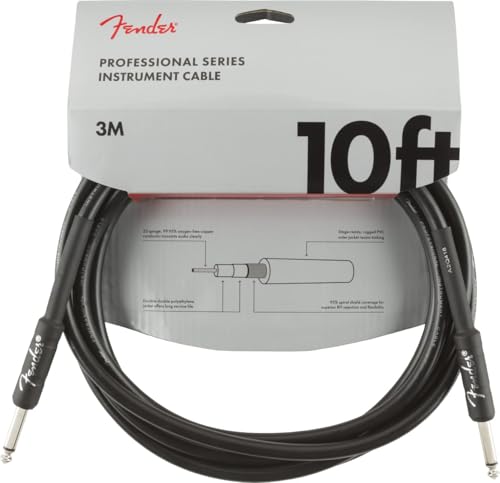
Reference features: Durable 95% oxygen-free spiral shielding, an 8mm PVC jacket for low interference, 22-gauge conductor, and nickel-plated connectors to minimize wear. The anti-kinking design helps maintain signal integrity during frequent on-stage movement.
Best for: Players who want a long-lasting cable with steady shielding and resilient construction, suitable for both practice sessions and live performances.
Caution: Some users may prefer heavier shielding or different connector finishes depending on their existing gear; ensure compatibility with guitar jacks and amp inputs before purchase.
JSAUX 10 ft Guitar Cable

Reference features: Thicker construction with multiple insulator shields to reduce static and crackle. Uses high-quality oxygen-free copper and a durable nylon braided jacket, with a convenient strap for wrapping and storage. Broad compatibility includes electric guitar, mandolin, amplifiers, bass, drum, pedal, speaker, mixer, tuner, and microphone.
Best for: Players seeking robust durability and lower noise across a range of instruments, including mandolins and keyboards, while maintaining a tidy setup.
Caution: The thicker build may be less flexible in very tight pedalboard configurations; test the bend radius for your setup.
Aqdocvf 10 ft Guitar Cable

Reference features: Includes rotatable copper casing for better solder joint protection, right-angle to straight connectors, and a set of colorful picks included as a bonus. The cable uses high-fidelity PVC insulation and double shielding for noise rejection, with durable rotatable connectors designed for secure connections in various instruments or amps.
Best for: Musicians who travel or perform in varied configurations, needing flexible orientation and included extras to support quick tonal changes or practice sessions.
Caution: Multi-color picks are a bonus but may not be essential for all users; focus on connector quality and shield effectiveness for critical gigs.
AA AUDIO ACCESSORY Pro Series 10 ft

Reference features: Gold-plated Neutrik Rean connectors for compatibility with various jacks, 18 AWG OFC conductor for lower resistance and capacitive loss, and Kevlar reinforcement for durability. The cable also emphasizes low capacitance to preserve signal integrity across the length.
Best for: Players seeking premium durability and signal fidelity, especially those who perform on multiple stages or need cables that resist wear and tangling during travel.
Caution: The premium features may come with a higher price point; evaluate if heavy-duty construction is essential for your typical usage.
Buying Guide
What should you look for when buying a guitar-to-amp cable?
- Conductor material and gauge: Cables with oxygen-free copper (OFC) conductors typically offer better conductivity and lower signal loss. Higher gauge (smaller number, e.g., 18 AWG) can reduce resistance but may be less flexible; choose a balance that suits your playing style and setup.
- Shielding and noise rejection: Dual shielding and braided or spiral shielding help minimize hum and interference. For noisy environments or long runs, prioritize cables with robust shielding and low capacitance.
- Connector design: Right-angle versus straight connectors influence stability on stage and ease of routing on pedalboards. Consider the shape that reduces strain on the jack and minimizes accidental disconnections.
- Durability features: Nylon braiding, Kevlar reinforcement, and rotatable connectors can extend cable life under frequent setup and teardown or travel wear.
- Length considerations: Common lengths (6–15 ft) cover most practice rooms and small to medium stages. Longer cables introduce more potential for capacitance-related tone loss, so ensure the length matches your use case.
- Compatibility: Ensure the cable works with your instruments (electric guitar, bass, mandolin) and with amps or effect pedals in your signal chain.
Quick decision checklist
- For on-stage reliability: choose cables with Kevlar or reinforced jackets and rotatable connectors.
- For studio tone: favor lower capacitance and high-quality OFC conductors.
- For travel and flexibility: consider right-angle connectors and tangle-free nylon braiding.
Common scenarios and recommendations
- Live performance with long runs: Prefer dual-shielded, low-capacitance cables with durable connectors (e.g., AA AUDIO ACCESSORY Pro Series or Fender Professional Series).
- Home practice and smaller stages: A mid-length cable with good shielding and flexible connectors (e.g., Fender or JSAUX) offers a good balance of performance and value.
- Mandolin or multi-instrument setups: Choose a cable with wide compatibility and robust shielding to handle diverse gear (e.g., JSAUX or Aqdocvf).
FAQ
- What is the benefit of right-angle connectors?
They reduce strain on the jack during stage movement and can fit tighter pedalboard layouts. - Do longer cables degrade tone?
Yes, due to higher capacitance; choose length based on the venue and signal chain. Consider low-capacitance designs for longer runs. - Is Kevlar reinforcement necessary?
Not strictly, but it significantly improves durability for frequent setup and travel. - Should I pay more for gold-plated connectors?
Gold plating can improve corrosion resistance and contact reliability in some environments, but build quality and shielding often have a larger impact on tone. - What instruments can these cables connect to?
Most listed cables support electric guitars, basses, mandolins, keyboards, amplifiers, mixers, and various effects units.
All product details above are provided to help buyers compare options and make an informed choice. The recommended picks emphasize reliability, shielding, and compatibility for a range of playing styles and venues.