Answering the needs of players who want rich tones, flexible signal paths, and studio-grade modeling in a floor unit, this guide highlights five top guitar floor effects processors. Each model suits different players—from beginners seeking easy presets to pros needing deep editing and live performance control. Below, you’ll find concise comparisons, practical pros and cons, and buying considerations to help you choose the right unit for your rig.
Summary of chosen products
| Product | Best For | Key Strength |
|---|---|---|
| Zoom G1X Four | Practice, songwriting, live practice | Extensive effects with a looper and rhythm patterns |
| MOOER GE150 Max Li | Battery-powered stage use, flexible control | 8 footswitches, long battery life, clear display |
| SORAN Dual Stomp | Creative tones with deep modulation | 125 effects, 99 presets, dual expression pedal |
Zoom G1X Four Guitar Multi-Effects Processor

Featuring 71 effects and 13 amp models, the Zoom G1X Four provides a broad palette for clean to high-gain tones. The built-in 30-second looper supports real-time layering, which is ideal for songwriting and practice. It also includes 68 rhythm patterns to simulate a backing band, helping players stay in time during practice or brainstorming sessions.
Best for: players who want a versatile, all-in-one practice and performance unit with robust rhythm backing and a generous effects suite. The G1X Four is especially suitable for songwriters and home-recording setups without external pedals.
Caution: While feature-rich, exploring all 71 effects and amp models may require time to dial in a preferred chain and tone for live setups.
MOOER GE150 Max Li Battery-Powered

The GE150 Max Li combines a large, informative LCD display with eight multifunction footswitches for quick preset access and parameter changes. It runs on a built-in Li battery for roughly nine hours of on-stage use, making it a strong choice for gigs or rehearsals where power access is limited. It offers 200 preset slots across 50 banks and dozens of amp and cabinet models, plus support for third-party IRs to shape speaker tones.
Best for: performers who need long battery life, extensive preset slots, and flexible footswitch control during live performances.
Caution: The unit’s manageable footprint means it may take time to navigate all routing options; beginners may benefit from a guided setup.
SORAN Dual Stomp Multi Effects Pedals

This rechargeable guitar pedal offers 99 presets and 125 effects with 11 simultaneous modules per preset. Its dual-mode expression pedal handles both wah and volume tasks, enabling expressive performance control. The DSM technology adds USB audio interface functionality for studio recording or live streaming, broadening its use beyond simple effects processing.
Best for: players who want deep tonal flexibility, advanced expression control, and integrated recording capability in a compact package.
Caution: The higher number of parameters can require a learning curve to master effective preset programming.
BOSS GT-1: Compact, Iconic Amps & Effects

The GT-1 combines a modern, portable design with a broad array of amp models and effects. Its easy-to-use controls make it suitable for beginners while providing enough depth for more advanced players seeking quick tone setup for live performances. The unit is widely used for portable practice and mobile gigging due to its lightweight form factor.
Best for: newcomers and stage players who prioritize portability and straightforward patch editing without sacrificing tone variety.
Caution: It may lack some of the deeper routing and editing capabilities found in larger, studio-focused processors.
Line 6 POD Go Guitar Multi-Effects Pedal

The POD Go provides a compact workflow with a large color display and more than 270 amp and effects models, combining Line 6’s HX and legacy tones. Its portability makes it a strong option for players who need a versatile stage and studio tool without a heavy footprint. It supports easy patch switching and robust tone sculpting for various genres.
Best for: players who want a broad tonal palette, reliable on-stage performance, and straightforward editing in a compact package.
Caution: While feature-rich, some users may prefer deeper rig integrations that larger floor units offer.
BOSS ME-90 Guitar Multi-Effects
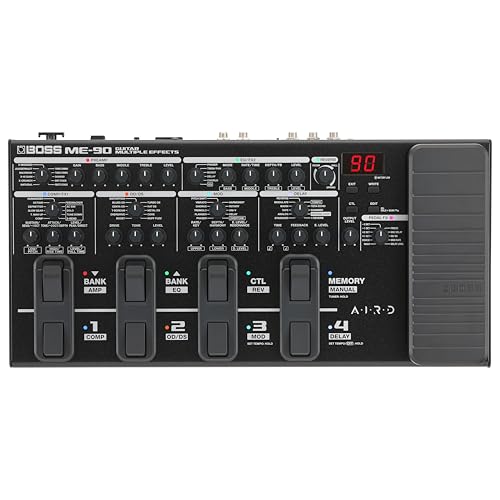
The ME-90 builds on decades of BOSS multi-effects design, delivering 11 AIRD amp models, IR loading, and an effects loop in a compact format. It features eight multi-function footswitches and a redesigned expression pedal, offering robust stage control and quick tone changes during performances.
Best for: players seeking classic BOSS tone quality with a versatile, all-in-one floor unit for live or studio setups.
Caution: The interface may feel dated to some users accustomed to newer color screens and more modern editing workflows.
SONICAKE QME-20 Smart Box

The QME-20 stands out with 130+ effects, NAM/IR support, a built-in looper, tuner, metronome, and a USB audio interface with loopback. It also supports third-party IR and NAM files for expanded tone options, making it a flexible choice for players who want studio-grade sound in a compact, portable unit.
Best for: players who value NAM/IR compatibility, USB audio interface capability, and broad effects selection in a small package.
Caution: NAM/IR loading may require extra time during initial setup and tone organization.
Buying Guide: Key Considerations for Choosing a Guitar Floor Effects Processor
- Tone quality and model depth: Consider how many amp models, cabinet simulations, and effects you actually need. Some units emphasize mass tone options; others focus on practical live performance features.
- Editing and preset management: If you like deep tone design, look for devices with organized presets, clear editing interfaces, and the ability to save multiple rigs for different gigs.
- Footswitch layout and control: For live use, ensure the number and placement of footswitches suit your playing style. Look for units with programmable controls or CTRL modes for quick access during performances.
- Connectivity and recording workflow: USB audio interfaces, MIDI, NAM/IR support, and audio routing options enable easy integration with DAWs, recording gear, and live sound systems.
- Power options: Battery-powered models are ideal for portability and on-the-go gigs, but check run-time expectations and charging needs for your typical performance schedule.
- Ease of use vs. depth: Beginners may prefer simpler, ready-to-play setups, while advanced players might prioritize extensive tone-shaping capabilities and I/O routing.
Frequently Asked Questions
- What is a guitar floor effects processor?
- Do I need an audio interface with a floor unit?
- What should beginners look for in a floor processor?
- Is battery power important for live use?
- How many effects do I really need?
- Are NAM/IR files important?
A guitar floor effects processor is a compact device that combines multiple guitar effects, amp simulations, and sometimes a looper or rhythm patterns in a single floor unit. It typically provides stompbox-like control with presets and adjustable parameters for live and studio use.
Some models include a USB audio interface, which allows direct recording and playback with a computer. If you plan to record or stream, look for NAM/IR support and USB connectivity.
Beginners should prioritize easy patch navigation, built-in instructional presets, a reliable looper, and a compact footprint. A user-friendly interface helps with ongoing tone exploration.
Battery power is valuable for practice on the go and for mobile gigs without reliable power access. For fixed-stage setups, a power adapter is often preferred.
This depends on your genre and workflow. For casual practice, a moderate set of essential effects plus a looper may suffice. For recording and live performance, more effects and deeper editing can be beneficial.
NAM and IR support allow loading third-party impulse responses and cabinet simulations, enabling more authentic speaker tones and flexible tone-shaping across different amps and cabinets.
Note: This article presents a range of popular guitar floor effects processors. Availability and specifications may change over time. Always verify current models, features, and compatibility with your gear before purchasing.