Gain boost pedals are essential for adding presence, pushing amps, and shaping your tone without altering your core signal. This guide reviews five reliable options that deliver clean boosts, variable gain, and tonal control for guitar and bass players. Each pedal below is selected for build quality, intuitive controls, and performance on stage or in the studio.
| Product | Brand | Key Benefit |
|---|---|---|
| SONICAKE Clean Boost Pedal | SONICAKE | 0-12 dB gain with buffer |
| AZOR Pure Boost | AZOR | 20 dB boost with 2-band EQ |
| IOppWin Pure Boost | IOppWin | 20 dB+ boost with true bypass |
| LEKATO Boost Pedal | LEKATO | 2-mode clean/TS boost |
| Caline CP-514 Santa Carla Boost | Caline | 2–20 dB boost with one-knob control |
SONICAKE Clean Boost Pedal

The SONICAKE Clean Boost Pedal includes a built-in buffer to preserve signal integrity and offers a gain range of 0-12 dB. This compact booster is designed to increase signal strength without adding distortion, making it suitable for pedalboard setups and live performances. A simple on/off switch toggles the effect, providing a transparent boost that can push an overdriven amp or emphasize solos without altering the core tone.
AZOR Pure Boost Guitar Pedal
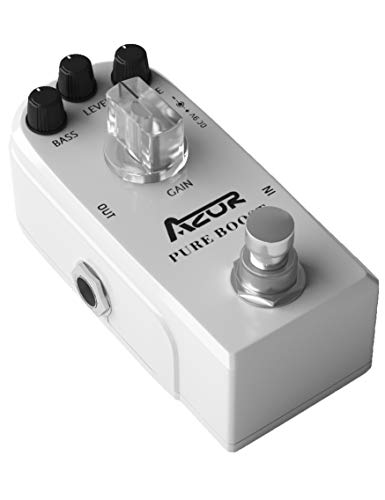
AZOR’s Pure Boost offers a 20 dB clean boost with a 15 dB, two-band EQ to shape both highs and lows. The pedal emphasizes a transparent tone and true bypass, preserving your original signal when disengaged. With three knobs for bass, tone, and volume, players can tailor their boost to complement their guitar’s pickups and amp setup, adding richness without coloration.
IOppWin Pure Boost Pedal

IOppWin’s Pure Boost provides 20 dB of clean boost with ±15 dB two-band EQ and a durable metal enclosure. The true-bypass design ensures the pedal remains out of the signal chain when off, preserving your guitar’s tone. This model is aimed at players seeking a robust booster capable of pushing solos or bridging to drive sections without altering core dynamics.
LEKATO Boost Pedal
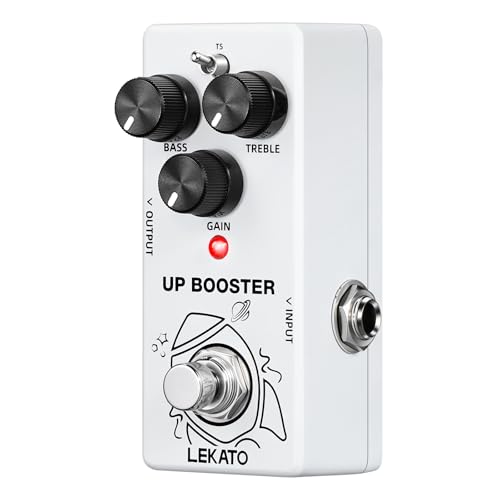
LEKATO’s Boost Pedal features two modes: a clean boost and a TS-style booster. The three-knob control allows users to adjust gain, low, and high frequencies, enabling a fuller sound without sacrificing clarity. The true-bypass circuit helps maintain signal integrity, and the mini footprint makes it easy to fit into crowded pedalboards while offering flexible tonal shaping for varied rig configurations.
Caline CP-514 Santa Carla Boost
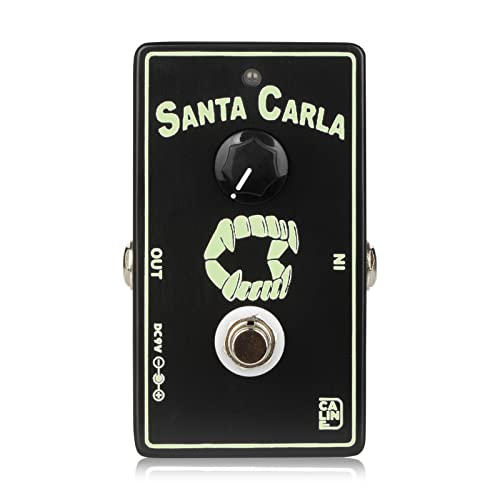
Caline’s CP-514 Santa Carla Boost offers a wide boost range from 2 dB to 20 dB with a single control for simplicity. Designed for quick tone adjustments, it provides a bright green LED indicator and a compact form factor. The boost is designed to push amps or pedals with minimal signal coloration, making it a practical option for players who want a straightforward, versatile booster on their board.
Buying Guide
Key purchase considerations for gain boost pedals:
- Gain range and headroom: Choose a pedal that provides enough boost to meet your needs without saturating or changing your core tone.
- Buffer and true bypass: A buffer helps preserve high-end clarity on long signal paths; true bypass ensures the pedal does not color your tone when off.
- EQ options: Two-band or three-knob EQ allows you to tailor bass and treble to match your guitar and amp, especially in dirty or modern amps.
- Footprint and build quality: Compact footprints fit crowded pedalboards; metal enclosures tolerate travel and gig use.
- Power requirements: Check whether the pedal shares a common 9V supply with other pedals and if it requires isolated power for hum-free operation.
- Sound goals: Decide between a pure clean boost for transparency or a boost with tonal shaping to push amplifiers into a desired overdrive.
- Pedal arrangement: Consider placing boosters before dirt/distortion pedals to boost gain or after for level matching and solos.
- Scratch and noise considerations: Some boosts may introduce hiss at higher gains; ensure the unit’s specs align with your noise floor.
- Durability and aesthetics: If stage use is frequent, select a rugged enclosure and a design that suits your rig’s visual style.
Overall, the best gain boost pedal for you balances headroom, tonal transparency, and practicality for your rig. Whether you need a simple 20 dB push, or a more nuanced two-band EQ along with boost, these options provide solid routes to shaping your live and studio tones.